#1
Ibanez Prestige RG5120M
Fusion primary guitar (technically demanding precision) · Mahogany body, maple top, DiMarzio Fusion Edge pickups, Edge tremolo, Wizard V neck, 25.5-inch scale, 24 extra-jumbo frets, Japanese manufacturing$1,300–$1,600 usedBest for: Technical jazz-rock fusion lead, fast Wizard neck for fusion scalar passages, Japanese Prestige precision for lowest action in the industry, DiMarzio Fusion Edge for full-range clarity from clean jazz to rock drive
The Ibanez Prestige RG is the most popular guitar in professional jazz-rock fusion — Steve Lukather (Toto, session), Paul Gilbert, Guthrie Govan, and many others use Ibanez Prestige instruments for technical fusion playing. The Wizard V neck profile is extremely thin and fast, ideal for the high-speed scalar passages and wide interval jumps that fusion requires. DiMarzio Fusion Edge pickups are specifically voiced to maintain note clarity and definition through high-gain fusion and across the full dynamic range from clean jazz chord voicings to driven rock lines. Used at $1,300–$1,600.
What to check used: The Ibanez Edge tremolo on the RG5120M is excellent quality but requires periodic setup and maintenance. Fusion players who need to switch tunings between songs may find a fixed-bridge guitar more practical. The thin Wizard neck profile is very fast but may be uncomfortable for players accustomed to thicker Gibson or PRS necks — allow adjustment time.
#2
PRS Custom 24
Modern fusion versatility (American craftsmanship, coil tap) · Mahogany body, figured maple top, 2 PRS 85/15 humbuckers with coil tap, 25-inch scale, 24 frets, Pattern Thin neck$1,600–$2,500 usedBest for: Modern professional fusion, coil tap covers clean jazz single-coil tones and full humbucker drive, Pattern Thin neck for fast fusion playing, 24 frets for upper-register fusion leads
The PRS Custom 24 is the professional American fusion recommendation — the 85/15 humbuckers with coil tap provide jazz-clean articulate single-coil tones and full-humbucker drive for rock fusion sections in one guitar. The Pattern Thin neck profile is fast enough for fusion lead while retaining enough thickness for chord-melody jazz fusion voicings. PRS quality control ensures consistent intonation and action that professional fusion performance requires. Used at $1,600–$2,500.
What to check used: PRS instruments have a polished, refined character — some fusion players find this perfect for contemporary fusion production; others prefer a rawer character for jazz fusion that leans toward the organic. If your fusion influences are more vintage (McLaughlin with Shakti, early Di Meola), the Gibson ES-335 or semi-hollow character may suit better.
#3
Ibanez Artcore AS93
Semi-hollow jazz-fusion guitar · Semi-hollow, 2 Super 58 humbuckers, 24.75-inch scale, single Florentine cutaway, arched top and back$500–$600 new / $340–$460 usedBest for: Jazz-influenced fusion chord voicings, Super 58 warmth for smooth clean fusion, semi-hollow resonance for John Scofield-style jazz-fusion clean tone, accessible semi-hollow fusion entry
The Ibanez Artcore AS93 provides semi-hollow jazz character for fusion at mid-range prices — Super 58 humbuckers produce a warm, detailed single-note tone suited to John Scofield-style jazz-fusion. The semi-hollow construction provides natural acoustic resonance that adds richness to clean fusion chord voicings. The single Florentine cutaway provides upper-fret access. Used at $340–$460.
What to check used: The AS93 is less suited to high-gain rock fusion sections than Ibanez Prestige or PRS instruments — the semi-hollow body feeds back with aggressive gain. The AS93 is the recommendation for fusion that leans toward the jazz side; the RG Prestige or PRS Custom 24 is the recommendation for fusion that emphasizes the rock side.
#4
Gibson ES-335
Vintage jazz-rock fusion (Larry Carlton, Lee Ritenour) · Semi-hollow, 2 humbuckers, 24.75-inch scale, warm acoustic resonance, dual Florentine cutaway$2,200–$3,000 usedBest for: Smooth jazz-rock fusion in the Larry Carlton and Lee Ritenour tradition, semi-hollow warmth for clean fusion chord melody, recording studio fusion tone, blooming sustain for fusion single-note expression
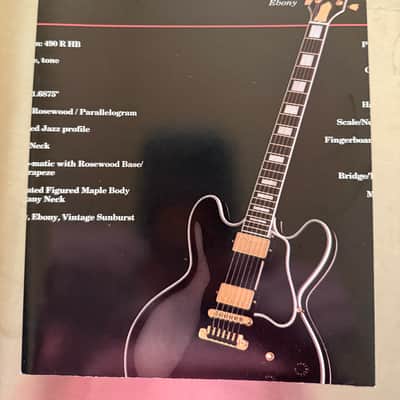
The Gibson ES-335 defines the warm jazz-rock fusion guitar tone — Larry Carlton (Steely Dan's 'Peg,' 'Kid Charlemagne') and Lee Ritenour used ES-335s for the smooth, sustaining clean-to-overdrive fusion tone that defines late 1970s jazz-rock fusion production. The semi-hollow construction provides a naturally warm, resonant character that suits lyrical fusion expression. Used at $2,200–$3,000.
What to check used: The ES-335 is less suited to high-speed technical fusion (Guthrie Govan style) than Ibanez or PRS instruments — the 24.75-inch scale and semi-hollow body are optimized for lyrical expression rather than technical speed. The ES-335 is the correct recommendation for smooth jazz-fusion; the Ibanez Prestige or PRS Custom 24 suit technical fusion.
#5
Fender Stratocaster
Fusion Stratocaster (Robben Ford, Stevie Lukather clean-to-drive) · 3 single-coil pickups, 5-position switch, 25.5-inch scale, tremolo arm, versatile pickup selection(American Professional II: $1,000–$1,400 used)Best for: Clean jazz-influenced fusion, Robben Ford-style single-coil fusion, Stevie Ray Vaughan blues-fusion crossover, tremolo arm for fusion expression, middle position for clean fusion chord melody
The Fender Stratocaster appears in jazz-rock fusion — Robben Ford, Stevie Lukather (in some contexts), and many jazz-fusion players use Stratocasters for their dynamic clean-to-overdrive range. The Stratocaster's five pickup positions provide tonal versatility for fusion's wide dynamic range. The middle pickup position produces the hollow, slightly nasal clean tone characteristic of jazz-fusion guitar processing. Used at $1,000–$1,400.
What to check used: Single-coil Stratocasters hum (60-cycle) in high-gain fusion contexts — noise becomes a problem when fusion sections require high gain. Noiseless pickups (Fender Vintage Noiseless, Suhr V60LP) address this, or use active noise reduction. Players who need quiet single-coil performance for studio fusion recording should upgrade to noiseless pickups.
#6
Suhr Classic S
Boutique fusion Stratocaster · Alder body, Suhr V60LP single-coil pickups, 5-position switch, 25.5-inch scale, USA Suhr Floyd Rose or hardtail$1,600–$2,200 usedBest for: Professional studio fusion, Suhr boutique quality for the most refined Stratocaster-style fusion tone, V60LP noiseless single-coils for quiet studio fusion, Suhr craftsmanship
The Suhr Classic S is the boutique Stratocaster-style fusion instrument — Suhr's precision USA manufacturing produces the tightest fret leveling and lowest action achievable in a Stratocaster-format guitar. The V60LP pickups are noiseless single-coils that retain the Stratocaster clarity without 60-cycle hum, critical for studio fusion work. Suhr instruments are used by professional session players and fusion guitarists who require maximum playability and reliability. Used at $1,600–$2,200.
What to check used: Suhr instruments are boutique investments — the quality is genuinely exceptional but expensive. For players not recording professionally, an American Stratocaster with noiseless pickup upgrade achieves approximately 90% of the Suhr's performance at lower cost. The remaining 10% matters to professional studio musicians for whom the Suhr is justified.
#7
Yamaha Pacifica 612VIIFM
Value professional fusion versatility · Alder body, figured maple top, Seymour Duncan humbuckers (SH-4 JB bridge, SH-2 Jazz neck) with coil tap, 25.5-inch scale, 24 frets$650–$800 new / $420–$580 usedBest for: Professional-quality fusion without boutique prices, Seymour Duncan JB/Jazz pickup combination for studio-standard fusion tone, coil tap for single-coil clean jazz tones
The Yamaha Pacifica 612VIIFM provides professional pickup quality at mid-range prices — Seymour Duncan JB (bridge) and Jazz (neck) with coil tap is the studio-standard fusion pickup configuration, providing warm smooth clean fusion (Jazz neck, single-coil position) and articulate driven fusion (JB bridge). The 612VIIFM's Japanese manufacturing quality ensures precise fret leveling and consistent playability. Used at $420–$580.
What to check used: Yamaha Pacifica instruments are underappreciated in the fusion community — the quality genuinely competes with guitars costing 2-3x more. The figured maple top is aesthetic rather than tonal; the Seymour Duncan pickups are identical to what more expensive guitars use. For fusion players seeking value, the 612VIIFM is a serious working instrument.
#8
Ibanez AZ2402
Modern precision fusion guitar (floating tremolo Prestige) · Alder body, Seymour Duncan Hyperion pickups, 25.5-inch scale, Ibanez AZ-FX9 tremolo, roasted maple neck, 24 jumbo frets$1,200–$1,500 usedBest for: Technical modern fusion, Seymour Duncan Hyperion pickups for full-range fusion clarity, Ibanez AZ-FX9 locking tremolo for tuning stability, smooth roasted maple neck
The Ibanez AZ2402 is the modern technical fusion instrument — the AZ series addresses the RG's extreme thinness with a slightly meatier neck profile that suits chord-melody jazz fusion alongside technical lead fusion. Seymour Duncan Hyperion pickups are voiced for maximum clarity and dynamic range across clean jazz and driven rock fusion. The AZ-FX9 locking tremolo provides stability for technical fusion playing. Used at $1,200–$1,500.
What to check used: The AZ series is somewhat newer than the RG Prestige and has a smaller used market — expect fewer options and slightly higher used prices relative to the RG5120M. The quality is comparable; the choice between AZ and RG often comes down to preferred neck thickness (AZ is slightly thicker) and tremolo preference.
#9
ESP LTD EC-1000
Fusion rock crossover (EMG clarity for rock-fusion) · Mahogany body, maple top, EMG 81/60 active humbuckers, Set-Thru neck, 25.5-inch scale, 24 frets$800–$1,100 usedBest for: Fusion that leans heavily toward rock, EMG 81/60 for clean articulate fusion clean and driven rock fusion, Set-Thru neck for fast lead access, 25.5-inch scale for rock fusion tightness
The ESP LTD EC-1000 with EMG 81/60 active pickups suits fusion that emphasizes the rock side — the EMG 81 bridge produces ultra-clean, articulate high-gain response that works well for players like John Petrucci who bridge fusion and progressive metal. The EMG 60 neck provides smooth, clear clean fusion chord tone. For players whose fusion is closer to progressive rock than jazz, the EC-1000 is the recommendation. Used at $800–$1,100.
What to check used: The EC-1000 single-cutaway limits upper fret access compared to double-cutaway fusion guitars — the Set-Thru neck helps, but the upper bout limits fretting hand position at the highest frets. For fusion that requires extensive fret 22-24 playing, a double-cutaway design is preferable. The EC-1000 suits fusion players who play primarily in the middle register.