#1
Boss Katana 50 MkII
Modeling combo (50W/25W/0.5W)$200–$280 usedBest for: All-around beginner amp — practice, rehearsal, first gigs
The Katana 50 MkII is the best beginner guitar amp available. Five amp character channels (Clean, Crunch, Lead, Brown, Acoustic), 50 watts (switchable to 25W or 0.5W for quiet practice), 57 onboard effects, and a 12-inch speaker that handles everything from delicate picking to overdriven rhythm. Boss Tone Studio software lets you download and save hundreds of professional patches. The 0.5W mode provides usable guitar tone at genuinely bedroom-quiet volumes. New it retails for $299; used examples are $200–$280.
What to check used: The sheer number of effects and patches can overwhelm beginners — start with a single preset you like and learn it before exploring further. The 50W mode is significantly louder than most bedrooms need; keep it at 0.5W for home practice.
#2
Fender Frontman 10G/15G
Solid-state combo (10W or 15W)$50–$100 usedBest for: Tightest budget, apartment practice, first day setup
The Fender Frontman 10G is the starting point for guitarists who need something working today without spending more than $50–$100. Solid-state, simple Bass and Treble EQ, and an overdrive channel that's rudimentary but functional. It's not what you'll play forever, but it's a reliable practice amp that works. It ships bundled in Fender starter packs alongside a Squier guitar. Used examples are everywhere and priced to move. When you know you're serious, the Katana is the upgrade.
What to check used: The Frontman 10G has limited headroom and limited tone-shaping capability. It will do for the first 6–12 months of learning, but it won't grow with you. Budget it as a starter tool, not a permanent solution.
#3
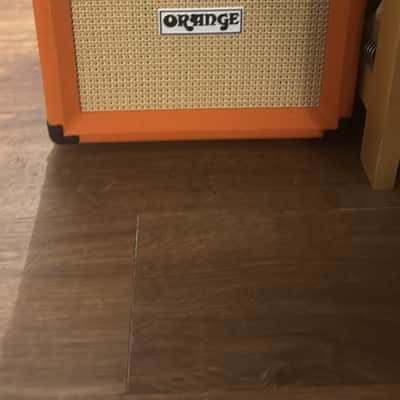
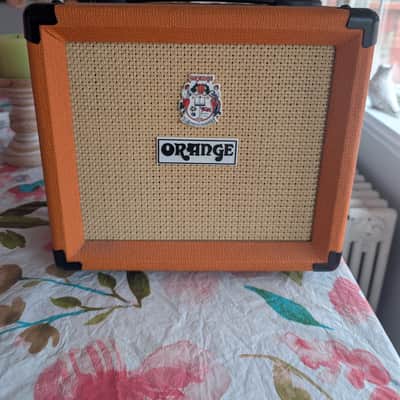
Orange Crush 35RT
Solid-state combo (35W)$150–$220 usedBest for: Budget beginner who wants more volume and a built-in tuner
The Orange Crush 35RT delivers the warm, rich Orange tone at a beginner price point. 35 watts of solid-state power, a 10-inch speaker, two channels (Clean and Overdrive), built-in reverb and tuner, and a headphone output. Orange's voicing produces a warmer, rounder character than most budget amps — less harsh on the treble frequencies that make cheap amps unpleasant to practice on. Used examples are available at $150–$220. New price is around $280.
What to check used: The 35RT's overdrive channel is voiced warmer and rounder than, say, a Marshall gain sound. If your reference tone is metal or hard rock, the Orange voicing may feel smooth rather than aggressive. The 10-inch speaker is fine for practice but smaller than most stage amps.
#4
Marshall DSL20CR
Tube combo (20W/10W/1W)$380–$500 usedBest for: First tube amp, classic rock tone, growing into real guitar sounds
The Marshall DSL20CR is the best first tube amp. 20 watts with 10W and 1W power reduction modes, two channels (Classic Gain and Ultra Gain), EL34 power tubes, and the characteristic Marshall mid-forward bark. EL34 tubes and point-to-point analog character are what rock guitar tones are built on — no modeling or digital simulation. The 1W mode allows real power amp saturation at manageable volumes. Used examples at $380–$500 represent excellent value for a genuine tube amp.
What to check used: This is a tube amp — budget an extra $60–$80 for tube replacement when you buy used. Verify both channels engage and the EQ controls move smoothly. The DSL20CR's 1W mode is still audible at room volume; it's not silent practice, just quieter.
#5
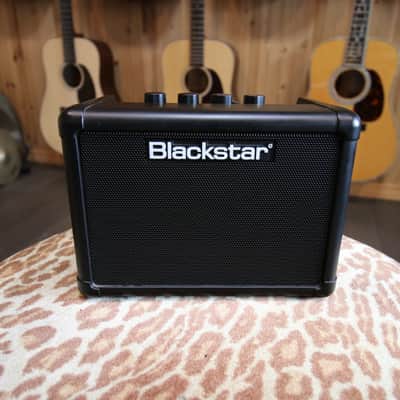
Blackstar Fly 3
Mini combo (3W)$40–$70 usedBest for: Silent apartment practice, battery-powered portability, desk playing
The Blackstar Fly 3 is a 3-inch speaker mini amp that runs on batteries — genuinely useful for playing in spaces where even a small conventional amp is too loud. It has clean and overdrive channels, onboard delay, and a headphone output. Tiny, affordable, and good enough for learning chords and scales in a shared living space. Battery life is excellent. Not a performance amp, but a useful practice tool that occupies almost no space.
What to check used: The Fly 3 is a practice tool, not a real amp. It will not help you develop stage-level playing habits (volume, attack, dynamics). Use it for learning, but supplement with a larger amp before any performance context.
#6
Peavey Vypyr VIP 1/VIP 2
Modeling combo (20W or 40W)$100–$180 usedBest for: Versatile beginner who wants acoustic and bass simulation
The Peavey Vypyr VIP series is unique in that it handles electric guitar, acoustic guitar, and bass guitar in a single amp — making it the right choice for beginners who play or plan to play more than one instrument. Multiple amp models, effects, and instrument presets are included. The VIP 2 at 40 watts can handle rehearsal scenarios. Used Vypyrs are extremely affordable and built well — Peavey construction quality is strong.
What to check used: The multi-instrument flexibility means no single instrument sounds as accurate as a dedicated amp. For a player committed to electric guitar, the Katana 50 is a better single-purpose tool. The Vypyr excels for players who haven't committed to a single instrument yet.
#7
Fender Blues Junior III/IV
Tube combo (15W)$300–$420 usedBest for: First tube amp with Fender tone — clean, warm, and musical
The Blues Junior is the beginner's first taste of real Fender blackface tone. 15 watts, EL84 tubes, a 12-inch speaker, and spring reverb that all Fender amps are known for. The character is warm, clean at low volumes, and breaks up gently as volume increases. Unlike the Marshall DSL20CR (which is voiced for rock), the Blues Junior has a cleaner, Fender-characteristic response that suits country, blues, and clean rock styles. It's the first amp for players who grow up to play a Deluxe Reverb.
What to check used: Verify tube condition on used examples. At 15W it won't overdrive as aggressively as a Marshall. This is a clean-to-light-breakup amp, not a high-gain tool.