#1
Gibson Les Paul Standard
Blues-rock lead benchmark (Jimmy Page, Joe Perry, Slash) · Mahogany body, maple top, 2 Burstbucker humbuckers, 24.75-inch scale, set neck, weight-relief chambering$2,200–$3,000 usedBest for: Blues-rock lead playing, sustained humbucker tone for blues-rock lead runs, Jimmy Page Zeppelin-style blues-rock, Slash Guns N Roses crossover blues-rock, Joe Perry Aerosmith tone
The Gibson Les Paul Standard is the blues-rock lead guitar — Jimmy Page (Led Zeppelin), Slash (Guns N' Roses), and Joe Perry (Aerosmith) used Les Paul Standards for the thick, sustained humbucker tone that defines blues-rock lead playing. The mahogany/maple construction provides a warm, resonant body that sustains blues lead notes and bends. The 24.75-inch scale is slightly slinky, easing string bends. Used at $2,200–$3,000.
What to check used: The Gibson Les Paul Standard is a significant investment. The Epiphone Les Paul Standard Pro ($550–$750 used) or PRS SE Custom 24 ($550–$750 used) provide approximate humbucker blues-rock tone at significantly lower cost for players developing the style. The Gibson's advantage is in sustain, resonance, and refinement — qualities that become more apparent at professional playing levels.
#2
Fender Stratocaster
Blues-rock single-coil (Hendrix, Stevie Ray Vaughan, John Mayer) · 3 single-coil pickups, 5-position switch, 25.5-inch scale, synchronized tremolo, Texas Special or Custom Shop pickups(American Professional II: $1,000–$1,400 used)Best for: Hendrix-style blues-rock, Stevie Ray Vaughan Texas blues-rock Stratocaster tone, John Mayer blues-rock tone, tremolo arm for blues-rock expression, middle and neck pickup for smooth blues-rock lead
The Fender Stratocaster is the single-coil blues-rock guitar — Jimi Hendrix, Stevie Ray Vaughan (who used heavy 0.013 gauge strings), and John Mayer use Stratocasters for blues-rock. The middle and neck pickup positions produce the warm, smooth clean-to-overdrive tone central to modern blues-rock. The tremolo arm adds expressive pitch articulation. American Professional II with V-Mod II pickups is the current standard recommendation. Used at $1,000–$1,400.
What to check used: Stevie Ray Vaughan used heavy 0.013 gauge strings tuned to Eb (half-step down) to get more volume and tension from the Stratocaster. Most players find 0.010 or 0.011 strings more practical. The heavier gauge produces more tone and attack but requires more physical effort for bending. John Mayer uses custom-wound pickups; the stock American Professional II V-Mod pickups are excellent for blues-rock without modification.
#3
Gibson SG Standard
British blues-rock (Clapton Cream, Tony Iommi early blues-rock) · Mahogany body, 2 humbuckers, double-cutaway, 24.75-inch scale, set neck, lighter weight than Les Paul$900–$1,300 usedBest for: British blues-rock, Clapton Cream-era SG tone, lighter weight than Les Paul for extended blues-rock performance, upper-fret access via double-cutaway for blues-rock lead
The Gibson SG Standard is Eric Clapton's (Cream) blues-rock guitar — Clapton used a Gibson SG for Cream's 'Sunshine of Your Love,' 'White Room,' and the blues-rock recordings that defined the British blues-rock boom. The SG is lighter than the Les Paul (less chambering required) and provides the double-cutaway upper-fret access that suits blues-rock lead playing. The humbuckers produce warm, sustaining lead tone. Used at $900–$1,300.
What to check used: The SG's lighter body is sometimes criticized for less acoustic resonance than the Les Paul — in practice, the SG through a Marshall or Vox amplifier produces excellent blues-rock tone. The SG's balance differs from the Les Paul: the neck-heavy body requires adjustment to strap length and playing position.
#4
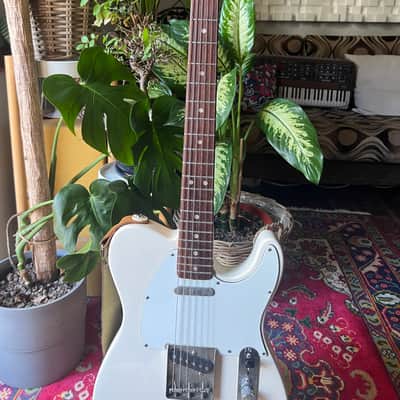
Fender Telecaster
Twangy blues-rock (Keith Richards, country-blues-rock crossover) · 2 single-coil pickups, 25.5-inch scale, bright bridge pickup, maple neck, dual-saddle brass bridge(Player Tele: $600–$850 used)Best for: Country-influenced blues-rock, Keith Richards Rolling Stones blues-rock, bright clean-to-dirty Telecaster character for blues-rock rhythm, simple reliable blues-rock gigging
The Fender Telecaster suits the country-influenced side of blues-rock — Keith Richards (Rolling Stones) used Telecasters for the bright, slightly gritty rhythm tone of early Stones blues-rock. The Telecaster's bright, cutting bridge pickup through light overdrive produces a distinct blues-rock character that complements but differs from the Les Paul or Stratocaster. For blues-rock players whose influences include country-blues crossover, the Telecaster is the correct recommendation. Used at $600–$850.
What to check used: The Telecaster's bridge pickup is brighter and more percussive than a Stratocaster neck pickup — the tonal character for blues lead is sharper and more cutting. Players who want the warm, smooth Stratocaster neck-pickup blues lead character should choose the Stratocaster. The Telecaster is the choice for brighter, more country-influenced blues-rock.
#5
PRS CE 24
Modern blues-rock versatility · Mahogany body, maple top, 2 PRS 85/15 humbuckers with coil tap, 25-inch scale, 24 frets$1,000–$1,350 usedBest for: Modern blues-rock versatility, coil tap for both single-coil and humbucker blues-rock tonal options, 24 frets for upper-register blues-rock lead, American craftsmanship for professional blues-rock
The PRS CE 24 is the modern blues-rock versatility recommendation — the coil-tap provides Stratocaster-like single-coil brightness for Hendrix-influenced blues-rock and full humbucker warmth for Les Paul-influenced blues-rock in one instrument. The 24-fret access allows upper-register lead playing beyond what Les Paul or Stratocaster provides. Used at $1,000–$1,350.
What to check used: PRS instruments have a polished, studio-refined character — some blues-rock musicians find this suits studio recording but feels slightly clinical for raw blues-rock live performance. Vintage and semi-vintage Gibson and Fender instruments have mechanical personality that some blues-rock players prefer. The PRS is the modern studio blues-rock choice.
#6
Epiphone Les Paul Standard Pro
Accessible humbucker blues-rock · Mahogany body, maple top, 2 ProBucker humbuckers, 24.75-inch scale, set neck$550–$750 usedBest for: Blues-rock players who want humbucker character without Gibson prices, ProBucker warmth for blues-rock lead, accessible Les Paul body for developing blues-rock style
The Epiphone Les Paul Standard Pro provides Les Paul humbucker blues-rock character at accessible prices — ProBucker humbuckers produce warm, sustaining tone for blues-rock lead at $550–$750 used. For blues-rock players who want to develop humbucker lead style before investing in a Gibson, the Epiphone is the recommendation. Used at $550–$750.
What to check used: Epiphone ProBucker pickups are good quality but less refined than Gibson Burstbuckers — the difference is most apparent in harmonic complexity and sustain over long held notes. For live blues-rock performance, the Epiphone is an excellent working instrument; for close-mic studio recording, the Gibson's refinement becomes more apparent.
#7
Squier Classic Vibe 60s Stratocaster
Budget blues-rock Stratocaster · Alder body, Fender-designed alnico single-coil pickups, 5-position switch, 25.5-inch scale$350–$430 new / $220–$300 usedBest for: Blues-rock beginners who want Stratocaster single-coil platform, budget entry for Hendrix and SRV blues-rock exploration, Classic Vibe quality for developing blues-rock technique
The Squier Classic Vibe 60s Stratocaster is the blues-rock beginner platform — alnico single-coil pickups in the Classic Vibe produce authentic Fender single-coil character for blues-rock at $220–$300 used. Through a Blues Driver or Tube Screamer-style overdrive, the Classic Vibe produces convincing blues-rock tone for practice and small gigs. Used at $220–$300.
What to check used: Invest in a quality overdrive pedal before upgrading from Classic Vibe to American Stratocaster — a Boss Blues Driver BD-2 or Ibanez Tube Screamer through the Classic Vibe produces better blues-rock than an American Stratocaster without overdrive. Effects investment improves tone more than guitar investment at this level.
#8
Gibson ES-335
Semi-hollow blues-rock (BB King, Chuck Berry, Alvin Lee) · Semi-hollow, 2 humbuckers, 24.75-inch scale, warm acoustic resonance, dual Florentine cutaway$2,200–$3,000 usedBest for: Jazz-influenced blues-rock, BB King-style warm single-note blues lead, Alvin Lee Ten Years After blues-rock, semi-hollow warmth for lyrical blues-rock lead
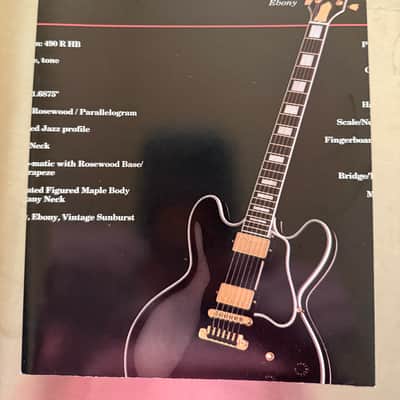
The Gibson ES-335 is the semi-hollow blues-rock guitar — BB King's 'Lucille' ES-345/355 variant and Alvin Lee (Ten Years After) used ES-335-style semi-hollows for their lyrical, warm blues-rock lead tone. The semi-hollow construction provides natural acoustic warmth that solid-body guitars lack, producing a more rounded, bloom-heavy lead tone ideal for expressive blues-rock soloing. Used at $2,200–$3,000.
What to check used: The ES-335 is prone to feedback at high blues-rock stage volumes — the semi-hollow construction resonates with amplifier output. The center block reduces (but does not eliminate) feedback compared to fully hollow instruments. Position the guitar carefully relative to the amplifier in live blues-rock performance.
#9
PRS S2 Custom 24
Professional blues-rock value · Mahogany body, maple top, 2 S2 humbuckers, coil tap, 25-inch scale, 24 frets$1,000–$1,400 usedBest for: Professional blues-rock at mid-range price, PRS USA craftsmanship without Private Stock cost, coil tap versatility for varied blues-rock tonal needs
The PRS S2 Custom 24 provides American PRS manufacturing at prices closer to import instruments — the S2 Custom 24 uses slightly simpler construction than the core PRS Custom 24 (less figured maple top, S2 humbuckers instead of 85/15) while maintaining PRS's American guitar quality. For professional blues-rock players who want PRS tone and construction quality at more accessible prices, the S2 is the recommendation. Used at $1,000–$1,400.
What to check used: The PRS S2 series uses less premium materials (plain maple top vs figured maple, S2 pickups vs 85/15) than core PRS models. For players who specifically want the figured maple aesthetic or 85/15 pickups, the core CE 24 or Custom 24 is preferable. Tonally the S2 Custom 24 is excellent; the difference is primarily visual and in pickup refinement.