#1
Gibson SG Standard
Angus Young standard (most associated hard rock guitar) · Mahogany body, 2 Calibrated T-Type humbuckers, double-cutaway, 22 frets, 24.75-inch scale, American-made$900–$1,300 usedBest for: AC/DC hard rock tone, Angus Young reference guitar, double-cutaway for high-fret access, Black Sabbath and hard rock classics
The Gibson SG Standard is Angus Young's guitar — the iconic hard rock tone of AC/DC is built on a Gibson SG through a Marshall amplifier. Angus plays SG guitars exclusively, and his tone (from the 1970s through the present) defines hard rock guitar for many players. Tony Iommi (Black Sabbath) also used SGs extensively in the early years. The SG's mahogany body and humbuckers produce the powerful, mid-forward tone that cuts through loud drumming and bass in a hard rock band context. At $900–$1,300 used, the SG Standard is the American Gibson quality entry for hard rock. Used at $900–$1,300.
What to check used: The SG's double-cutaway neck joint means the upper body horn provides no support for the neck — SGs tend to be neck-heavy, with the headstock pulling down when played standing. A wide or heavier strap keeps the guitar in position. The SG body is also thinner than a Les Paul, producing a slightly different resonance character (more percussive, less deep bass).
#2
Gibson Les Paul Standard 50s
Jimmy Page and Slash hard rock reference · Mahogany body, maple top, 2 Burstbucker humbuckers, 22 frets, 24.75-inch scale, thick 50s neck profile$1,200–$1,800 usedBest for: Led Zeppelin and Guns N Roses hard rock tone, Jimmy Page and Slash Les Paul reference, thick humbucker tone for hard rock leads
The Gibson Les Paul Standard is the Led Zeppelin and classic hard rock guitar — Jimmy Page used 1958-1959 Les Paul Standards for the entire Led Zeppelin catalog. Slash (Guns N Roses) uses a Les Paul for his signature hard rock lead tone. The Les Paul's combination of mahogany body resonance, maple top brightness, and PAF-inspired humbuckers produces the warm, singing, powerful tone that hard rock lead players need. Used at $1,200–$1,800.
What to check used: Gibson Les Paul quality varies by production period — inspect used examples carefully. The 50s-style thick neck profile is notably different from the 60s slim taper neck; try both if possible. The thick 50s profile is associated with older blues-rock and classic rock styles; the 60s slim profile suits faster, more technical playing.
#3
Fender Stratocaster
Hard rock Strat (Jimi Hendrix, Ritchie Blackmore) · 3 single-coil pickups, 25.5-inch scale, synchronized tremolo, alder body, maple or rosewood neck(American Professional II: $1,000–$1,400 used / Player: $600–$850 used)Best for: Hendrix and Deep Purple hard rock, bridge pickup bite through Marshall for hard rock, tremolo for dive-bombs and vibrato, Ritchie Blackmore and hard rock single-coil character
The Fender Stratocaster in hard rock is associated with Jimi Hendrix (the original hard rock single-coil tone) and Ritchie Blackmore (Deep Purple) — both players used Stratocasters through Marshall amplifiers at high volume to produce the single-coil bite and sustain that defines their hard rock style. The Strat bridge pickup through a loud Marshall has its own character: brighter and more cutting than the Les Paul, with more treble bite in the upper register. Used at $600–$1,400.
What to check used: Stratocaster hard rock tone requires the bridge pickup and a loud, driven Marshall-style amplifier — single-coils at moderate volumes do not produce the compressed, sustaining hard rock tone. The Strat hard rock tone specifically depends on the amplifier; it is less forgiving of clean amplifier use than humbuckers.
#4
Epiphone SG Standard
Budget SG for AC/DC and classic hard rock · Mahogany body, 2 Alnico Classic Pro humbuckers, double-cutaway, 22 frets, 24.75-inch scale$240–$340 usedBest for: Budget AC/DC hard rock tone, Alnico Classic Pro humbuckers for hard rock distortion, double-cutaway for fret access
The Epiphone SG Standard is the accessible AC/DC hard rock guitar at $240–$340 used — Alnico Classic Pro humbuckers produce the hard rock distortion character for practicing and gigging at lower cost than the Gibson SG. For hard rock beginners who want the SG format, the Epiphone is the starting point. Used at $240–$340.
What to check used: The Epiphone Alnico Classic Pro pickups produce good hard rock tone but are less responsive dynamically than Gibson's Calibrated T-Type pickups — the Epiphone handles distortion well but is less expressive for clean passages and light breakup. Hard rock purists will notice the difference in direct comparison.
#5
Epiphone Les Paul Standard 50s
Budget Les Paul for Guns N Roses and classic hard rock · Mahogany body, maple top, ProBucker humbuckers, 22 frets, 24.75-inch scale, set-neck$280–$380 usedBest for: Budget hard rock Les Paul, ProBucker warmth for Guns N Roses and Aerosmith styles, accessible set-neck construction
The Epiphone Les Paul Standard 50s is the accessible Les Paul hard rock guitar at $280–$380 used — ProBucker humbuckers produce warm hard rock lead tone suitable for Guns N Roses and Aerosmith styles. For hard rock beginners who want the Les Paul format without Gibson prices, the Epiphone is the recommendation. Used at $280–$380.
What to check used: Same limitations as the Epiphone SG — the ProBucker pickups are an improvement over basic budget pickups but different from Gibson's Burstbuckers. The Epiphone is the budget starting point; the Gibson is the long-term investment for serious hard rock players.
#6
PRS CE 24
Modern hard rock versatility · Mahogany body, maple top, 2 PRS 85/15 humbuckers with coil tap, 25-inch scale, Pattern Regular neck$1,000–$1,350 usedBest for: Modern hard rock that covers multiple styles, 85/15 humbuckers for warm hard rock tone, coil tap for single-coil passages, American craftsmanship
The PRS CE 24 is the modern versatile hard rock guitar — 85/15 humbuckers produce warm, singing hard rock lead tone comparable to Les Paul character, and the coil-tap provides single-coil clarity for cleaner passages. The 25-inch scale is between the Strat and Les Paul, providing a slightly different feel. For hard rock players who need versatility across multiple styles (clean to high-gain), the PRS CE 24 is the practical recommendation. Used at $1,000–$1,350.
What to check used: PRS instruments have their own tonal character that is neither Gibson nor Fender — warm but balanced, with less of the vintage vintage-raw character of old Gibson or Fender instruments. Hard rock purists who want the specific Les Paul or SG character may prefer those instruments.
#7
Schecter Hellraiser C-1
Modern hard rock and metal versatility · Mahogany body, flamed maple top, 2 EMG 81/89 active humbuckers, set-neck, 25.5-inch scale, 24 frets$500–$700 new / $350–$550 usedBest for: Modern hard rock and metal, active EMG pickups for high-output distortion, 24 frets for upper-fret hard rock leads, premium aesthetic
The Schecter Hellraiser C-1 is the modern hard rock guitar for players whose influences extend into the harder end of the spectrum — EMG 81/89 active humbuckers provide consistent, high-output distortion that does not compress or lose clarity at high gain, which suits the tighter, more aggressive hard rock playing of modern bands (Sevendust, Breaking Benjamin, Disturbed). At $350–$550 used, the Hellraiser provides excellent quality for its price. Used at $350–$550.
What to check used: Active EMG pickups require a 9V battery installed in the guitar — the battery is inside the back cavity and needs replacement every 200-300 hours of playing time. EMG active pickups also have a different character from passive humbuckers: they are tighter, more consistent, and less 'vintage' sounding. Players who want the classic Les Paul or SG vintage character should choose passive pickups.
#8
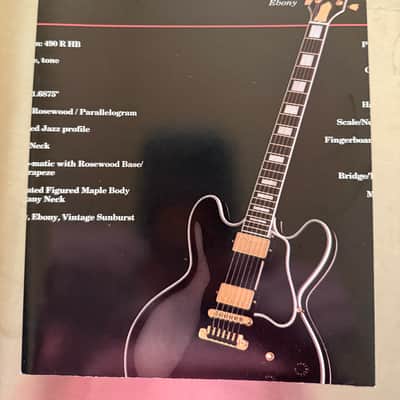
Gibson ES-335
Semi-hollow for blues-influenced hard rock · Semi-hollow, 2 Gibson humbuckers, 24.75-inch scale, warm acoustic bloom through hard rock distortion($2,200–$3,000 used)Best for: Blues-influenced hard rock, semi-hollow warmth for Aerosmith and Allman Brothers adjacent hard rock styles, warm lead tone with acoustic dimension
Some hard rock players prefer semi-hollow instruments for the warm, complex acoustic bloom the semi-hollow body adds to distorted lead tone — the harmonic complexity from the hollow chambers creates a more nuanced lead sound than solid-body guitars. Aerosmith's Joe Perry has used ES-335-style instruments. For hard rock with a strong blues influence, the semi-hollow is the recommendation. Used at $2,200–$3,000.
What to check used: Semi-hollow instruments in loud hard rock contexts are prone to acoustic feedback from the hollow chambers — managing stage volume and monitor positioning is more critical with semi-hollow instruments. For players whose hard rock playing is at high volumes or requires aggressive feedback control, solid-body instruments are more practical.
#9
Gibson Flying V
Iconic hard rock V shape · Mahogany body, 2 Gibson humbuckers, distinctive V body shape, 24.75-inch scale, American-made$1,100–$1,500 usedBest for: Classic hard rock V-body aesthetic, Dave Mustaine and Jimi Hendrix V-shape association, aggressive stage presence, warm Gibson humbucker tone
The Gibson Flying V is the classic hard rock body shape associated with aggressive stage presence — Albert King played a Flying V for his blues-rock playing; Dave Mustaine (Megadeth) and many hard rock/metal players use the V shape for its visual aggression and upper-body access. The Flying V's mahogany body and humbuckers produce warm, powerful tone consistent with Gibson hard rock character. Used at $1,100–$1,500.
What to check used: The Flying V body shape is uncomfortable to play seated — the pointed lower bout provides no stable resting point for the leg. Flying V guitars are stage instruments, primarily for standing performance. Also, the angular body is more prone to headstock damage when handled carelessly. Store and transport with care.