#1
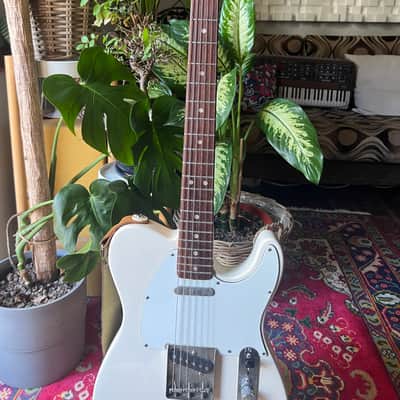
Fender Stratocaster
Versatile prog foundation (Pink Floyd, King Crimson, Yes clean tones) · 3 single-coil pickups, 25.5-inch scale, alder body, floating tremolo for expressive playing, 5-position switch(American Professional II: $1,000–$1,400 used / Player: $600–$850 used)Best for: Pink Floyd and clean prog tones, David Gilmour Stratocaster lead style, smooth sustained lead lines, clean verses in progressive arrangements
The Fender Stratocaster is used across progressive rock for its smooth, sustained lead tone — David Gilmour (Pink Floyd) uses Stratocasters as his primary instrument for the flowing, lyrical lead playing that defines progressive rock guitar expression. The neck pickup provides the warm, singing tone for extended melodic solos; the bridge pickup provides brightness for rhythmic passages. The five-position switching allows tonal variety for prog's diverse arrangement demands. American Professional II at $1,000–$1,400 used.
What to check used: Progressive rock Stratocaster playing typically requires effects — delay (for spatial depth), reverb (for atmosphere), and a smooth overdrive or fuzz for lead. A dry Stratocaster without effects is functional but less suited to the atmospheric, cinematic quality of progressive rock.
#2
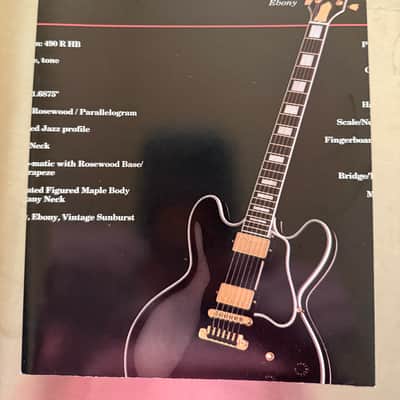
Gibson ES-335
Semi-hollow prog (warm jazz-influenced progressive rock) · Semi-hollow, 2 humbuckers, 24.75-inch scale, dual Florentine cutaway, maple/walnut body block$2,200–$3,000 usedBest for: Jazz-influenced progressive rock, warm semi-hollow tone for complex chord voicings, Steve Howe and softer prog tones
The Gibson ES-335 is used in jazz-influenced progressive rock — the semi-hollow construction provides acoustic resonance that suits the harmonic complexity of progressive rock. For players influenced by soft prog, jazz-rock fusion, and complex chord voicings (Gentle Giant, early Genesis), the semi-hollow warmth and bloom of the ES-335 provide the appropriate tonal foundation. Used at $2,200–$3,000.
What to check used: The ES-335 is premium-priced. The Ibanez AS93 ($500–$700 used) or Ibanez AS73 ($240–$330 used) provides approximate semi-hollow warmth at significantly lower cost — entirely appropriate for progressive rock playing and practice.
#3
Rickenbacker 360
Jangle-prog guitar (Yes, early Genesis, 12-string applications) · Semi-hollow, 2 Hi-Gain single-coil pickups, 24.75-inch scale, American-made in Santa Ana CA, stereo output$2,100–$2,500 new / $1,500–$2,100 usedBest for: Yes and early Genesis prog jangle tone, Roger McGuinn-influenced progressive rock, distinctive chime for open chord prog voicings, stereo output for complex stage setups
The Rickenbacker 360 is used in classic progressive rock — Steve Howe (Yes) has used Rickenbackers among his extensive guitar arsenal for the distinctive chiming single-coil quality. The 12-string version (360-12) produces the cascading, shimmering chord tone used across 1970s progressive rock. The stereo output allows routing to two different amplifiers for complex prog stage setups. Used at $1,500–$2,100.
What to check used: Rickenbacker instruments have a specific neck profile and ergonomics that are distinctively different from Fender or Gibson instruments — hold and play before purchasing. Also, Rickenbacker factory pricing is relatively high new; the used market is the most accessible price point.
#4
PRS Custom 24
Modern prog versatility (most technically complete instrument for prog) · Mahogany body, maple top, 2 PRS 85/15 humbuckers with coil tap, 24 frets, 25-inch scale, Pattern Regular neck$2,200–$3,200 new / $1,600–$2,500 usedBest for: Modern progressive rock versatility, 24 frets for upper-register prog leads, coil tap for both humbucker warmth and single-coil clean brightness, American craftsmanship
The PRS Custom 24 is the premier modern progressive rock guitar — 24 frets allow full upper-register playing that 22-fret instruments cannot reach, the 85/15 humbuckers with coil tap provide both warm humbucker tone for heavier prog passages and single-coil clarity for clean prog sections, and PRS quality control is among the best in American guitar manufacturing. For technically demanding progressive rock, the PRS Custom 24 is the professional choice. Used at $1,600–$2,500.
What to check used: PRS Custom 24 pricing reflects American manufacturing quality — this is a professional-level investment. The PRS SE Custom 24 at $530–$720 used provides the same design at Korean-made quality, appropriate for intermediate-level progressive rock playing.
#5
Ibanez RG series (RG2550Z)
Technical prog and prog-metal (extended range, speed, precision) · Basswood body, Dimarzio Air Norton / True Velvet pickups (on RG2550Z), 25.5-inch scale, thin Ibanez Wizard neck profile, 24 frets, Edge tremolo(RG2550Z Prestige: $900–$1,300 used)Best for: Progressive metal and technical progressive rock, Ibanez Prestige craftsmanship for prog-metal technique, thin Wizard neck for fast passages, 24 frets for extended range playing
The Ibanez Prestige RG series (RG2550Z and similar) is the instrument of choice for progressive metal and technical progressive rock — John Petrucci (Dream Theater), Steve Vai, and Joe Satriani have used Ibanez instruments for technically demanding progressive playing. The thin Wizard neck profile suits fast, precise prog passages; the Dimarzio pickups provide both clean clarity and tight, articulate high-gain distortion for progressive metal. Used at $900–$1,300 for Prestige models.
What to check used: Non-Prestige Ibanez RG instruments (GRG, RG421, etc.) use different pickups and hardware than the Prestige series. The Prestige RG instruments are Japanese-made and use the Edge tremolo and selected Dimarzio pickups. Verify 'Prestige' in the model name when purchasing for professional-level progressive rock playing.
#6
Gibson Les Paul Standard
Classic prog humbucker (Jimmy Page prog-adjacent, warm sustained lead) · Mahogany body, maple top, 2 humbuckers, set-neck, 24.75-inch scale, American-made$1,200–$1,800 usedBest for: Classic 70s-influenced progressive rock, warm humbucker tone for prog-rock leads, Jimmy Page-style prog-adjacent playing, sustained note-bends for long prog solo passages
The Gibson Les Paul appears in progressive rock contexts — Jimmy Page (Led Zeppelin) used Les Pauls on the band's more progressive compositions; various progressive rock bands have used Les Pauls for the warm, sustaining humbucker tone that suits long, complex solo passages. The Les Paul's sustain and warmth work well for melodic progressive rock lead playing. Used at $1,200–$1,800.
What to check used: The Les Paul is heavier than most progressive rock guitarists prefer for long sets — average weight 9-10 lbs (4-4.5 kg). Weight-relieved and chambered Les Paul models are available used and provide similar tone at reduced weight. Check the specific model's weight before purchasing for gigging applications.
#7
G&L Legacy
American Stratocaster-format prog (MFD pickups for prog clarity) · Alder body, G&L MFD single-coil pickups, 25.5-inch scale, American-made, higher output than vintage Alnico$950–$1,350 usedBest for: Progressive rock players who want Stratocaster-format versatility with American quality, MFD pickups for higher output clean prog tone and lead playing
The G&L Legacy is the Leo Fender-improved Stratocaster concept — for progressive rock players who want American Stratocaster-format quality at lower prices than the Fender American Professional II, the G&L Legacy provides MFD pickups with higher output and less hum than traditional Alnico single-coils. The higher output makes clean prog tones fuller without requiring as much amplifier gain. Used at $950–$1,350.
What to check used: G&L MFD pickups are brighter and higher output than traditional Fender Alnico — some progressive rock players who specifically want David Gilmour Stratocaster character (traditional Alnico warmth) should choose the Fender American Professional II with V-Mod II pickups instead. The G&L is the choice for players who want more output from a Strat-format guitar.
#8
Epiphone ES-335
Budget semi-hollow for prog (accessible warm resonance) · Semi-hollow, 2 Alnico Classic Pro humbuckers, 24.75-inch scale, maple/poplar body block, dual Florentine cutaway$420–$600 usedBest for: Budget semi-hollow prog tone, jazz-influenced progressive rock on accessible budget, warm humbucker plus acoustic bloom for complex prog chord voicings
The Epiphone ES-335 provides semi-hollow character for progressive rock at accessible prices — the Alnico Classic Pro humbuckers produce warm, rounded tone suitable for jazz-influenced progressive rock at $420–$600 used. For progressive rock players who want semi-hollow resonance without Gibson ES-335 prices, the Epiphone 335 is the recommendation. Used at $420–$600.
What to check used: The Epiphone ES-335 produces slightly more feedback than the Gibson at high volumes — semi-hollow instruments are more feedback-prone than solid bodies. For loud progressive rock stage volumes, verify the Epiphone feeds back acceptably with your amplifier and gain settings before committing.
#9
Martin D-28
Acoustic prog (acoustic-electric hybrid arrangements, Steve Howe style) · Sitka spruce top, rosewood back and sides, 14-fret dreadnought, 25.4-inch scale, low-oval neck profile$1,400–$1,900 usedBest for: Acoustic passages in progressive rock arrangements, classical-acoustic influenced prog interludes, Steve Howe-inspired acoustic prog sections
Acoustic guitar sections appear throughout progressive rock — Steve Howe (Yes) plays nylon-string and steel-string acoustic passages in live and studio performances; many progressive rock bands incorporate acoustic interludes as compositional contrast. The Martin D-28 is the premium acoustic reference for progressive rock's acoustic sections — powerful projection and tonal complexity for nuanced acoustic prog passages. Used at $1,400–$1,900.
What to check used: The Martin D-28's dreadnought body produces significant volume — for quiet recording or intimate acoustic prog settings, a parlor or OM body Martin (000 or OM) provides better balance and tone projection. For stage acoustic prog sections with amplification, the D-28 projects excellently through a pickup system.