#1
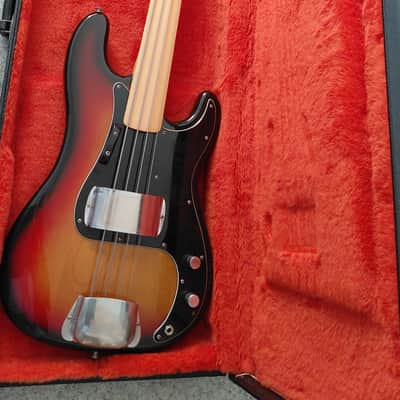
Fender Precision Bass
Classic rock bass standard (the original rock bass) · Split-coil P-Bass pickup, maple or rosewood fretboard, alder body, passive electronics, simple volume/tone controls$350–$550 used (Player) / $900–$1,400 used (American)Best for: Classic rock, punk, hard rock, any style requiring punchy midrange attack and defined low end without complexity, the rock bass that appears on more recordings than any other
The Fender Precision Bass is the foundational rock bass — the split-coil P-Bass pickup produces the punchy, defined midrange attack that underpins classic rock, punk, and hard rock. The P-Bass requires no tone management decisions: plug in, play. Volume and tone are the only controls. The American Professional II P-Bass ($900–$1,400 used) is the professional standard; the Player P-Bass ($350–$550 used) is the accessible entry point with the same core character.
What to check used: The Precision Bass is deliberately simple — one pickup, minimal controls. Players who want tonal versatility through pickup blending need the Jazz Bass or active bass alternatives. The P-Bass is the choice when tone complexity is not the goal and the fundamental P-Bass sound is exactly what is needed.
#2
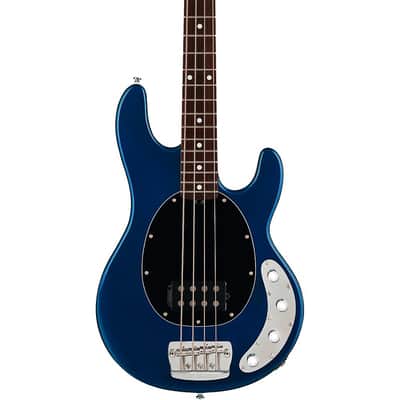
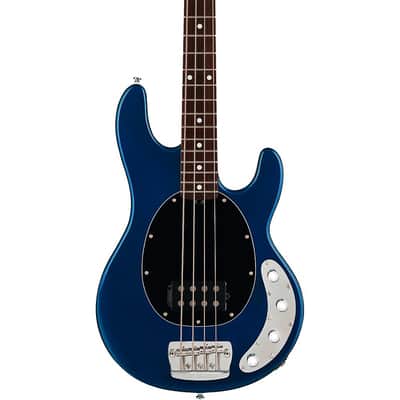
Music Man StingRay
Active rock bass with aggressive attack · Single humbucking MM pickup, active 2-band or 3-band EQ, music man proprietary electronics, ash or alder body$700–$1,200 used (standard) / $1,300–$1,800 used (Special)Best for: Rock, funk-rock, alternative rock, any style that benefits from aggressive active tone, players who want onboard EQ flexibility without changing basses
The Music Man StingRay delivers the most aggressive active rock bass tone — the single large humbucking pickup positioned at the sweet spot between J-Bass bridge and middle positions produces a scooped, punchy sound that cuts through loud rock band mixes. The active 2 or 3-band EQ allows aggressive treble boost for attack-forward rock tones or bass boost for chest-thumping low end. Used at $700–$1,200.
What to check used: The Music Man StingRay's aggressive character is both its strength and limitation — for genres requiring vintage warmth (traditional blues, country, old-school soul), the StingRay's modern character is less appropriate than a passive P-Bass or J-Bass. The StingRay requires battery replacement for active electronics (annually with normal playing).
#3
Rickenbacker 4003
Iconic rock bass (Yes, Rush, The Who) · Dual single-coil pickups, stereo output capability ('Rick-O-Sound'), semi-hollow construction, maple body, characteristic 'burp' attack$1,200–$1,800 usedBest for: Progressive rock, classic rock, players who want the specific Rickenbacker sound (Chris Squire, Geddy Lee, Paul McCartney), stereo bass recording applications
The Rickenbacker 4003 produces the most distinctive bass tone in rock — the characteristic 'burp' attack, semi-hollow resonance, and treble-forward character define progressive rock bass playing on Yes and Rush recordings. The dual single-coil pickups allow a range from vintage warmth (neck pickup) to biting treble attack (bridge pickup), and the stereo output enables dual-amp recording setups. The Rickenbacker is the choice for players specifically wanting the Ric sound. Used at $1,200–$1,800.
What to check used: The Rickenbacker 4003's narrow nut width (1.625 inches) is significantly narrower than P-Bass (1.75 inches) and J-Bass (1.5 inches) — the string spacing is tighter than most bass players are accustomed to. The Ric also requires a specific pickup cover removal adjustment for aggressive playing styles — the cover stock position interferes with aggressive right-hand technique. Used 4003s before 1985 (Hi-Gain pickups) have output compatibility issues with modern high-input-impedance preamps.
#4
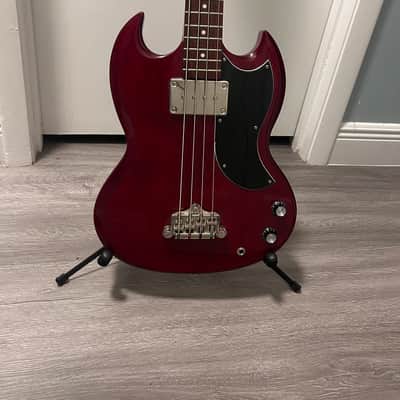
Gibson EB-3
British rock bass (vintage warmth) · 2 humbucker pickups (mini + full), short-scale (30.5 inches) or long-scale, mahogany body, classic Gibson bass character$600–$1,000 used (reissue) / $1,500–$4,000 used (vintage 1960s–70s)Best for: British rock, hard rock, players who want warm mahogany tone, short-scale option for smaller players, Jack Bruce (Cream) and Andy Fraser (Free) tones
The Gibson EB-3 provides warm, woolly British rock bass tone — the mahogany body, dual humbucker pickup configuration, and (optionally) short-scale length produce the thick, dark character of classic British rock bass. The EB-3 was the primary bass of Jack Bruce (Cream), making it the historical reference for blues-based British hard rock. Used reissues at $600–$1,000 provide the EB-3 character at accessible pricing.
What to check used: The Gibson EB-3's short-scale (30.5-inch) version produces less sustain and low-frequency extension than long-scale basses — some players find the looser string tension of short-scale basses requires adjustment in right-hand technique. Long-scale EB-3 versions are available and address this. The EB-3 also requires specific string gauge selection for proper short-scale tension.
#5
Fender Jazz Bass
Versatile rock bass (two-pickup flexibility) · Two single-coil J-Bass pickups, individual volume controls per pickup, tone control, slim C-shaped neck profile$350–$550 used (Player) / $900–$1,400 used (American)Best for: Rock players who want both warm neck pickup warmth and bridge pickup bite, studio and live versatility, players who double on multiple genres
The Fender Jazz Bass provides tonal range the Precision Bass cannot match — both pickups together produce the classic punchy rock tone with added presence, the bridge pickup alone provides bridge-pickup bite for cut-through-the-mix rock tones, and the neck pickup alone delivers P-Bass-adjacent warmth. The slimmer neck profile (1.5-inch nut width) suits players with smaller hands or technique-intensive right-hand work. Used Player J-Bass at $350–$550.
What to check used: Jazz Bass single-coil pickups hum when either pickup is not at full volume — the dual-pickup hum-canceling effect only works when both pickups are at equal volume. Players who use one pickup only will experience single-coil hum in environments with electrical interference. This is inherent to single-coil design; hum-canceling J-Bass replacements (DiMarzio, Seymour Duncan) eliminate this at the cost of some single-coil character.
#6
Epiphone Thunderbird
Hard rock and metal bass (extreme tone) · 2 humbucking pickups (T-Bird design), mahogany body, set neck, through-neck in some versions, pronounced mid-scoop tone$250–$400 usedBest for: Hard rock, metal, players who want the Thunderbird visual and aggressive tone at accessible price, Gibson Thunderbird tone at Epiphone pricing
The Epiphone Thunderbird delivers the aggressive Thunderbird tone — the dual humbucker configuration with mahogany body produces the deep, powerful attack used in hard rock and metal contexts. The Epiphone Thunderbird provides the Gibson Thunderbird character at half the price, used at $250–$400. The visual impact of the Thunderbird body shape is substantial and suits hard rock and metal aesthetics.
What to check used: The Epiphone Thunderbird's neck-heavy balance is a known characteristic — the long body and headstock combination produces neck dive when using a standard bass strap. Wide (3.5-inch) bass straps significantly reduce neck dive. The bass can be difficult to play while seated. Players who need a balanced instrument for seated practice should try before buying.
#7
Squier Classic Vibe P-Bass
Budget rock bass (best entry point) · Split-coil P-Bass pickup, alder body, maple neck, vintage-voiced electronics, Squier quality improvement over standard Affinity line$250–$350 usedBest for: Beginners and budget-conscious players who want legitimate P-Bass tone without the Fender American price point, first electric bass for rock players
The Squier Classic Vibe P-Bass is the best-value entry point for rock bass — the split-coil pickup voices closer to the American P-Bass than the Squier Affinity line, the alder body produces the correct P-Bass fundamental resonance, and build quality reflects Squier's Classic Vibe series improvements over budget alternatives. Used at $250–$350, the Classic Vibe is the rock bass recommendation when budget is the primary constraint.
What to check used: The Squier Classic Vibe P-Bass has lower-tier electronics and hardware than Fender Player or American series — the tuning machines are adequate but not premium, and the factory setup may require adjustment by a guitar technician. For $50–$100, a professional setup is worthwhile to optimize playability before extended use.
#8
G&L L-1000
P-Bass alternative with active/passive flexibility · G&L MFD (Magnetic Field Design) humbucker, active/passive switching, Leo Fender's post-Fender design improvements$450–$700 usedBest for: P-Bass players who want active EQ flexibility without abandoning passive tone availability, players who want Leo Fender's final bass refinements
The G&L L-1000 represents Leo Fender's improvements on the P-Bass design — the MFD (Magnetic Field Design) humbucker pickup produces the fundamental P-Bass thumping character but with increased output and active/passive switching that the Precision Bass lacks. For rock players who want P-Bass tone with modern flexibility, the L-1000 is the natural evolution. Used at $450–$700.
What to check used: G&L instruments are less well-known than Fender or Gibson in secondary markets — resale value is lower than equivalent Fender models even though build quality is comparable. For players who prioritize resale value or brand recognition, the Fender Player P-Bass is a more practical choice. G&L quality for cost is excellent for players who will keep the instrument long-term.