#1
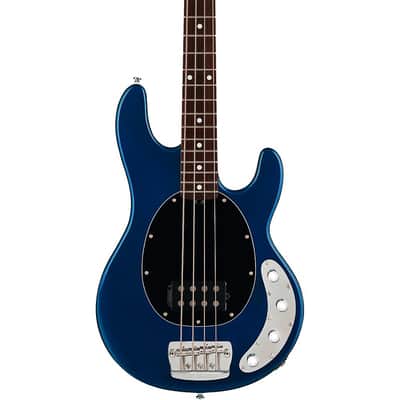
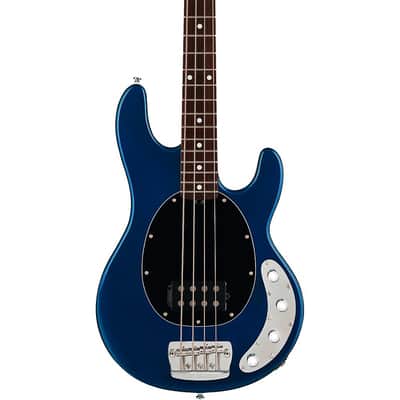
Music Man StingRay
Funk primary bass (Flea primary, slap funk standard) · Ash body, active 3-band EQ, single ceramic humbucker or H/H, 34-inch scale(StingRay Special: $950–$1,150 used)Best for: Flea RHCP slap funk tone, active 3-band EQ for punchy funk tone shaping, ceramic humbucker slap snap for funk slap bass, American Music Man build quality for professional funk
The Music Man StingRay is the defining funk slap bass — Flea (Red Hot Chili Peppers) built his entire slap bass approach around the StingRay's powerful active humbucker. The ceramic humbucker produces the aggressive, punchy snap that defines modern slap funk bass. The active 3-band EQ allows boosting the treble for slap brightness and cutting the mids for the characteristic 'scooped' funk bass tone. Used at $950–$1,150.
What to check used: The StingRay's ceramic humbucker has a bright, aggressive character that suits slap funk but can sound harsh in melodic or jazz contexts — the StingRay excels at funk, rock, and slap bass but is less versatile across genres than the J-bass. The StingRay HH (two humbucker) version provides more tonal range.
#2
Fender Jazz Bass
Versatile funk bass (Larry Graham invention, slap origin) · 2 single-coil Jazz Bass pickups, 34-inch scale, 1.5-inch nut width(Player Jazz: $650–$800 used)Best for: Larry Graham original slap bass technique, both pickups for J-bass slap snap, narrow nut width for fast slap and pop technique, classic funk bass standard
The Fender Jazz Bass is where slap bass was invented — Larry Graham developed the slap technique on a J-bass while playing with Sly and the Family Stone. The J-bass's two pickup combination and narrow 1.5-inch nut provide the snap and definition that suits funk slap bass. Both pickups at full volume produces the characteristic J-bass slap tone. Used at $650–$800.
What to check used: Fender Jazz Bass's single-coil pickups produce 60-cycle hum when used individually — for funk recording, both pickups at equal volume cancel hum. The Player Jazz Bass active (HSS) or a noiseless pickup upgrade eliminates the hum for studio recording. Many funk bassists use the straight J-bass tone despite this characteristic for its authentic funk character.
#3
Warwick Thumb
German boutique funk bass (Marcus Miller influenced) · Wenge neck/body, 2 MEC Jazz pickups with MEC active preamp, 34-inch scale(Streamer Standard: $700–$900 used / Thumb BO: $1,200–$1,500 used)Best for: German boutique slap funk tone with wenge body resonance, MEC active electronics for precise funk tone control, Marcus Miller smooth funk bass inspiration
The Warwick Thumb suits fusion-influenced funk bass — the wenge construction produces a dark, focused low-mid punch that suits smooth funk production and the active MEC electronics provide precise EQ control. Warwick basses have a distinctive character that separates them from Fender and Music Man in funk contexts — more aggressive mid-presence, less bright attack. Used at $1,200–$1,500.
What to check used: Warwick necks require wax treatment and maintenance due to wenge wood porosity — buy a Warwick maintenance wax (Warwick Beeswax) and apply quarterly. Warwick instruments that have not been maintained often develop dry, rough-feeling necks. This is cosmetic and reversible but requires immediate attention on purchase.
#4
G&L L-2000
Leo Fender dual-humbucker funk bass · 2 G&L MFD humbucking pickups, active/passive switching, series/parallel switching, 34-inch scale(USA: $1,000–$1,400 used)Best for: Maximum tonal versatility for funk that spans slap to melodic bass, G&L MFD dual humbuckers for powerful active funk punch, Leo Fender's post-Fender bass design with USA quality
The G&L L-2000 provides maximum funk bass versatility — dual MFD humbuckers with series/parallel switching and active/passive modes create the widest tonal range of any funk bass. The active mode's aggressive character suits slap funk; passive mode produces vintage character; series mode produces the fattest, most powerful bass tone in the lineup. Used at $1,000–$1,400.
What to check used: The G&L L-2000's extensive switching (series/parallel, active/passive, bass/treble switches) requires learning time — new G&L owners often find the controls confusing before understanding the full tonal range. Spend time with each switch combination to understand the L-2000's complete range before dismissing any setting.
#5
Sire Marcus Miller V7 Swamp Ash
Active J-bass funk with bright ash body · Swamp ash body, 2 Sire single-coil pickups, 3-band active EQ, passive bypass, 34-inch scale$600–$700 new / $400–$550 usedBest for: Marcus Miller slap funk tone at mid-range pricing, ash body brightness for slap snap character, active/passive switch for funk production versatility, mid-range accessible funk bass
The Sire Marcus Miller V7 Swamp Ash is the most affordable path to Marcus Miller funk bass tone — the ash body produces a brighter, snappier character than alder that enhances slap funk's high-frequency snap. The active 3-band EQ provides the treble boost and mid scoop common in funk bass production. Used at $400–$550.
What to check used: The ash body V7 is brighter than the alder V7 — for funk that requires aggressive treble snap, the ash is the better choice. For funk that requires warmer, more melodic bass tone (smooth R&B funk, neo-soul), the alder body V7 or standard Fender J-bass is warmer.
#6
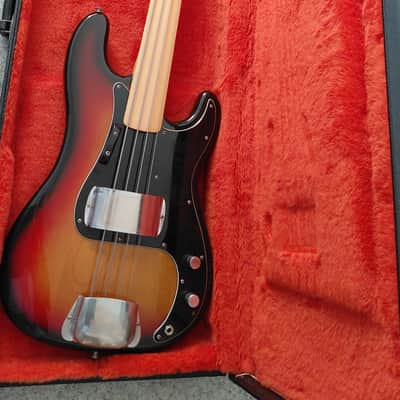
Fender Precision Bass
Vintage funk rhythm bass (James Brown, Motown funk foundation) · Split single-coil P-bass pickup, 34-inch scale, 1.75-inch nut, mahogany/alder body(Player P-Bass: $650–$800 used)Best for: James Brown funk rhythm bass in the Fat's Domino/Motown tradition, warm P-bass low-mid punch for supporting funk rhythm, vintage funk foundation without slap emphasis
The Fender Precision Bass suits funk that emphasizes rhythm and groove over slap technique — James Brown's bands, the Funk Brothers (Motown), and the foundational funk tradition used P-bass for warm, supportive funk rhythm bass. The P-bass's warm low-mid character and simple controls suit groove-focused funk playing. Used at $650–$800.
What to check used: The P-bass is less associated with slap funk than J-bass and StingRay — slap technique is possible on P-bass but the wider nut width (1.75-inch) and pickup placement are less slap-optimized than J-bass or StingRay. The P-bass is the groove rhythm funk instrument; J-bass and StingRay are the slap funk instruments.
#7
Ibanez SR500E
Thin-neck active funk bass · Mahogany body, Nordstrand Big Single pickups, Bartolini active EQ, 34-inch scale, thin SR neck$700–$800 new / $450–$600 usedBest for: Funk players with smaller hands who need fast slap access on thin SR neck, Nordstrand pickups for quality funk bass tone at mid-range pricing, Bartolini EQ for funk tone control
The Ibanez SR500E suits funk players who prioritize fast playing on a thin neck — the SR neck profile is the fastest-playing neck in the sub-$800 range, supporting both slap technique and fast melodic funk fills. Nordstrand Big Single pickups provide high-quality passive pickup character with the Bartolini active EQ for funk tone shaping. Used at $450–$600.
What to check used: The thin SR neck's reduced wood mass produces slightly less low-end body than Fender-profile necks — funk players who need deep, fat bass fundamentals may prefer the Fender J-bass or P-bass's fuller neck construction. The Ibanez is the best choice when playing speed and neck comfort are primary requirements.
#8
Spector Euro 4LX
European boutique funk bass (active EMG) · Curved maple/mahogany body, 2 EMG 40DC pickups, Spector TonePump active preamp, 34-inch scale$1,100–$1,400 usedBest for: Boutique European quality funk bass with EMG active pickups, Spector TonePump bass boost for deep funk foundation, aggressive EMG active character for modern funk and R&B production
The Spector Euro 4LX provides boutique funk bass quality at mid-market pricing — the Czech Republic construction with EMG 40DC pickups and Spector TonePump active preamp produces the powerful, aggressive active character of modern funk and R&B production. The TonePump's passive bass boost produces the massive low-end of modern funk production without sacrificing mid-range clarity. Used at $1,100–$1,400.
What to check used: Spector Euro instruments use set-neck construction — unlike bolt-on basses, the neck cannot be removed for replacement if problems develop. Inspect the neck joint carefully when buying used and check for any wood checking or separation at the heel.