#1
Martin OM-21
Professional recording acoustic (top studio choice) · Sitka spruce top, rosewood back and sides, Orchestra Model body, 25.4-inch scale, modified low oval neck$1,600–$1,900 new / $1,100–$1,500 usedBest for: Professional recording and session acoustic, balanced frequency response ideal for microphone capture, fingerpicking and flatpicking clarity in studio settings, OM shape provides focused midrange
The Martin OM-21 is the preferred studio acoustic among professional session players — the Orchestra Model body size produces a balanced, focused sound with clear midrange definition that translates exceptionally well to microphone recording. The rosewood back and sides provide warmth and overtone complexity without the bass-heavy boom of dreadnoughts that creates low-end buildup in close-mic recording situations. Martin's craftsmanship at this tier means consistent results across multiple takes. Used at $1,100–$1,500.
What to check used: The Martin OM-21 uses standard gloss finish which adds minimal visual aging — for players who prefer a vintage-worn aesthetic, the Martin 000-17 (satin mahogany) provides a different character at lower price. The OM-21 rosewood back and sides are subject to CITES import/export restrictions in some countries.
#2
Taylor 314ce
Versatile recording acoustic with electronics · Sitka spruce top, sapele back and sides, Grand Auditorium body, 25.5-inch scale, Taylor ES2 pickup system$1,400–$1,700 new / $900–$1,250 usedBest for: Recording with optional DI signal, Grand Auditorium body for recording versatility, ES2 pickup for direct input alongside microphone, studio and live hybrid applications
The Taylor 314ce combines recording-quality acoustic tone with a reliable built-in pickup system — the ES2 pickup allows simultaneous microphone and DI input in recording situations where a blended signal is desired. The Grand Auditorium body size provides a slightly bigger, rounder sound than OM models while remaining focused enough for close-mic recording. Taylor's consistency across production runs means predictable results. Used at $900–$1,250.
What to check used: The ES2 pickup is designed for live amplification and provides a natural acoustic tone, but for strict studio applications, a good microphone will outperform any under-saddle pickup. The 314ce's primary recording advantage is the acoustic tone — the pickup is the live performance bonus.
#3
Collings OM1
Boutique recording acoustic (best tone per dollar at this price) · Sitka spruce top, mahogany back and sides, Orchestra Model body, 25.5-inch scale, satin finish, Collings craftsmanship$3,100–$3,700 new / $2,200–$2,900 usedBest for: Professional studio recording, exceptional clarity and note separation for fingerpicking, Collings craftsmanship for consistent recording performance, satin finish for projecting natural wood resonance
The Collings OM1 is among the most respected studio acoustic guitars available — Collings Guitars in Austin, Texas produces instruments with exceptional consistency and tonal clarity. The OM1's mahogany back and sides produce a dry, clear, focused tone with immediate note response that records exceptionally well. Professional session guitarists who need the instrument to sound perfect without EQ correction in post-production use Collings instruments. Used at $2,200–$2,900.
What to check used: The Collings OM1 is a significant investment justified for professional session work and dedicated home studio setups. For home recording enthusiasts, the Martin OM-21 or Taylor 314ce provide excellent recording quality at lower cost.
#4
Martin 000-15M
Affordable recording acoustic (genuine Martin quality at mid-price) · Solid mahogany top, back, and sides, 000 body, 24.9-inch scale, satin finish, 15 series construction$800–$900 new / $540–$720 usedBest for: Mid-budget studio acoustic, solid mahogany construction for warm, dry recording tone, 000 body for close-mic recording without low-end buildup, Martin quality at accessible price
The Martin 000-15M is the most accessible all-solid-mahogany Martin recording acoustic — all-solid mahogany construction at $540–$720 used provides the dry, warm, overtone-rich recording tone of premium acoustics at mid-budget prices. Mahogany-top acoustics record with a focused, dry midrange quality that producers prefer for acoustic tracks that need to sit in dense arrangements without EQ. The 000 body size avoids the low-end boom of dreadnoughts in close-mic situations. Used at $540–$720.
What to check used: The Martin 000-15M's all-mahogany construction produces a drier, warmer sound than spruce-top guitars — this is intentional and desirable for recording, but players who prefer the bright, sparkly character of spruce-top acoustics should consider the Martin 000-16GT (spruce top, mahogany sides) instead.
#5
Taylor Academy 12
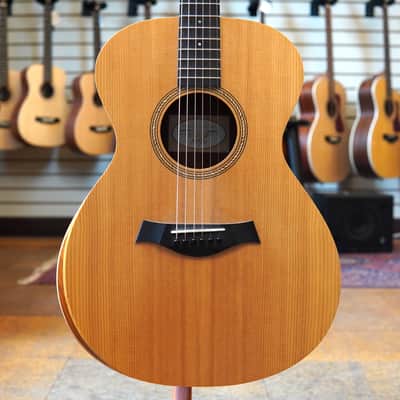
Entry recording acoustic (Taylor quality at entry price) · Sitka spruce top, layered sapele back and sides, Grand Concert body, 24-7/8 inch scale, Taylor ES-B pickup$570–$670 new / $380–$510 usedBest for: Recording beginners with entry budget, Taylor quality control at affordable price, Grand Concert body for close-mic recording, ES-B pickup for live applications
The Taylor Academy 12 is the most accessible Taylor acoustic with genuine Taylor quality control — the Grand Concert body size is ideal for close-mic recording situations, providing a balanced sound without low-end boom. The Taylor neck profile is consistently comfortable and the action is set well from the factory. For recording enthusiasts on entry budget, the Academy 12 provides reliable studio-quality acoustic tone. Used at $380–$510.
What to check used: The Academy 12 uses layered (laminate) sapele back and sides rather than solid wood — layered back and sides produce less tonal complexity and overtone richness than solid-wood counterparts. The spruce top is solid, which provides the most important tonal element for recording. At this price, the layered back and sides are an expected trade-off.
#6
Eastman E6OM
Boutique OM at accessible boutique price · Sitka spruce top, ovangkol back and sides, Orchestra Model body, 25.375-inch scale, Gotoh tuners$1,100–$1,300 new / $750–$1,000 usedBest for: Boutique-quality recording acoustic at mid-range price, ovangkol back and sides for rosewood-like warmth with sustainable sourcing, balanced OM tone for studio fingerpicking
The Eastman E6OM provides boutique recording acoustic quality at prices below comparable Martin and Taylor instruments — Eastman Guitars (Chinese production, rigorous quality control) produces instruments that rival American boutique acoustics in tone and consistency. The ovangkol back and sides produce rosewood-adjacent warmth with approved sustainable sourcing (no CITES restrictions). For recording players who want high-quality OM tone at accessible prices, the Eastman E6OM is the recommendation. Used at $750–$1,000.
What to check used: Eastman instruments are made in China, which some players associate with lower quality — however, Eastman's quality control and tonal output is competitive with American-made instruments at significantly higher prices. Eastman exports to the US market specifically to compete with Martin and Taylor at mid-range price points.
#7
Martin 000-17
Satin mahogany recording acoustic (dry, immediate tone for studio) · Solid mahogany top, back, and sides, 000 body, 24.9-inch scale, satin finish, vintage-inspired 17 series$1,000–$1,200 new / $680–$900 usedBest for: Dry, immediate mahogany studio tone, singer-songwriter recording application, satin finish for natural resonance, 000 body for balanced studio recording without low-end excess
The Martin 000-17 occupies the space between the affordable 000-15M and the premium OM-21 — all-solid mahogany construction with a more refined neck profile and upgraded appointments than the 15 series. The satin finish allows the mahogany to resonate more freely than gloss, producing a slightly more open, dry tone that records exceptionally well for singer-songwriter and folk recording. Used at $680–$900.
What to check used: The 000-17 is similar to the 000-15M in tone but with improved construction quality — the upgrade from 15M to 000-17 is most apparent in fret work consistency, neck profile refinement, and nut/saddle quality. For home recording use, the 000-15M at lower used prices provides 80% of the recording value. The 000-17 suits players who gig and record equally.
#8
Yamaha LS-TA
Modern recording acoustic with TransAcoustic system · Sitka spruce top, rosewood back and sides, small concert body, TransAcoustic internal actuator, onboard reverb and chorus effects$600–$700 new / $400–$560 usedBest for: Home recording with built-in reverb for tracking without outboard reverb, headphone practice, player who wants effects built into the acoustic instrument, small body for intimate recording
The Yamaha LS-TA (TransAcoustic) includes an internal actuator that projects reverb and chorus through the guitar body itself — no amplifier or effects required. For home recording setups where outboard reverb is limited, or for players who want to hear reverb while tracking dry, the LS-TA provides a unique solution. The small concert body records well in close-mic situations. Used at $400–$560.
What to check used: The TransAcoustic system adds a subtle mechanical component — the internal actuator adds slight weight and changes the body resonance minimally. For purist recording applications where the absolute acoustic character is paramount, a non-TransAcoustic instrument will record slightly better. The LS-TA is the recommendation for players who want the TransAcoustic feature as the primary advantage.
#9
Recording King RO-328
Budget recording OM (best value for studio-spec OM shape) · Solid sitka spruce top, solid Indian rosewood back and sides, Orchestra Model body, bone nut and saddle$450–$550 new / $300–$420 usedBest for: Entry budget recording acoustic with all-solid construction, OM shape for recording clarity, bone nut and saddle for better intonation, solid rosewood for recording warmth
The Recording King RO-328 is the best budget option for a studio-oriented recording acoustic — all-solid construction (solid spruce top and solid rosewood back and sides) at $300–$420 used provides the genuine tonal complexity of solid wood instruments required for recording applications. Bone nut and saddle improve intonation and sustain. For recording beginners who want an all-solid OM at entry prices, the Recording King RO-328 is the recommendation. Used at $300–$420.
What to check used: Recording King's production quality is consistent but does not match Martin or Collings craftsmanship — fret work and nut/saddle fitting may require a $50-80 professional setup after purchase for optimal playability. The solid wood construction is the important recording quality; the setup can be improved after purchase.