#1
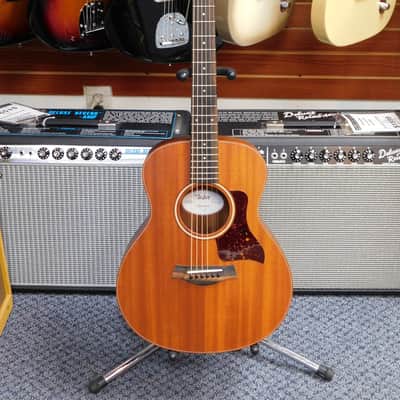
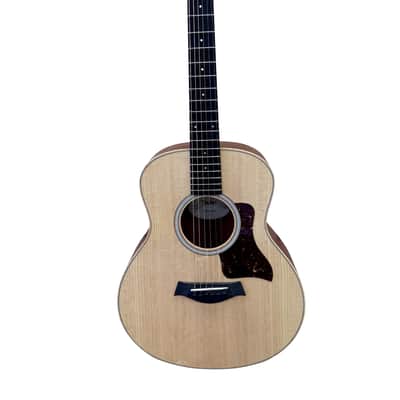
Taylor GS Mini
Solid Spruce Top$350–$450 usedBest for: Travel, smaller players, apartment use, versatile tone
The Taylor GS Mini is the best acoustic guitar under $500 regardless of size or style. Genuine Taylor quality at an accessible price — solid Sitka spruce top (standard model) or solid mahogany top (Mahogany version), Taylor's proprietary GS Mini bracing, and the Taylor name's exceptional resale value. The 23.5" scale makes it easier to play than a full dreadnought. Used Taylor GS Minis at $350–$450 are consistently excellent and nearly impossible to go wrong on.
What to check used: Check the top for any cracks or finish checking — common on all acoustic tops stored in dry climates. The GS Mini's layered back and sides are appropriate for travel but won't match all-solid construction. Verify the tuners (Grover) turn smoothly.
#2
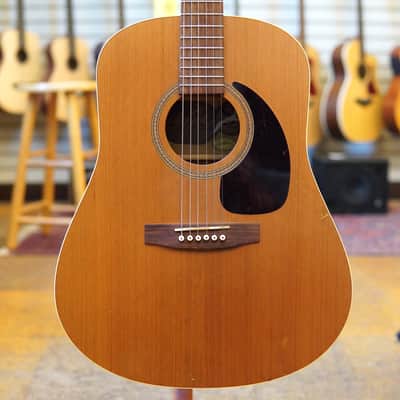
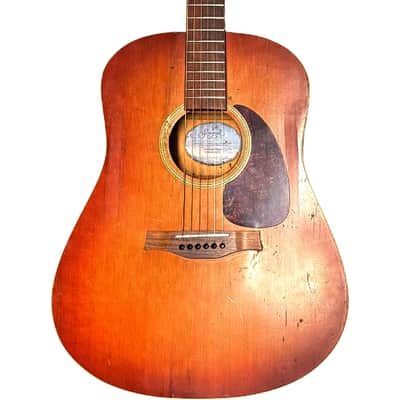
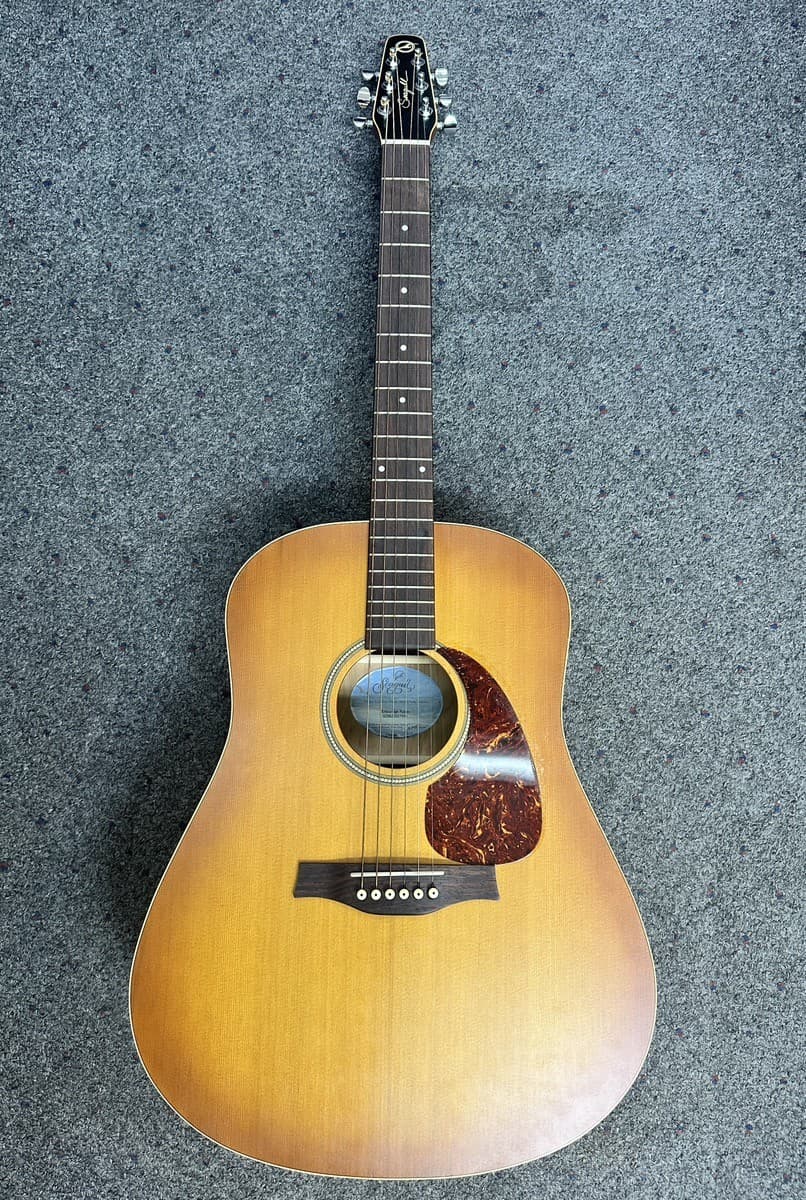
Seagull S6 Cedar Original
Solid Cedar Top$200–$320 usedBest for: Fingerpicking, vocals, folk, Americana
The Seagull S6 Cedar is the best acoustic guitar under $300 used and competes well in this $500 category. Solid cedar top (warmer than spruce, better for fingerpicking), Canadian craftsmanship, silver leaf maple back and sides, and Seagull's wider nut (1 7/8") that's preferred by fingerstyle players. Used S6 Cedars at $200–$320 represent extraordinary quality at the price — built better than most $600 new guitars.
What to check used: Cedar tops are slightly more sensitive to humidity changes than spruce — a guitar humidifier ($15) is worth using if you're in a dry climate. Cedar also shows wear more visibly near the soundhole. Cosmetic, not structural.
#3
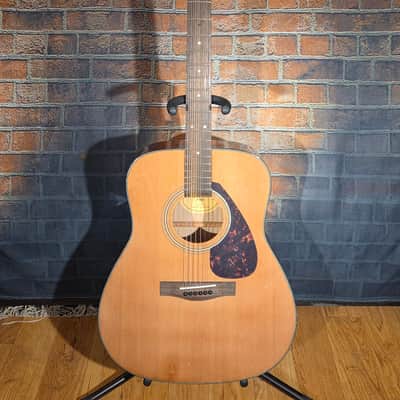
Yamaha FG830
Solid Spruce Top$200–$300 usedBest for: Strumming, beginner to intermediate, all-rounder
The Yamaha FG830 is the step above the FG800 — rosewood back and sides, solid spruce top, scalloped X-bracing, and Yamaha's exceptional quality control. The rosewood back and sides add warmth and complexity compared to the nato/sapele in lower models. Used FG830s at $200–$280 deliver Yamaha's legendary reliability with a genuinely beautiful, complex tone. The best Yamaha acoustic under $300 used.
What to check used: Rosewood back and sides require basic climate care — humidity extremes can cause cracks. Always store in a case with a humidifier packet if you're in a very dry environment. Check tuners for smooth operation.
#4
Martin D-X2E
Solid Spruce Top$300–$420 usedBest for: Players who want Martin quality at a budget price
The Martin D-X2E is Martin's budget line with a solid Engelmann spruce top over high-pressure laminate (HPL) back and sides. The solid top provides genuine Martin tone — the HPL back and sides are Martin's response to making an affordable guitar. Used D-X2Es at $300–$400 carry the Martin name and the genuine Martin solid-top sound, with Fishman Sonitone electronics included. The most affordable way to own a Martin.
What to check used: The HPL back and sides look different from solid wood under bright light — HPL has a more uniform, processed appearance. This is by design and not a defect. The Fishman electronics have a simple undersaddle design — test them before buying.
#5
Fender Paramount PM-1
Solid Spruce Top$300–$450 usedBest for: Vintage-style playing, country, Americana, sessions
Fender's Paramount series is their premium acoustic line — solid tops, solid backs and sides (unlike the CD-60S), and professional-grade construction. The PM-1 dreadnought has solid Sitka spruce top, solid mahogany back and sides, and a 1 11/16" nut width. Used PM-1s at $300–$450 are genuine all-solid-wood instruments that outperform their price significantly.
What to check used: The Paramount series has a 'natural gloss' finish that shows wear and fingerprints more than satin. This is cosmetic but affects the used appearance. Verify the nut width — some players find 1 11/16" narrow for fingerstyle.
#6
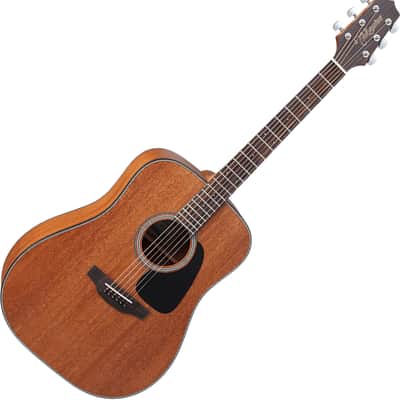
Takamine GN93CE
Solid Spruce Top$250–$380 usedBest for: Stage use, strumming, light fingerpicking with electronics
The Takamine GN93CE is Takamine's NEX (concert-style) body with a cutaway and Takamine's own CTP-1 CoolTube preamp system. The all-solid spruce and rosewood construction combined with Takamine's stage-ready electronics make this one of the most well-rounded acoustic-electrics under $400 used. Takamine's electronics are reliable and warm — preferred by many acoustic performers over Fishman or L.R. Baggs alternatives.
What to check used: The CoolTube preamp requires a 9V battery — check it's functional before buying. The NEX body is smaller than a dreadnought; if you want full dreadnought projection, look at the Takamine GD93CE instead.
#7
Orangewood Brooklyn Live
Solid Sitka Spruce Top$180–$280 usedBest for: Players who want all-solid wood at the lowest possible price
Orangewood's Brooklyn Live is all-solid construction (solid spruce top, solid mahogany back and sides) at a price that competes with laminate guitars from established brands. Direct-to-consumer pricing eliminates dealer markup. Used Brooklyn Live models at $180–$250 are genuinely exceptional — better raw quality than same-priced Yamaha or Fender models, with the added benefit of all-solid-wood construction throughout.
What to check used: Orangewood is a newer brand with less used-market supply — finding a specific model requires patience. Resale value is less predictable than Yamaha or Martin. The direct-to-consumer origin means some used sellers price these incorrectly.
#8
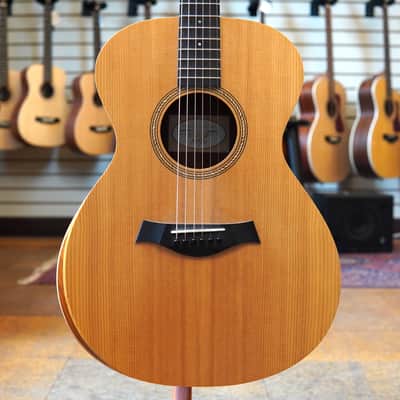
Taylor Academy 10 or 10e
Solid Sitka Spruce Top$350–$450 usedBest for: Serious beginners, quality-first buyers
The Taylor Academy series is Taylor's entry-level line with genuine Taylor quality — Academy bracing (Taylor proprietary), solid Sitka spruce top, layered sapele back and sides, and Taylor's bolt-on NT neck that essentially eliminates neck reset concerns. Used Academy 10s at $350–$430 are the best 'real Taylor' you can buy under $500 used. The bolt-on neck is a genuine advantage on a used guitar — no costly neck resets.
What to check used: Layered (laminate) back and sides are appropriate for this price point but don't match all-solid construction tone. Verify the electronics work if purchasing the 10e version. Taylor Academy necks are slightly thinner than standard — try before buying if you're used to a full-size neck.