#1
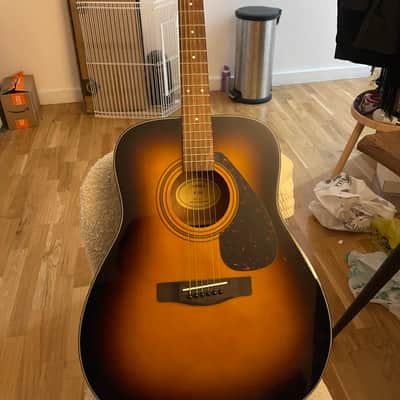
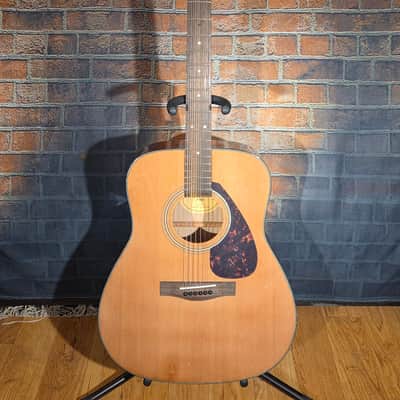
Yamaha FG800
Solid Spruce Top$100–$170 usedBest for: Beginners, strumming, folk, country
The Yamaha FG800 is the benchmark acoustic guitar under $300. The key word is 'solid top' — the FG800 uses solid Sitka spruce (not laminate) for the top, which means better tone that improves with age. Laminate-top guitars sound the same at year 1 and year 10; solid-top guitars open up and develop complexity over time. The FG800 used at $100–$150 is routinely better than most laminate guitars at twice the price.
What to check used: Action on used Yamaha FG800s is often high from owner neglect — a nut and saddle adjustment ($40–$60) dramatically improves playability. Check the bridge hasn't lifted from the top.
#2
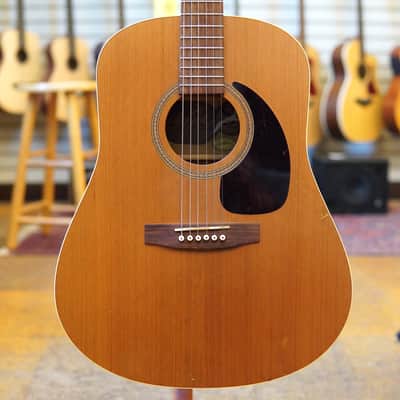
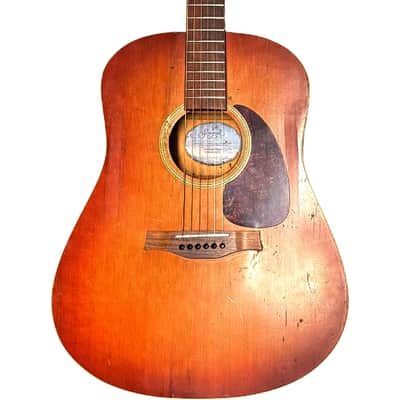
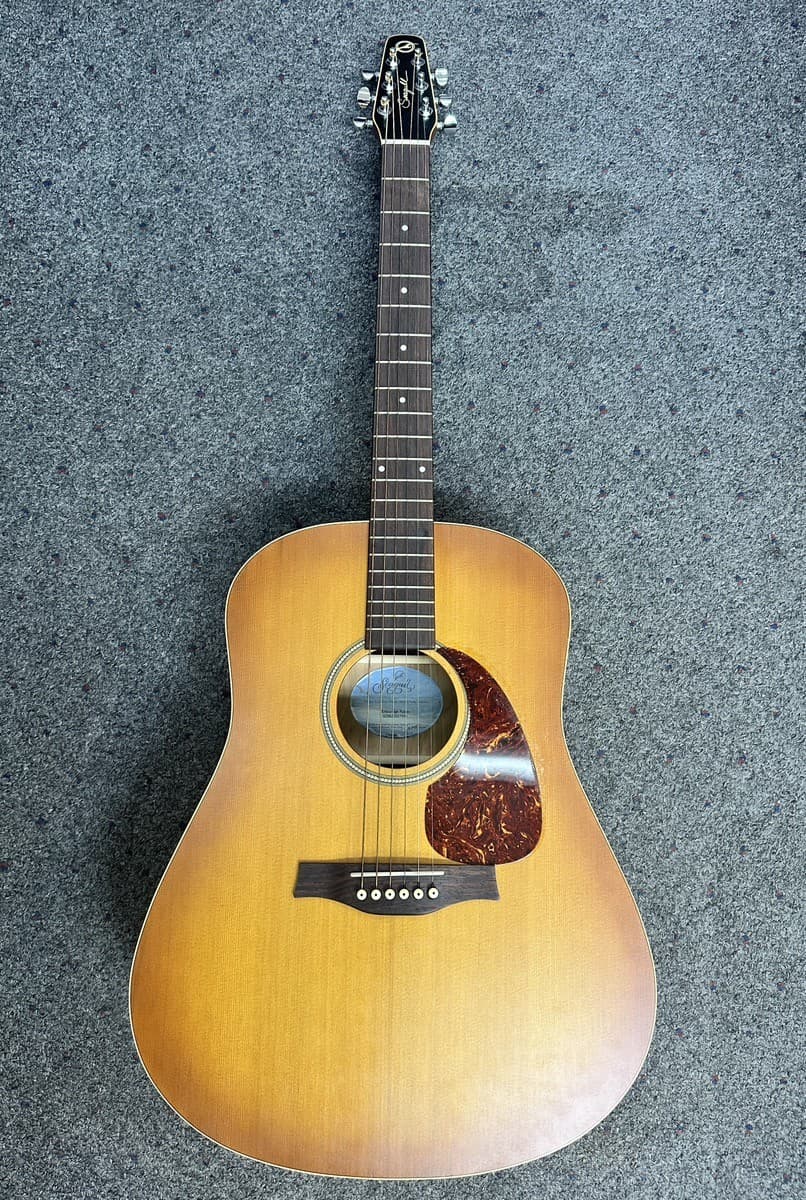
Seagull S6 Original
Solid Cedar Top$200–$300 usedBest for: Fingerpicking, vocals, folk, singer-songwriter
The Seagull S6 is made in Canada and uses a solid cedar top — warmer and more responsive to fingerpicking than spruce. Seagull's build quality at this price is exceptional, better than anything from Asia at double the cost. The wider nut (1 7/8") is specifically good for fingerstyle players. Used S6s at $200–$280 are one of the best acoustic guitar values on the market.
What to check used: Cedar tops are slightly softer than spruce — check for dents near the soundhole (fingernail marks from strumming). These are cosmetic and very common. The wider nut takes adjustment if you're used to standard-width necks.
#3
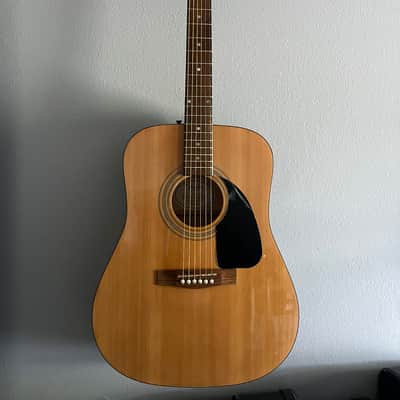
Fender CD-60S
Solid Spruce Top$120–$180 usedBest for: Beginners, strumming, folk
The Fender CD-60S is Fender's solid-top dreadnought — a genuine beginner acoustic at a price that includes solid Sitka spruce on top. Mahogany back and sides, scalloped X-bracing (for better low-end projection), and a comfortable neck. Used CD-60S models at $120–$180 represent good value — Fender's quality control on acoustics has improved significantly since 2015.
What to check used: Fender acoustics from before 2015 had inconsistent quality. The CD-60S (S for solid top, introduced ~2018) is the specific model to look for — verify it's the 'S' variant. Earlier CD-60 (without 'S') has laminate top.
#4
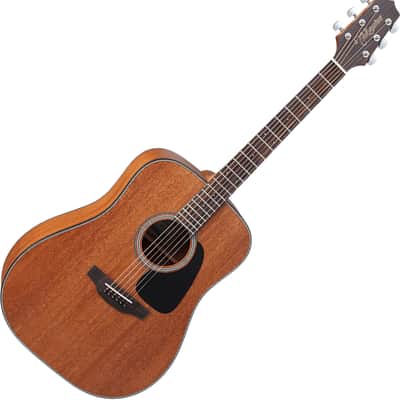
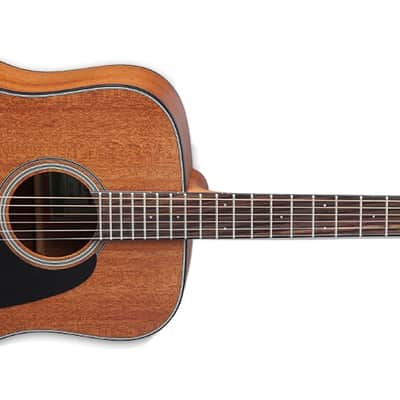
Takamine GD30
Solid Spruce Top$150–$230 usedBest for: Strumming, stage use, solid build quality
Takamine has made high-quality acoustic guitars since 1962 and the GD30 brings that heritage to budget pricing. Solid spruce top, rosewood fingerboard and bridge, and Takamine's consistent build quality. Used GD30s at $150–$200 are noticeably better built than comparably priced Yamaha or Fender — tighter fret ends, better nut work, more resonant body construction.
What to check used: Takamine acoustics are built for stage use — the bracing is slightly stiffer than fingerpicking-specific guitars. Great for strumming and light fingerpicking; if you exclusively fingerpick, consider the Seagull S6 instead.
#5
Yamaha FG820
Solid Spruce Top$150–$220 usedBest for: Beginners, strumming, everything
The FG820 is the step up from the FG800 — rosewood back and sides vs. the FG800's nato, improved scalloped X-bracing, and slightly better resonance across the range. Used FG820s at $150–$220 are excellent guitars and the 'safe' recommendation for any budget buyer who wants Yamaha quality with better tone than the entry FG800.
What to check used: Rosewood back and sides are more aesthetically beautiful than nato but require slightly more climate management. A guitar humidifier ($15) is worth the investment for any solid-top acoustic in dry climates.
#6
Orangewood Oliver
Solid Spruce Top$120–$190 usedBest for: Players wanting a newer direct-to-consumer brand
Orangewood launched in 2018 as a direct-to-consumer brand — no dealer markup means their solid-top guitars retail for $180–$240 where comparable quality from established brands would be $300+. The Oliver (dreadnought) uses solid Sitka spruce over sapele back and sides. Used Oliver models are less common but represent good value when available. Orangewood's QC is consistently better than Yamaha at similar used prices.
What to check used: Orangewood is a newer brand with less used-market history — resale prices are less predictable. Buy at the right price ($120–$180 used) and you're fine; don't pay more than a used Yamaha FG820 for the same condition.
#7
Fender Malibu Player
Solid Spruce Top$150–$220 usedBest for: Smaller body players, women and younger players, travel
The Fender Malibu Player is a concert-body acoustic (smaller than a dreadnought) with solid spruce top. Concert bodies project less loudly than dreadnoughts but are more comfortable for smaller players, better for fingerpicking, and easier to play seated for long periods. Used Malibu Players at $150–$200 are the best concert-body recommendation under $300.
What to check used: Concert body = quieter than dreadnought when played unplugged. If you play in groups or need to project, consider a dreadnought (FG800, CD-60S) instead. The Malibu Player has Fishman electronics — test if they're operational.
#8
Recording King RD-06
Solid Spruce Top$100–$170 usedBest for: Vintage-style tone, country, Americana
Recording King is a Chicago-based acoustic brand that makes genuinely vintage-spec guitars at budget prices. The RD-06 uses solid Sitka spruce, classic scalloped bracing, and vintage appointments that produce a surprisingly authentic dreadnought tone. Used RD-06s at $100–$150 are undervalued — brand recognition is lower than Yamaha or Fender but quality is comparable or better.
What to check used: Recording King's lower profile means resale values are lower than Yamaha or Fender — good for buyers, less good if you plan to sell later. Check the setup carefully; factory setup on RD-06s can be mediocre.