#1
Fender Stratocaster
Primary surf guitar (Dick Dale, The Ventures) · 3 single-coil pickups, 5-position switch, 25.5-inch scale, synchronized tremolo, bright maple neck(American Professional II: $1,000–$1,400 used / Player: $600–$850 used)Best for: Most authentic surf guitar tone, Dick Dale Stratocaster lead style, bright single-coil clarity for reverb-heavy surf, tremolo for vibrato surf technique
The Fender Stratocaster is the canonical surf guitar — Dick Dale (the 'King of Surf Guitar') used a Stratocaster through a Fender Dual Showman amplifier with Fender spring reverb to create the definitive surf sound on 'Misirlou' and 'Let's Go Trippin.' The bright bridge pickup through heavy spring reverb produces the splashing, wet character that defines surf music. The synchronized tremolo allows the vibrato dive that Dick Dale used in his aggressive picking style. Used at $600–$1,400.
What to check used: Surf Stratocaster tone is heavily dependent on spring reverb — without a spring reverb pedal (Boss FRV-1, Fender Pugilist, Surfy Industries Surfy Bear) or a spring reverb amplifier (Fender Twin Reverb, Fender Deluxe Reverb with reverb), the Stratocaster alone does not produce surf tone. Budget for spring reverb before investing in guitar.
#2
Fender Jazzmaster
Surf rhythm and indie surf guitar · Offset body, 2 Jazzmaster single-coil pickups, floating tremolo, rhythm/lead circuit, warm low-mid character(American Vintage II / American Original: $700–$1,200 used)Best for: Surf rhythm guitar, warm low-mid single-coil for reverb-heavy surf, The Beach Boys studio aesthetic, indie surf and neo-surf playing
The Fender Jazzmaster is closely associated with surf music — its warm, resonant single-coil pickups and floating tremolo suit the reverb-heavy, expressive quality of surf guitar. The rhythm circuit's full-treble roll-off produces the smooth, warm tone used for surf chord work; the lead circuit provides the brighter pick attack for lead surf runs. The dual-circuit system is specifically suited to live surf performance. Used at $700–$1,200.
What to check used: The Jazzmaster's floating bridge requires maintenance knowledge specific to this instrument — the bridge can rattle and shift under aggressive Dick Dale-style alternate picking. A Mastery Bridge upgrade ($160) stabilizes the instrument for intensive surf lead playing. Accept this maintenance requirement or choose the more stable Stratocaster for surf lead work.
#3
Fender Jaguar
Classic surf guitar (short-scale for speed and vibrato) · 24-inch scale, offset body, 2 Jaguar single-coil pickups, dual circuit, floating bridge, 22 frets(American Vintage II: $900–$1,300 used)Best for: Short-scale surf playing, faster string vibrato due to reduced scale tension, The Ventures and instrumental surf aesthetic, dual-circuit for rhythm/lead switching
The Fender Jaguar is the instrument of choice for many surf guitarists — the 24-inch short scale allows faster fretting-hand vibrato (the string bends more easily under finger pressure) which suits surf's expressive vibrato passages. The Jaguar was introduced in 1962 specifically for surf and studio use, and its dual-circuit system mirrors the Jazzmaster's live switching capability. Used at $900–$1,300.
What to check used: Same floating bridge considerations as the Jazzmaster. The 24-inch scale requires heavier string gauges (0.011 or 0.012) to maintain appropriate tension. The Jaguar's chrome control plate and dual-circuit can be initially confusing — allow time to learn the control layout before using in live performance.
#4
Fender Mustang
Student-scale surf guitar (compact offset for surf beginners) · 24-inch scale, offset body, 2 Mustang single-coil pickups, slide switch circuit, 22 frets(American Performer: $700–$950 used)Best for: Surf beginners, compact short-scale surf guitar, simplified control system versus Jazzmaster/Jaguar, Kurt Cobain-adjacent surf-influenced alternative
The Fender Mustang is the simplified offset guitar for surf beginners — the single slide switch circuit (instead of the Jazzmaster/Jaguar's complex dual circuit) provides easier operation while retaining the offset body and short scale suited to surf. The Mustang was Fender's student surf guitar in the 1960s. For players who want offset surf aesthetics without the Jazzmaster/Jaguar maintenance complexity, the Mustang is the recommendation. Used at $700–$950.
What to check used: The Mustang's slide switch circuit is simpler but less versatile than the Jazzmaster's dual rhythm/lead circuit — surf players who want the full switching capability of classic surf instruments should choose the Jazzmaster or Jaguar. The Mustang is appropriate for beginners or players who want simplicity over the full feature set.
#5
Squier Classic Vibe 60s Jazzmaster
Budget surf Jazzmaster · Alder body, Fender-designed single-coil pickups, offset body, simplified floating tremolo, 25.5-inch scale$350–$430 new / $220–$300 usedBest for: Budget surf Jazzmaster entry, offset surf aesthetic at accessible price, Classic Vibe quality for surf beginners
The Squier Classic Vibe 60s Jazzmaster is the accessible entry to surf guitar — Fender-designed single-coil pickups in the Jazzmaster offset body at $220–$300 used provides authentic surf character at minimal cost. Through a spring reverb pedal and clean amplifier, the Classic Vibe produces convincing surf tone for practice and small gigs. Used at $220–$300.
What to check used: The Classic Vibe uses a simplified version of the Jazzmaster floating bridge — less stable than American Jazzmaster hardware under heavy surf alternate-picking technique. For serious surf gigging, the upgrade to American Jazzmaster hardware improves reliability.
#6
Gretsch G5420T
Hollow-body surf tone (rockabilly-surf crossover) · Hollow body, 2 Broad'Tron BT-2S humbuckers, 24.6-inch scale, Bigsby-style tremolo, center-block feedback resistance$700–$850 new / $480–$650 usedBest for: Rockabilly-surf crossover, Bigsby vibrato for authentic 1960s surf tremolo arm technique, warm hollow-body surf character, Gretsch twang for reverb-heavy surf
The Gretsch G5420T provides hollow-body warmth with tremolo for rockabilly-influenced surf — the Bigsby-style vibrato produces the arm-tremolo technique used in 1960s surf and rockabilly. The warm Broad'Tron pickups provide a character distinct from Stratocaster brightness — more rounded and full in reverb-heavy surf contexts. Used at $480–$650.
What to check used: The Gretsch hollow-body can produce feedback at high surf volumes — manage position relative to amplifier. The Bigsby tremolo arm has a different spring return than a Stratocaster synchronized tremolo — the feel requires adaptation from players used to Strat-style vibrato.
#7
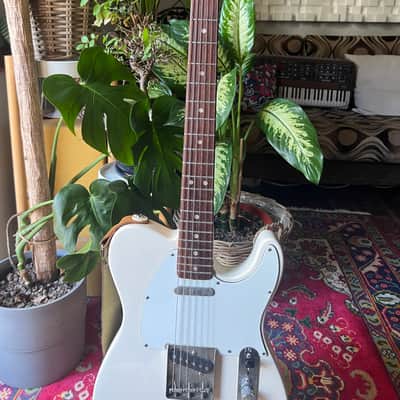
Fender Telecaster
Clean country-surf crossover · 2 single-coil pickups, 25.5-inch scale, bright bridge pickup, simple controls(Player Tele: $600–$850 used)Best for: Country-influenced surf, bright clean Telecaster tone for reverb-heavy chord surf, simple reliable gigging surf guitar
The Fender Telecaster appears in surf-adjacent country and Western instrumental music — the bright, cutting Telecaster bridge pickup through spring reverb produces a clean, sparkling surf-country tone. For players whose surf influences include the countrypolitain and Western swing crossover with surf (Link Wray adjacent, Duane Eddy style), the Telecaster is the recommendation. Used at $600–$850.
What to check used: The Telecaster lacks the offset body aesthetic and the tremolo arm of the classic surf guitars — players who specifically want the visual and mechanical tradition of surf guitar (Jazzmaster, Jaguar) should choose those instruments. The Telecaster is the versatile, simplified alternative.
#8
Mosrite Ventures Model
Collector surf guitar (The Ventures signature instrument) · Offset body, 2 Mosrite pickups, 25.5-inch scale, Vibramute tremolo, American-made, 1960s production$1,800–$4,500 used (original 1960s examples)Best for: Serious surf collectors and performers who want the authentic Ventures sound, original 1960s Mosrite construction, The Ventures guitar reference
The Mosrite Ventures Model is the guitar of The Ventures — the most influential surf instrumental band of the 1960s. Nokie Edwards (The Ventures) used Mosrite guitars for 'Walk Don't Run' and their extensive catalog of surf instrumentals. The Mosrite is the definitive collector surf instrument. Original 1960s examples are $1,800–$4,500+ on the used market. Used at $1,800–$4,500.
What to check used: Original Mosrite guitars are collector instruments — authenticate carefully before purchasing. Reproduction Mosrites are available new from Mosrite of California. The Ventures used both Mosrite and Fender instruments across their career. For surf playing, a Stratocaster or Jazzmaster produces comparable surf tone at lower cost; the Mosrite is for collectors who specifically want the Ventures instrument heritage.