#1
Gibson SG Standard
Stoner rock primary guitar (Josh Homme, Scott Hill) · Mahogany body, 2 humbuckers, double-cutaway, 24.75-inch scale, set neck, lightweight$900–$1,300 usedBest for: Queens of the Stone Age-style stoner rock, Josh Homme SG tone, mahogany humbucker warmth through fuzz for stoner rock groove, lighter weight for extended stoner rock performance in lower tunings
The Gibson SG Standard is the stoner rock primary guitar — Josh Homme (Queens of the Stone Age) uses Gibson guitars including SG-style instruments for QOTSA's fuzz-forward, groove-heavy stoner rock. The SG's mahogany humbucker tone through fuzz and wah produces the thick, warm character central to stoner rock's psychedelic heavy groove. The lightweight SG is manageable for the lower tunings common in stoner rock (C#/Db, C standard). Used at $900–$1,300.
What to check used: Stoner rock SG playing in lower tunings requires setup adjustment — heavier string gauges (0.012-0.054 or 0.013-0.056) and truss rod adjustment for tunings below standard Eb. Professional setup cost: $60-100. Without proper setup, down-tuned heavy string gauges produce excessive fret buzz and poor playability.
#2
Fender Jazzmaster
Desert-influenced stoner rock and psychedelic stoner · Offset body, 2 Jazzmaster single-coil pickups, floating tremolo, rhythm/lead circuit, warm bass-heavy clean tone(American Vintage II: $700–$1,200 used)Best for: Desert-influenced stoner rock (Kyuss-adjacent), psychedelic stoner rock, warm single-coil through fuzz for stoner desert groove, tremolo arm for stoner rock pitch expression
The Fender Jazzmaster suits desert stoner rock — the warm, bass-heavy single-coil through a Big Muff or similar fuzz produces the specific desert stoner character that distinguishes Kyuss-influenced stoner rock from metal-influenced stoner. The floating tremolo adds expression. Josh Homme of QOTSA has also used Jazzmaster-style instruments for their specific single-coil fuzz texture. Used at $700–$1,200.
What to check used: Single-coil Jazzmaster through fuzz in stoner rock produces a different character than humbucker SG through fuzz — the single-coil produces a more open, resonant, slightly nasal fuzz character while the humbucker produces a denser, thicker wall. Both are correct for stoner rock; the choice depends on tonal preference and stoner subgenre.
#3
Gibson Les Paul Standard
Heavy stoner rock lead (Earthless, heavy psychedelic stoner) · Mahogany body, maple top, 2 humbuckers, 24.75-inch scale, heavyweight sustain$2,200–$3,000 usedBest for: Heavy psychedelic stoner rock, maximum humbucker sustain for stoner rock lead, guitar for stoner bands with extended psychedelic solos
The Gibson Les Paul suits the heavier, more lead-focused side of stoner rock — Earthless and similar heavy psychedelic stoner bands use Les Paul-style guitars for the dense, sustaining lead tone in extended improvised stoner rock passages. The heavy mahogany Les Paul body sustains notes through long stoner rock solos. Used at $2,200–$3,000.
What to check used: The Les Paul's weight is significant in stoner rock contexts with heavy string gauges and lower tunings — the combined weight of the heavy guitar body and heavy strings can cause physical fatigue. The SG provides approximately equivalent stoner rock tone at lower weight.
#4
Epiphone SG Standard
Budget stoner rock SG · Mahogany body, 2 Alnico Classic Pro humbuckers, 24.75-inch scale, set neck$380–$500 new / $240–$360 usedBest for: Stoner rock beginners who want SG character at accessible prices, Alnico Classic Pro warmth for stoner fuzz, accessible stoner rock platform
The Epiphone SG Standard provides stoner rock SG character at accessible prices — at $240–$360 used, the Epiphone allows stoner rock players to develop the genre with proper humbucker SG tone before investing in a Gibson. The Alnico Classic Pro pickups produce warm, saturated tone suitable for stoner fuzz. Used at $240–$360.
What to check used: Same Epiphone vs Gibson quality caveat applies in stoner rock context — the live stoner fuzz character largely masks the pickup refinement difference. For home recording or studio stoner rock, the Gibson's pickup refinement becomes more apparent through high-quality recording chains.
#5
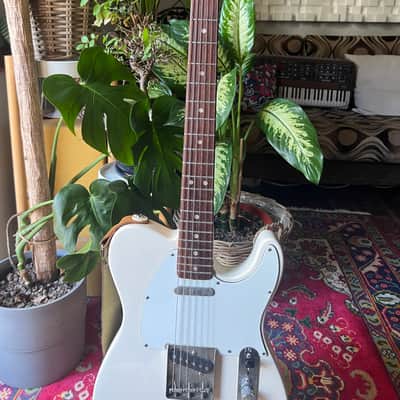
Fender Telecaster
Desert-twang stoner rock (Qotsa early material) · 2 single-coil pickups, 25.5-inch scale, bright bridge pickup(Player Tele: $600–$850 used)Best for: Early QOTSA desert stoner rock, Telecaster twang through fuzz for a specific desert stoner character, country-adjacent stoner rock groove
The Fender Telecaster appears in early stoner rock and desert rock contexts — the bright, slightly twangy Telecaster bridge pickup through a fuzz produces a specific desert stoner character distinct from humbucker instruments. Queens of the Stone Age's early recordings have a Telecaster-adjacent brightness to the fuzz tone. Used at $600–$850.
What to check used: The Telecaster produces a different fuzz character than humbucker instruments — brighter, more cutting through the fuzz, less dense. Some stoner rock players prefer this brightness; others prefer the dense warmth of humbucker stoner fuzz. Both are authentic stoner rock approaches.
#6
ESP LTD EC-1000
Modern production stoner rock · Mahogany body, maple top, EMG 81/60 active humbuckers, Set-Thru neck, 25.5-inch scale$800–$1,100 usedBest for: Modern stoner rock production, EMG 81 active pickup articulation through stoner fuzz, fixed bridge for tuning stability at stoner down-tunings
The ESP LTD EC-1000 suits modern production stoner rock — the EMG 81 active pickup maintains articulation through heavy stoner fuzz at extreme down-tunings where passive pickups can lose clarity. The 25.5-inch scale is tighter than Gibson at C and B standard tunings. Used at $800–$1,100.
What to check used: EMG active stoner tone differs from the traditional passive humbucker character — EMG active is cleaner and more defined; vintage passive is warmer and more organic. Traditional stoner rock aesthetic often favors passive pickup character. EMG suits stoner rock that prioritizes modern production; passive Gibson suits stoner rock that prioritizes vintage organic tone.
#7
PRS Custom 24
Modern versatile stoner rock · Mahogany body, maple top, 2 PRS 85/15 humbuckers, 25-inch scale, 24 frets$1,600–$2,500 usedBest for: Stoner rock players who need lead-focused versatility, 24-fret access for extended stoner rock solo passages, PRS sustain for stoner rock lead
The PRS Custom 24 suits stoner rock players who want lead-focused versatility — 24 frets provide full upper-register access for extended stoner rock solos, and the 85/15 humbuckers produce warm, sustaining stoner rock character. Used at $1,600–$2,500.
What to check used: PRS's refined character may be too polished for some stoner rock aesthetics — the genre generally embraces a rougher, more organic character. The SG or Les Paul's vintage character often suits stoner rock's aesthetic better than PRS's studio refinement.
#8
Squier Classic Vibe 60s Jaguar
Budget single-coil stoner entry · Alder body, Fender-designed single-coil pickups, 24-inch scale, offset body, simplified dual circuit$350–$430 new / $220–$300 usedBest for: Budget stoner rock entry on single-coil offset platform, short-scale for stoner rock down-tunings, accessible Jaguar character for desert stoner exploration
The Squier Classic Vibe 60s Jaguar provides single-coil stoner rock character at entry prices — the offset 24-inch short scale and Fender-style single-coils through a Big Muff or Green Russian Muff produces desert stoner character at $220–$300 used. Used at $220–$300.
What to check used: Invest in fuzz and wah before upgrading the guitar — a Classic Vibe Jaguar through a Big Muff Pi and Dunlop Cry Baby produces more stoner rock character than an American Jazzmaster without effects. The effects are the stoner rock sound; the guitar is the platform.
#9
Danelectro 59M NOS
Lo-fi desert stoner (Kyuss-adjacent lo-fi desert rock) · Masonite body, lipstick tube single-coil pickups, hollow construction, vintage lo-fi character$250–$320 new / $160–$230 usedBest for: Lo-fi desert stoner, lipstick tube character for raw, nasal stoner fuzz, vintage aesthetic at accessible prices, Kyuss-adjacent lo-fi desert groove
The Danelectro 59M NOS produces lo-fi stoner character through lipstick tube pickups — the nasal, hollow single-coil character through a Big Muff Pi produces a specific raw, lo-fi desert stoner texture distinct from Gibson or Fender instruments. For stoner players whose influences include the lo-fi aesthetic of early desert rock recordings, the Danelectro at $160–$230 used is an exploratory instrument. Used at $160–$230.
What to check used: The Danelectro is a budget instrument — the Masonite body and lipstick pickups are characterful but limited in build quality. Use the Danelectro as a second/experimental instrument rather than a primary stoner rock guitar. The lo-fi character can be specifically what stoner players seek or specifically what they want to avoid — it is very distinct.