#1
Squier Affinity P-Bass
Passive Precision Bass · Alder body, maple neck, single split-coil pickup, 4-string$100–$150 usedBest for: Beginners, rock and pop styles, classic P-Bass tone
The Squier Affinity P-Bass is the gold standard in budget bass — uses actual Fender Precision Bass specs and manufacturing at a student price. Split-coil pickup produces the iconic P-Bass tone (warm, punchy, cuts through a mix). Neck feel is legitimate; body is lightweight alder. Used Affinity P-Bass units at $100–$150 are the most commonly recommended starter bass by teachers.
What to check used: Tuning machines are basic but functional — they hold fine, just do not expect smooth action. Bridge is die-cast and can rattle; tightening the mounting bolts usually fixes this. Frets are serviceable but often need leveling; budget $60 for a pro setup.
#2
Squier Affinity Jazz Bass
Passive Jazz Bass · Alder body, maple neck, dual single-coil pickups, 4-string$110–$160 usedBest for: Beginners interested in jazz, funk, melodic styles
The Squier Affinity Jazz Bass offers the alternative to P-Bass — dual single-coil pickups produce a brighter, more articulate tone (better for jazz and funk). Thinner body than P-Bass feels slightly less chunky. Used Affinity J-Bass at $110–$160 is the same build quality as the P-Bass but appeals to players who prefer the Jazz tone and smaller body. Neck is slightly narrower.
What to check used: Single-coil pickups are louder than split-coil, which means hum is slightly more noticeable without shielding. Mixing pickup volumes mid-song is an intended feature; make sure both volume controls work. Same setup costs as P-Bass (tuners, bridge tightening, fret work).
#3
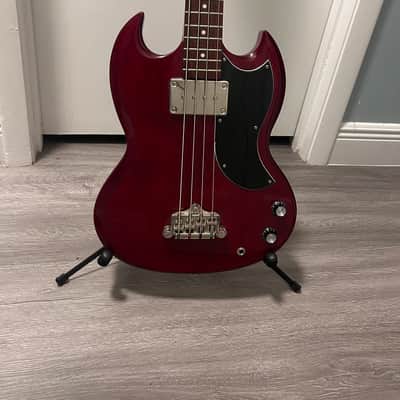
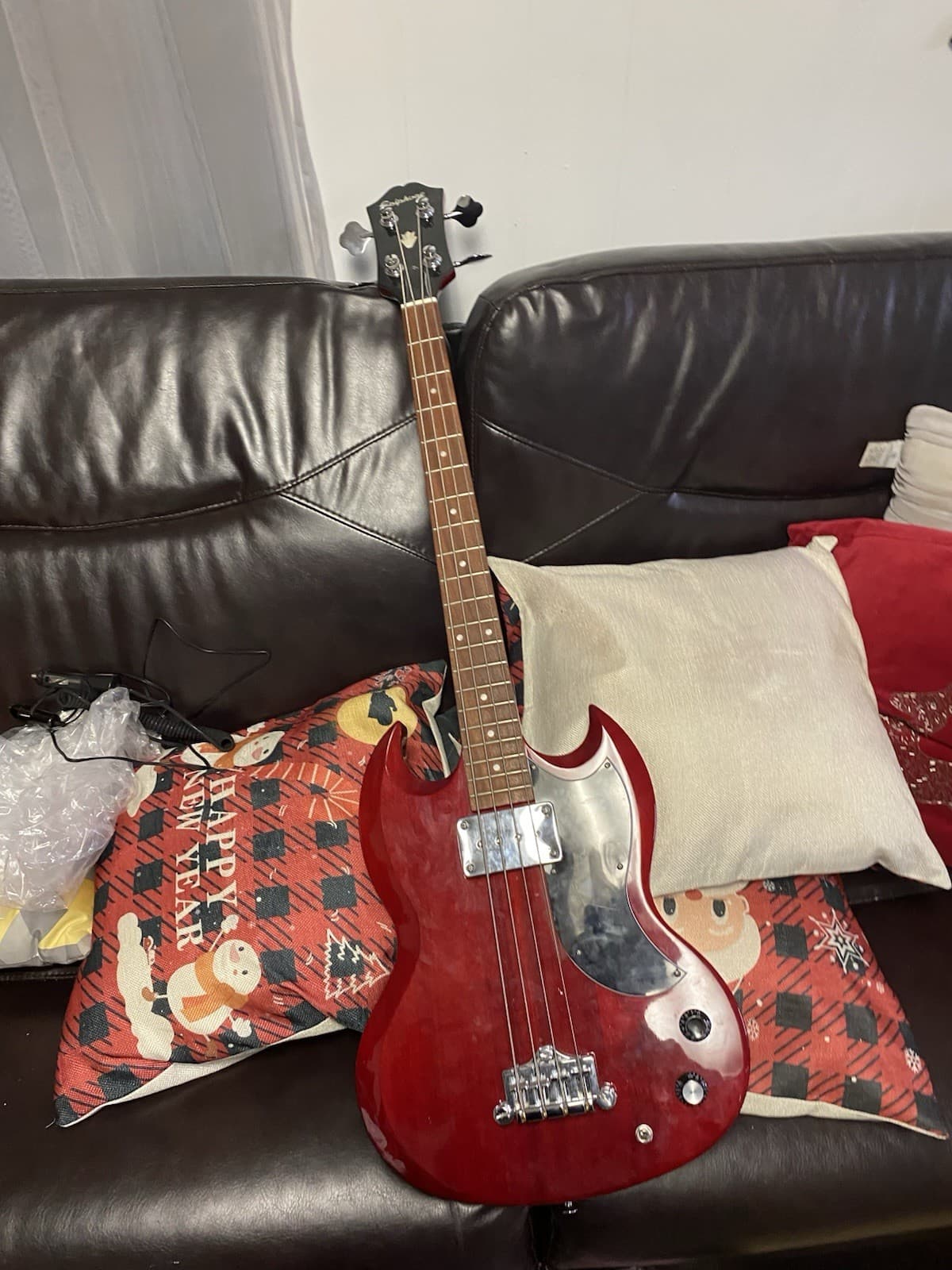
Epiphone EB-0
Passive SG-Style Bass · Mahogany body, mahogany neck, single humbucker pickup, 4-string$100–$150 usedBest for: Rock and metal players, bold tone preference, aesthetics
The Epiphone EB-0 is the rock and metal player's bass — modeled after Gibson EB-0, uses mahogany body and humbucker pickup for thick, aggressive tone. Built-in strap button (unlike some cheap basses), solid hardware for the price. Used EB-0 at $100–$150 is the pick for players who want tone personality rather than versatility. More durable than Squier's alder construction.
What to check used: Humbucker pickup is dark and thick — less articulate than single-coil. This is intentional. SG-style body is lighter than you might expect but neck-heavy when worn on a strap; use a thick leather strap for comfort. Fretwork is inconsistent; setup is important.
#4
Harley Benton B-450
Passive Precision-Style Bass · Basswood body, bolt-on neck, single split-coil pickup, 4-string$60–$100 usedBest for: Absolute budget learners, true beginners under $100
Harley Benton is Thomann's house brand — made in Indonesia at cost-focused pricing. The B-450 is a P-Bass clone with split-coil pickup, bolt-on neck, and basswood body. At $60–$100 used, it is the cheapest playable option on this list. Quality control is hit-or-miss, but many players report Harley Benton basses are surprisingly playable when set up.
What to check used: Basswood body is softer than alder — prone to dings and dents from careless handling. Frets are significantly less refined than Squier; expect to send it to a luthier for setup ($60–$80). Pickups are very weak; you may want to replace them after 1–2 years.
#5
Rogue LX200B
Passive Precision-Style Bass · Laminate hardwood body, bolt-on neck, single coil-style pickup, 4-string$50–$80 usedBest for: Gigging student bass, very tight budget, practice bass
Rogue is a Musician's Friend brand — LX200B is their P-Bass look-alike at the absolute minimum price point. Laminate construction (multiple wood veneers) makes it durable for a student. Single-coil style pickup is thin but functional. At $50–$80 used, this is the survival budget bass — playable, but you get what you pay for.
What to check used: Laminate body construction means no sustain or resonance of solid wood — tone is thin and flat. Likely to need bridge replacement and fret leveling ($80+ total). Use this only if budget is the only option.
#6
Squier Mini P-Bass
Passive Short-Scale Precision Bass · 32-inch scale, alder body, maple neck, single split-coil pickup$80–$120 usedBest for: Small-handed learners, children, compact practice bass
The Squier Mini P-Bass is the shortscale option — 32 inches vs standard 34 inches, making it ideal for small hands, young players, or anyone who finds standard basses uncomfortable. Uses the same Affinity P-Bass specs in a smaller frame. Neck reach is significantly easier for children. At $80–$120 used, it is the accessibility pick.
What to check used: Short-scale pickups produce less output than standard basses — tone is thinner. String tension is lighter, which means tuning stability requires more frequent adjustment. Intonation compensation is different; check that the bridge can compensate for scale length.
#7
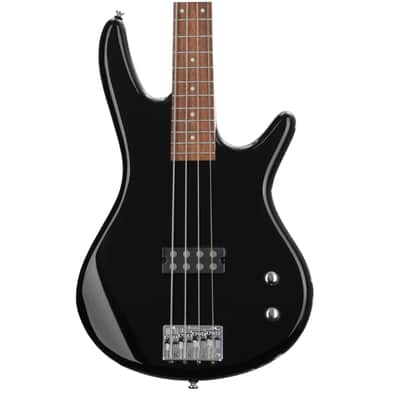
Ibanez GSRM20 Mikro
Passive Short-Scale Precision-Style Bass · 28.6-inch ultra-short scale, poplar body, single pickup, 4-string$100–$140 usedBest for: Very small hands, children, ultra-compact travel bass
The Ibanez Mikro is the ultra-compact bass — even shorter than the Squier Mini at 28.6 inches, marketed for children and players with small hands. Poplar body, single pickup, and compact headstock. Build quality is better than Rogue or Harley Benton. At $100–$140 used, it is the pick for anyone who absolutely cannot play a standard-scale bass.
What to check used: Ultra-short scale means tone is very thin and treble-heavy. String tensions are very light. Bridge setup is critical for intonation — many cheap luthiers struggle with sub-30-inch scale setup. Look for a shop experienced with short-scale instruments.