#1
Taylor 214ce
Contemporary singer-songwriter workhorse (balanced tone for vocals) · Sitka spruce top, layered rosewood back/sides, Taylor Expression System 2 pickup, Grand Auditorium body, Venetian cutaway$420–$600 usedBest for: Singer-songwriters who gig regularly, balanced acoustic-electric tone that sits behind vocals, comfortable Grand Auditorium body, reliable on-board pickup system
The Taylor 214ce is the modern singer-songwriter standard — the Grand Auditorium body provides balanced, articulate tone that sits naturally under vocals without overwhelming the mix. The Expression System 2 pickup delivers accurate acoustic amplification for intimate singer-songwriter performance. The Venetian cutaway allows access to upper frets for extended melodies. At $420–$600 used, the 214ce is the primary recommendation for singer-songwriters who perform live.
What to check used: The 214ce uses layered rosewood back and sides rather than solid tonewoods — the tone is excellent and sits well in a mix, but lacks the resonant complexity and long sustain of all-solid construction. For pure acoustic quality without amplification, consider the Martin 000-15M.
#2
Martin 000-15M
Intimate all-mahogany singer-songwriter (close-mic recording friendly) · All-solid mahogany (top, back, sides), 000 (auditorium) body, 25.4-inch scale, satin finish$550–$750 usedBest for: Singer-songwriters who record at home or in studios, warm all-mahogany tone for intimate performance, closed-mic recording without feedback issues, accessible all-solid Martin quality
The Martin 000-15M is the singer-songwriter recording guitar — all-mahogany construction produces a warm, direct tone that sounds beautiful on close-mic recordings without the projection issues that larger dreadnoughts can create. The 000 auditorium body is sized for intimate performance, producing a voice that sits naturally under vocals. At $550–$750 used, the 000-15M is the all-solid option for singer-songwriters who prioritize recording and intimate settings.
What to check used: The 000 body is noticeably smaller than a dreadnought — players accustomed to large body instruments may find the transition uncomfortable. The all-mahogany construction lacks the brightness of spruce-top instruments; some singer-songwriters prefer the brightness of Taylor or Gibson.
#3
Gibson J-45
Singer-songwriter icon (Neil Young, Bob Dylan vocal tone) · Sitka spruce top, mahogany back/sides, slope-shouldered dreadnought, LR Baggs VTC pickup, 24.75-inch scale$1,400–$2,000 usedBest for: Singer-songwriters seeking iconic instrument, warm round-shouldered dreadnought voice for vocals, Neil Young and Bob Dylan aesthetic, balance between volume and articulation
The Gibson J-45 is the iconic singer-songwriter guitar — Bob Dylan and Neil Young built their vocal traditions on the J-45s warm, balanced voice. The round-shouldered dreadnought with mahogany back and sides produces tone that sits perfectly under vocals, with enough body for solo performance but enough clarity for articulate strumming. The 24.75-inch scale is slightly easier to play for extended performance. At $1,400–$2,000 used, the J-45 is the classic choice.
What to check used: The J-45 is warmer and less bright than spruce-top dreadnoughts — the character suits vocals but may feel darker than expected on initial play. Some player find the warmth limiting for finger-style playing alone without vocals.
#4
Yamaha FG-TA TransAcoustic
Budget singer-songwriter with reverb built in · Solid spruce top, nato back/sides, TransAcoustic piezo + on-board reverb system, dreadnought body$350–$480 usedBest for: Singer-songwriters on budget, built-in reverb for ambience without external effects, solid spruce top quality, durable workhorse for rehearsal and casual gigging
The Yamaha FG-TA TransAcoustic offers unique value — the on-board reverb system (powered by battery or USB) creates lush ambience for singer-songwriter performance without needing external effect pedals. The solid spruce top delivers real acoustic quality at a fraction of the cost of Taylor or Martin. At $350–$480 used, the FG-TA is the budget recommendation for singer-songwriters who want built-in ambience effects.
What to check used: The TransAcoustic reverb is noticeable but not professional-grade compared to outboard reverb pedals. The nato back and sides limit tonal complexity compared to rosewood or mahogany. Battery power is required for reverb operation.
#5
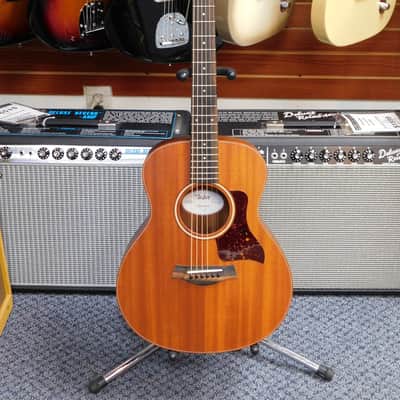
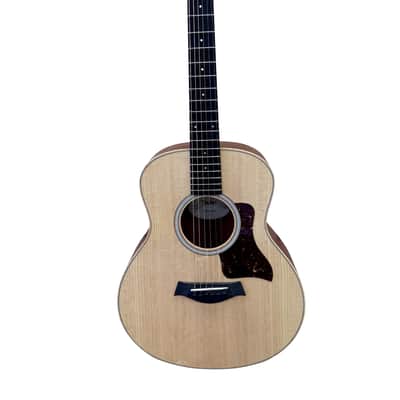
Taylor GS Mini
Travel and home-studio singer-songwriter acoustic · Sitka spruce top, layered sapele back/sides, Grand Symphony Mini body, grand auditorium voice in compact size$350–$480 usedBest for: Singer-songwriters who travel or need compact instrument, balanced Taylor tone in mini body, home studio and practice guitar, comfortable playability
The Taylor GS Mini delivers the Taylor Grand Auditorium sound in a compact body — perfect for singer-songwriters who travel or need a dedicated home-studio guitar. The mini body maintains enough resonance for serious practice and home recording without the bulk of full-size instruments. At $350–$480 used, the GS Mini is the portable singer-songwriter choice.
What to check used: The smaller body produces noticeably less volume than full-size acoustics — intended for close-mic contexts, not loud unamplified performance. Some players find the smaller body uncomfortable for extended playing sessions.
#6
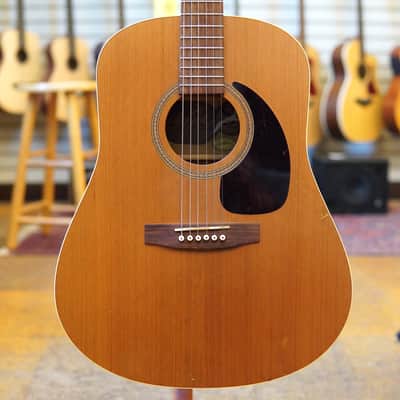
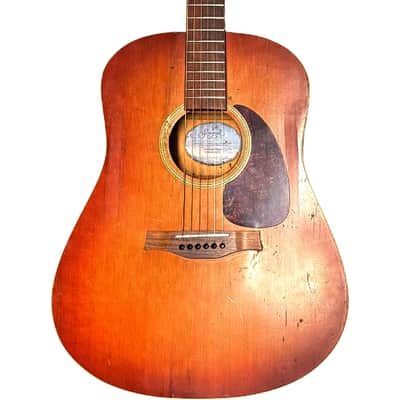
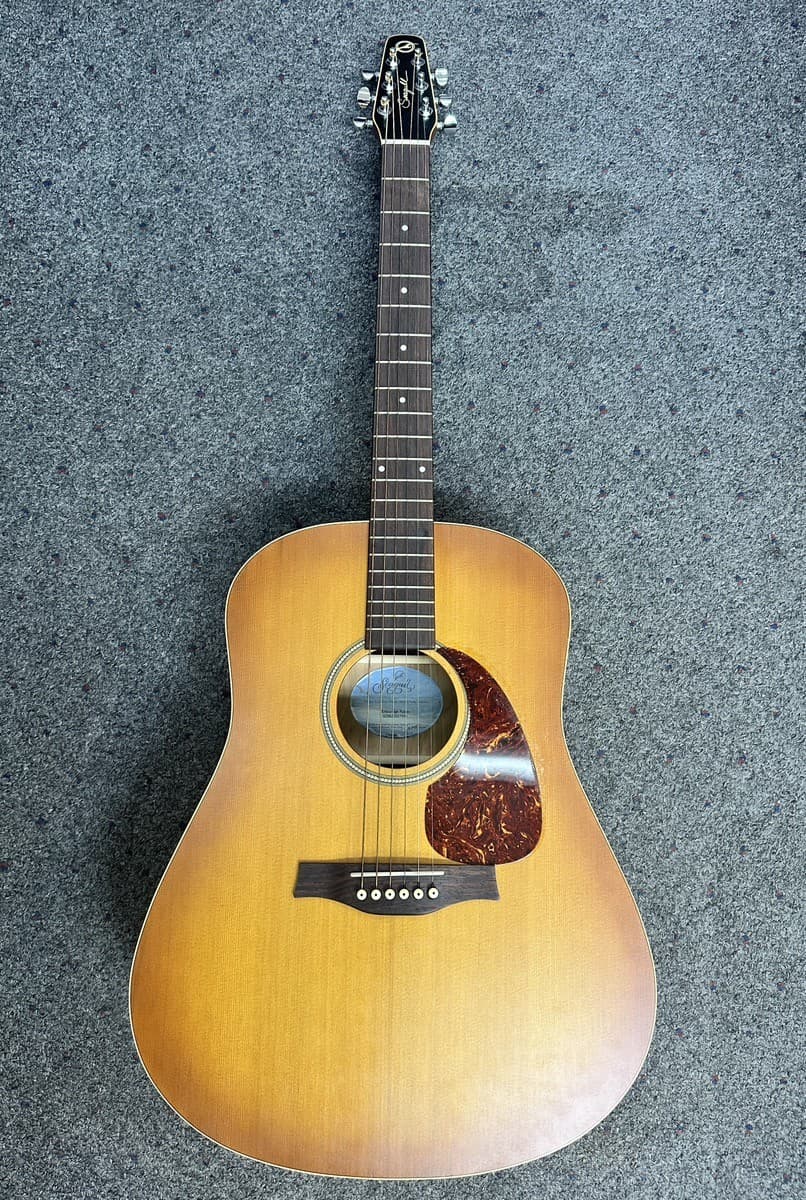
Seagull S6
Canadian all-solid entry for singer-songwriters · All-solid wild cherry top and back, all-solid mahogany sides, Grand Auditorium body, 25.3-inch scale$300–$420 usedBest for: Singer-songwriters seeking all-solid construction at accessible price, warm cherry and mahogany tone, reliable Canadian build quality, intimate voice
The Seagull S6 is the Canadian all-solid alternative — all-solid wild cherry and mahogany construction at $300–$420 used delivers real tonal quality often missing in entry-level guitars. The Grand Auditorium body balances volume with clarity suited to singer-songwriter contexts. Seagull's Canadian construction ensures consistent playability. At $300–$420 used, the S6 is the budget all-solid recommendation.
What to check used: The cherry and mahogany combination is less familiar than spruce/rosewood — the tone is warmer and earthier than typical acoustic guitars. Some players prefer brighter spruce-topped instruments.
#7
Martin LX1E
Nylon-string singer-songwriter for intimate contexts · Solid cedar top, mahogany back/sides, nylon strings, LXM piezo pickup, compact body$200–$280 usedBest for: Singer-songwriters seeking warm, intimate nylon-string tone, Bossa Nova and Latin folk influences, home studio and bedroom writing sessions
The Martin LX1E brings nylon-string warmth to singer-songwriter contexts — the solid cedar top and mahogany back deliver rich, complex tone suited to fingerpicking and intimate vocal accompaniment. The LXM pickup is integrated for low-volume gigging. At $200–$280 used, the LX1E is the nylon-string recommendation for singer-songwriters with classical influences.
What to check used: Nylon strings have different feel and tension than steel strings — transition requires adjustment for steel-string players. The tone is warmer and less articulate than steel strings, unsuitable for aggressively strummed singer-songwriter contexts.