#1
Ampeg BA-108 v2
Practice bass combo · 20 watts, 8" speaker, aux in, headphone out, scrambler overdrive$80–$120 usedBest for: Apartment practice, bedroom players, beginners on a budget
The Ampeg BA-108 is the best-value practice bass amp from a brand with genuine credibility — Ampeg makes the SVT, the most iconic professional bass amplifier in existence. The BA-108's 20 watts through an 8" speaker is quiet enough for apartment practice, the scrambler overdrive adds grit for rock players, and the headphone output enables silent practice. At $80–$120 used, it's more than enough for a beginning bassist.
What to check used: 20 watts and an 8" speaker will not keep up with a drummer in a band rehearsal. This is a bedroom/practice amp only. Verify the speaker has not been damaged by over-driving at full volume — listen for crackle or distortion at moderate volume. Check the scrambler circuit engages cleanly.
#2
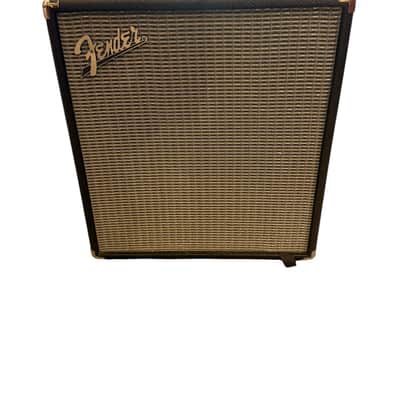
Fender Rumble 40
Bass combo · 40 watts, 10" speaker, 4-band EQ, vintage/bright/contour voicing switches$150–$220 usedBest for: Home practice, small rehearsal space, versatile tones, beginner to intermediate
The Fender Rumble 40 offers genuine rehearsal capability — loud enough to hear over acoustic drumming at low volumes, flexible enough to cop Fender vintage tones with the voicing switches. The four-band EQ (Bass, Low-Mid, High-Mid, Treble) provides real tone shaping. The Rumble series is known for being lightweight (the 40 is under 20 lbs) compared to older heavy bass amps. Used at $150–$220.
What to check used: The Rumble 40's 10" speaker has limited low-frequency extension below 60Hz — the very lowest register of a 5-string bass may feel thin. This is normal for a 10" cab at this size and wattage. Verify the contour and bright switches engage cleanly — Rumble controls are reliable but worth checking.
#3
Gallien-Krueger MB115
Bass combo · 200 watts, 15" speaker, 4-band EQ with contour, tweeter, DI out$280–$380 usedBest for: Rehearsal and small gigs, professional DI quality for recording, clean articulate tone
The Gallien-Krueger MB115 is GK's lightweight Class D combo — 200 watts through a 15" speaker covers rehearsal rooms and small club stages. GK's reputation for clean, articulate bass tone is evident here: the MB115 handles fingerstyle, pick, and slap bass cleanly without the muddy low-mid buildup that affects cheaper combos. The DI output makes it easy to connect to a PA for larger venues. Used at $280–$380.
What to check used: GK's MB-series combos use a Class D power amp that produces significantly less heat than older Class A/B amplifiers. This is normal — don't interpret cool operation as a malfunction. Check the 15" speaker is intact (push gently in the center dust cap) and the tweeter (if equipped) is producing clean high-frequency output.
#4
Ampeg PF-500 with PF-115HE
Portable head + cabinet · 500 watts into 4 ohm, Portaflex design, VU meter, 15" neo speaker cabinet$420–$580 used (head + cab together)Best for: Gigging bass player, classic Ampeg tone in lightweight format, club venues
The Ampeg Portaflex PF-500 head with PF-115HE cabinet is the mid-level gigging solution — 500 watts drives a 15" neodymium speaker cab that fits in a car easily. The PF-500 flips into the cabinet for storage and transport (the classic Portaflex design). Ampeg's circuitry delivers the company's signature warm, rounded bass tone. This rig covers club stages to medium-sized theaters at $420–$580 used for the pair.
What to check used: Buy the head and cabinet as a matched set — verify both pieces are present. Check the Portaflex latch mechanism on the head (it flips into the cabinet for storage). The 15" driver should be the original neodymium speaker; aftermarket speaker replacements change the tone significantly.
#5
Markbass CMD 121P
Professional bass combo · 300 watts, 12" Markbass speaker, tweeter, VLE/VPF filters, DI out, 26 lbs$550–$750 usedBest for: Professional gigging bassist, Italian engineering, world-touring lightweight combo
The Markbass CMD 121P is used by professional touring bassists worldwide. 300 watts through a 12" custom Markbass speaker (the company designs and builds its own drivers) in a 26-lb enclosure that handles most club to small theater stages. The VLE (Vintage Loudspeaker Emulator) filter rolls off the clean high end for a vintage tonal character; the VPF (Variable Pre-shape Filter) provides a mid-scoop for slap and funk. DI output at studio quality. Used at $550–$750.
What to check used: Markbass amplifiers are designed in Italy and have proprietary components — repairs require more specialized knowledge than generic amplifiers. Verify the VLE and VPF filters work smoothly at all settings. Used Markbass combos should be tested through a full gig to verify thermal stability (Class D designs can thermally protect if pushed hard in hot conditions).
#6
Ampeg SVT-CL with 8x10 cabinet
Professional all-tube head + 8x10 cabinet · 300 watts all-tube (6 x 6L6 or 6550), 8x10 speaker cabinet$1,400–$2,000 used (head + cab)Best for: Rock and metal touring, 'the bass amp', arena-stage bass tone, venue backline standard
The Ampeg SVT is the bass amplifier against which all others are measured. Every major venue, every festival backline, every touring production has SVTs. The 300-watt all-tube circuit through the 8x10 cabinet produces the bass tone that defines rock and metal — thick, saturated when pushed, and projecting across large distances in a way no solid-state amp replicates. Used SVT-CL head with a used 8x10 at $1,400–$2,000 is how working touring bassists get the real thing within budget.
What to check used: The SVT is heavy (85 lbs for the head alone, 165 lbs for the 8x10) and requires professional roadcasing for touring. Tubes must be biased correctly — buy from a seller who can demonstrate it was recently serviced or budget $200–$400 for a tube set and bias adjustment. All-tube amplifiers should be transported with the tubes removed if possible.
#7
Hartke HA3500
Bass head · 350 watts into 4 ohm, tube/solid-state blend preamp, 10-band graphic EQ$200–$300 usedBest for: Mid-level gigging bassist, aluminum cone speaker tone, blendable preamp character
The Hartke HA3500 is a reliable mid-level bass head with a unique feature: a dual preamp with a tube channel (12AX7) and a solid-state channel that you blend together for any combination of warmth and clarity. Paired with Hartke's aluminum-cone HyDrive cabinets (or any 4 ohm bass cabinet), the HA3500 covers rehearsal rooms and club stages confidently. Used at $200–$300 for the head.
What to check used: The tube in the Hartke's preamp section is a 12AX7 — it should be functional but verify the tube channel is producing warmth (turn the tube blend up with solid-state blend at zero and listen for tube warmth). Tube preamps in heads last longer than power tubes since they operate at lower demands.
#8
Fender Rumble 500 v3
Bass combo · 500 watts, 2x10" speakers, 4-band EQ, voicing switches, DI out, 42 lbs$380–$520 usedBest for: Lightweight high-wattage combo for gigging, rehearsal to stage in one unit
The Fender Rumble 500 is the amp that proved lightweight Class D bass amplification was ready for professional use — 500 watts in 42 lbs, with a pair of 10" speakers that projects clearly in live settings. The Rumble v3 tone controls and voicing switches (vintage, bright, contour) let you dial from clean modern to vintage Fender warmth. At $380–$520 used, it's the most practical gigging bass combo for players who drive their own gear.
What to check used: The Rumble 500 combo is a 2x10 speaker configuration — for very large rooms, you may need to add an extension cabinet (the Rumble 500 can drive a second cabinet). Verify both 10" speakers are working — play a low E and check that both speakers are moving equally.