#1
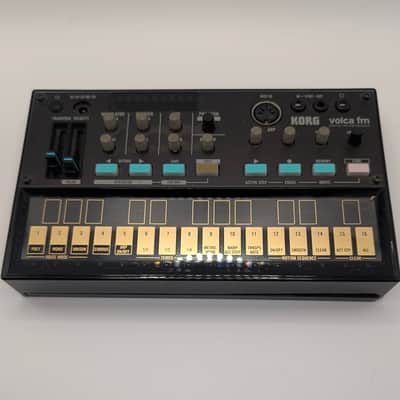
Korg Volca Keys
Analog Synthesizer · 28-key mini keyboard, single VCO, filter, mini speaker, battery-powered$80–$130 usedBest for: Beginners, compact workstation, bedroom production, hands-on learning
The Korg Volca Keys is the entry-level analog synth — single oscillator, analog filter, envelope, mini speaker, and built-in metronome. 28 mini keys are playable (not as nice as full keys, but functional). Runs on batteries or USB, compact (5.5 x 4 inches), and every control is tactile (no menu diving). Used Volca Keys at $80–$130 is the hands-on introduction to analog synthesis.
What to check used: Mini keys have poor velocity response — good for learning synthesis, less ideal for expressive playing. Speaker is tiny; pair with headphones or external speakers. Battery life is 4–5 hours; USB power is more reliable.
#2
Teenage Engineering Pocket Operator PO-20
Digital Synthesizer · 16-button grid sequencer, 8 drum sounds, built-in speaker, micro-sized$50–$80 usedBest for: Portable beat-making, game-like fun, quick composition
Teenage Engineering Pocket Operator PO-20 is the ultra-compact beat maker — 16-button grid, 8 drum machine sounds, tiny built-in speaker, and fits in your pocket. Used PO-20 at $50–$80 is a toy-grade introduction to sequencing and rhythm. Not a synthesizer in traditional sense, but a fun compositional tool for beats.
What to check used: 16-button interface requires learning the workflow — not intuitive at first. No real synthesis (just preset sounds). Button presses are fun but can be tiring during long sessions. Battery life is good (20 hours).
#3
Arturia MicroBrute
Analog Synthesizer · Mini 25-key keyboard, single VCO, analog filter, USB MIDI, gate sequencer$150–$230 usedBest for: Compact analog learning, USB MIDI integration, studio work
Arturia MicroBrute is the affordable analog synth with full-size sound — mini 25 keys (larger than Volca), single analog VCO, 2-pole resonant filter, and USB MIDI so you can control other gear. Build quality is excellent. Used MicroBrute at $150–$230 is the budget analog synth that still feels professional.
What to check used: Single VCO is limiting for complex soundscapes — velocity sensitivity is fixed (no per-note control). Mini keys are decent but not full-size. Metallic build can pick up RF interference; keep away from phones and routers.
#4
Korg Monologue
Analog Synthesizer · 25 mini keys, single VCO, digital filter, sequencer, arpeggiator$150–$220 usedBest for: Analog learning, hands-on soundscaping, compact studio use
Korg Monologue is analog with modern convenience — single VCO, analog-voiced digital filter (combines warmth with stability), 16-step sequencer, and arpeggiator. Mini 25 keys, compact footprint, menu-free design (all knobs tactile). Used Monologue at $150–$220 is Korg's best entry-level analog synthesizer.
What to check used: Filter is digital (not pure analog) — warmer than pure digital synths but not as alive as full-analog VCF. Mini keys require practice for melodic playing. Menu system for patch saving is minimal but requires reading manual.
#5
Roland Boutique JX-03
Digital Synthesizer · 25 mini keys, 6 DCOs (digital oscillators), digital filter, sequencer$150–$220 usedBest for: Digital synthesis learning, arpeggiation, preset exploration
Roland Boutique JX-03 is the digital alternative — 6 DCOs (more oscillators than analog competitors), digital filter, preset library of 2,000+ synth sounds, and sequencer. Mini keys, compact, and USB MIDI. Used JX-03 at $150–$220 offers more sound design capability than single-VCO analog synths, at the cost of warmth.
What to check used: Digital filter lacks the character of analog VCF — clean but less alive. 2,000 presets means more learning curve (preset diving instead of hands-on knob tweaking). Mini keys are same limitation as other boutique sizes.
#6
Behringer TD-3
Analog Synthesizer · No keyboard (sequencer-only), single VCO, analog filter, gate controls$80–$120 usedBest for: Bass synthesis learning, sequencer-based composition, cost-focused analog
Behringer TD-3 is the bassline sequencer — no keyboard, just 16-step sequencer interface and analog sound engine modeled after Roland TR-808. Single VCO, resonant filter, and true analog circuitry. Used TD-3 at $80–$120 is the cheapest real analog synth on this list. No keyboard means you program basslines via sequencer (old-school style).
What to check used: No keyboard means you need sequencer workflow (step in patterns, no real-time playing). Designed for bass and drum lines, not melodic playing. Speaker is tiny; external audio system required. Sequencer interface takes practice.
#7
Teenage Engineering Pocket Operator PO-32 Tonic
Digital Synthesizer · 16-button grid, 128 samples/synthesis engine, arpeggiator, micro-sized$60–$90 usedBest for: Portable beat-making, sample playback, chord progressions via arpeggiator
Teenage Engineering PO-32 Tonic is the upgraded Pocket Operator — 128 preset sounds (vs 8 on PO-20), built-in arpeggiator for chord playing without a keyboard, 16-button grid, and tiny speaker. Used PO-32 at $60–$90 offers more musical capability than PO-20. Still toy-like, but more powerful for actual composition.
What to check used: 16-button interface is still not keyboard-like — arpeggiator helps, but real melodic playing requires external keyboard. Small speaker sounds tinny; headphones are better. Button fatigue on long sessions.