#1
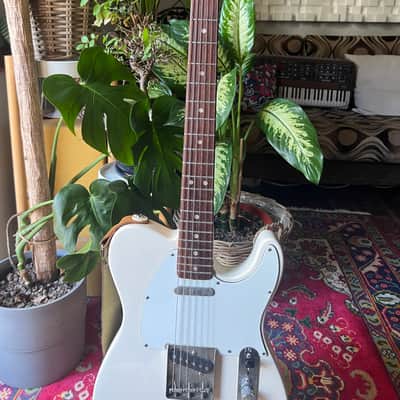
Fender Telecaster
Primary ska guitar (bright, cutting upstroke chords) · 2 single-coil pickups, 25.5-inch scale, hard maple neck, alder body, bright clean bridge tone(Player Tele: $600–$850 used)Best for: Most versatile ska guitar, bright bridge pickup for the ska upstroke chop, fast attack for rhythmic ska strumming, simple controls for quick stage adjustment
The Fender Telecaster is the most recommended ska guitar — the bright, percussive bridge pickup produces the cutting upstroke chop that defines ska rhythm guitar. The Telecaster's simplicity and reliability suit the fast, rhythmically demanding nature of ska playing. Third-wave ska guitarists frequently use Telecasters for their bright clarity through clean amplifier channels. The maple neck adds brightness and attack, important for the ska upstroke to cut through horns and rhythm section. Used at $600–$850.
What to check used: Ska Telecaster playing requires a very clean amplifier channel — ska rhythm guitar rarely uses distortion except in ska-punk. The Telecaster's bridge pickup through a bright clean amp (Fender Twin Reverb, Roland Jazz Chorus) produces the canonical ska tone. Avoid dialing in reverb or warmth that softens the attack — ska rhythm needs percussive punch.
#2
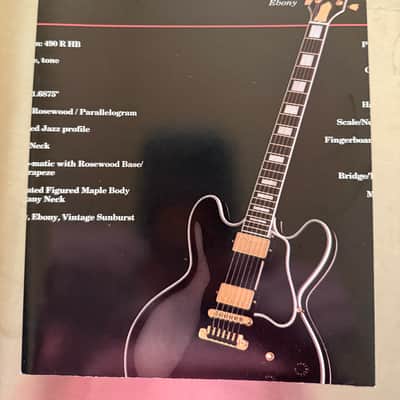
Gibson ES-335
Traditional ska and reggae-ska semi-hollow (warm, full chord voicings) · Semi-hollow, 2 humbuckers, 24.75-inch scale, warm acoustic resonance, dual Florentine cutaway$2,200–$3,000 usedBest for: Traditional ska and ska-jazz fusion, warm semi-hollow tone for fuller chord voicings, Jamaican first-wave ska aesthetic, big, warm chord sound for ska music's jazz roots
Original Jamaican ska (1960s) drew directly from jazz and R&B — the ES-335 format semi-hollow was used extensively in early ska music for its warm, full chord sound that bridged jazz and the emerging ska rhythm. For players interested in traditional and classic ska (Desmond Dekker era, The Skatalites), the semi-hollow ES-335 warmth provides the appropriate musical heritage. Used at $2,200–$3,000.
What to check used: The Gibson ES-335 is a premium investment appropriate for players who specifically want traditional ska tone and jazz-influenced chord voicings. For third-wave ska (No Doubt, Mighty Mighty Bosstones, Save Ferris), the Telecaster or Stratocaster is the more appropriate and affordable choice.
#3
Fender Stratocaster
Versatile ska-punk and third-wave ska guitar · 3 single-coil pickups, 5-position switch, 25.5-inch scale, alder body, tremolo arm(Player Strat: $600–$850 used)Best for: Third-wave ska and ska-punk versatility, middle pickup warmth for ska chord work, bridge pickup for ska-punk distortion, versatile tonal range for ska-punk bands
The Fender Stratocaster is used across third-wave ska and ska-punk — Tom Dumont (No Doubt) used Stratocasters extensively for the band's ska-punk and new wave hybrid sound. The Stratocaster's five-position switching allows the warm middle pickup for clean ska strumming and the bridge pickup for ska-punk distorted passages. For ska players who also play punk, rock, or reggae, the Stratocaster covers more tonal ground than the Telecaster. Used at $600–$850.
What to check used: The Stratocaster's floating tremolo can detune under aggressive ska strumming if not properly set up — verify the tremolo is blocked or set up correctly for rhythm playing. Many ska guitarists block the Stratocaster tremolo (stuffing a wooden block between the tremolo block and body cavity) for tuning stability during intensive ska upstroke playing.
#4
Ibanez Artcore AF75
Affordable semi-hollow for ska and ska-jazz · Semi-hollow, 2 Artcore humbuckers, 25-inch scale, single Florentine cutaway, mahogany neck, warm hollow-body tone$400–$500 new / $260–$380 usedBest for: Ska-jazz and traditional ska on budget, warm semi-hollow chord voicings for ska without Gibson prices, Artcore reliability for gigging
The Ibanez Artcore AF75 is the accessible semi-hollow option for ska players who want traditional ska warmth without Gibson ES-335 prices — the Artcore humbuckers produce warm, full chord tone suitable for ska-jazz and traditional ska at $260–$380 used. For ska players whose influences are in the traditional, jazz-rooted first-wave and second-wave ska tradition, the Artcore AF75 provides the semi-hollow character at a fraction of the Gibson cost. Used at $260–$380.
What to check used: The Artcore AF75 humbuckers are warmer and less articulate than Telecaster single-coils — for third-wave ska and ska-punk where the cutting upstroke chop is essential, the Telecaster is the more appropriate choice. The AF75 suits ska players whose primary influences are traditional, jazz-influenced ska rather than third-wave American ska.
#5
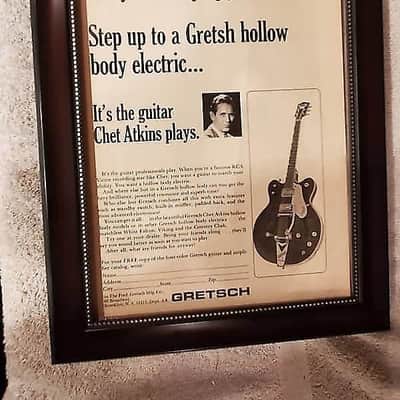
Gretsch G5420T
Hollow-body ska (rockabilly-ska crossover, vintage ska tone) · Hollow body, 2 Broad'Tron BT-2S pickups, 24.6-inch scale, Bigsby-style tremolo, chambered body with center block$700–$850 new / $480–$650 usedBest for: Vintage-inspired ska tone, rockabilly-ska crossover, Bigsby vibrato for subtle pitch inflection, hollow-body warmth with feedback resistance from center block
The Gretsch G5420T bridges the hollow-body warmth of traditional ska with practical stage feedback resistance — the chambered center block prevents the excessive feedback that fully hollow instruments encounter at ska volumes. The distinctive Broad'Tron pickups provide warm, slightly dark tone that suits vintage ska chord voicings. For ska bands with rockabilly or vintage aesthetic influences, the G5420T is the recommendation. Used at $480–$650.
What to check used: The G5420T's Bigsby-style tremolo can cause tuning instability under heavy ska strumming — the spring tension is lighter than a Stratocaster tremolo. For rhythmically intensive ska playing, block or stabilize the tremolo arm to maintain tuning through long sets.
#6
Squier Affinity Telecaster
Budget ska guitar for beginners · Alder body, 2 Fender-designed single-coil pickups, 25.5-inch scale, 21 frets, bright clean tone$250–$300 new / $150–$210 usedBest for: Budget ska guitar entry, Telecaster upstroke character at beginner prices, essential ska brightness for learning technique
The Squier Affinity Telecaster is the accessible ska guitar entry — Fender-designed single-coil pickups in the Telecaster format at $150–$210 used provide the essential brightness for ska upstroke technique. For ska beginners who want Telecaster character at minimal cost to learn ska rhythm technique, the Affinity is the starting point. Used at $150–$210.
What to check used: The Squier Affinity has noticeably more fret ends and less refined construction than the Classic Vibe series. For dedicated ska technique practice, the Squier Classic Vibe 50s Tele ($220–$300 used) is a meaningful improvement over the Affinity. The Affinity is the minimum viable budget option; the Classic Vibe is the appropriate budget recommendation for serious beginners.
#7
Epiphone Casino
Fully hollow ska (traditional ska maximum warmth) · Fully hollow, 2 P-90 single-coil pickups, 24.75-inch scale, laminate maple body, natural acoustic resonance$600–$700 new / $400–$560 usedBest for: Traditional and first-wave ska warmth, P-90 single-coil brightness in hollow body for ska chord clarity, fully hollow resonance for vintage ska sound
The Epiphone Casino is a fully hollow P-90 guitar that bridges jazz warmth and single-coil bite — the combination of hollow body resonance and P-90 single-coil clarity is well-suited to traditional ska's jazz roots. P-90s are brighter than humbuckers but warmer than Telecaster single-coils, producing a character that suits chord-forward ska strumming. Used at $400–$560.
What to check used: The fully hollow Casino feeds back at moderate-to-high volumes — ska concerts and ska-punk applications require careful positioning away from amplifiers to prevent feedback. This is an inherent characteristic of fully hollow instruments. The Ibanez Artcore AF75 (chambered center block) provides similar warmth with better feedback resistance.
#8
Rickenbacker 330
Jangly ska (chime for ska-rock and two-tone era UK ska) · Semi-hollow, 2 Rickenbacker Hi-Gain single-coil pickups, 24.75-inch scale, American-made, characteristic chime$1,800–$2,200 new / $1,300–$1,800 usedBest for: UK two-tone era ska and ska-punk influence, distinctive jangle for ska rhythm, The Specials and Madness adjacent tonal character
The Rickenbacker 330 is associated with UK two-tone era ska — the distinctive jangle of Rickenbacker single-coil pickups suits the sharper, more aggressive upstroke character of British two-tone ska (The Specials, Madness, The Selecter). For ska players whose primary influences are UK two-tone or ska-punk bands influenced by British ska aesthetics, the Rickenbacker 330 provides the appropriate tonal character. Used at $1,300–$1,800.
What to check used: The Rickenbacker 330 is a premium investment relative to Telecaster or Stratocaster options. The premium is justified for players who specifically want Rickenbacker's tonal character — but for ska beginners exploring the genre, start with a Telecaster and invest in Rickenbacker when specifically pursuing UK ska tone.