#1
Martin 000-15M
Best acoustic for DADGAD and fingerstyle open tunings · 000 body, solid mahogany top/back/sides, 24.9-inch scale length, 1.75-inch nut width, forward-shifted scalloped X bracing$500–$700 usedBest for: DADGAD, open D, and Celtic fingerpicking open tunings — the shorter 24.9-inch scale length reduces string tension in alternate tunings, making the guitar easier to play and preventing pitch sharpness that occurs on longer-scale instruments in lower tunings
The Martin 000-15M is the most recommended acoustic guitar for open and alternate tunings — the shorter 24.9-inch scale creates naturally lower string tension in standard tuning, and dropping to DADGAD or Open D tuning results in tension appropriate for fingerpicking without going slack. The solid mahogany construction produces warm, sustain-forward tone that resonates beautifully in open tunings when all strings drone. The 000 body suits players who want an intimate playing experience rather than a dreadnought's projection. Used at $500–$700.
What to check used: The Martin 000-15M's shorter scale length produces less volume and projection than dreadnought alternatives — for players who need open-tuning accompaniment for singing at performance volumes, the 000 may require amplification. The all-mahogany construction is warmer and less bright than spruce-top alternatives, which suits DADGAD overtones but may not suit players looking for bright, sparkly open-tuning sound.
#2
Taylor 314ce
Versatile acoustic-electric for open tuning performance · Grand Auditorium body, Sitka spruce top, sapele back/sides, 25.5-inch scale, Venetian cutaway, Taylor ES2 pickup$950–$1,300 usedBest for: Live performance open tuning (DADGAD, Open G) with pickup system, players who alternate between standard and open tunings on stage, Taylor's balanced tone that works equally well in standard and alternate tunings
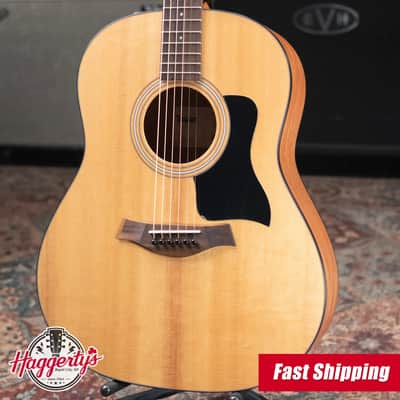
The Taylor 314ce is the open-tuning acoustic-electric standard for live performance — the Grand Auditorium body provides the balanced frequency response that translates well through any PA system in open tunings, the Taylor ES2 pickup system captures the full acoustic character of open-tuned voicings, and the 25.5-inch scale with Taylor's light action allows comfortable alternate tuning play. Used at $950–$1,300.
What to check used: The Taylor 314ce's 25.5-inch scale is longer than the Martin 000-15M — string tension in open and low tunings is higher, which can feel stiff for players who drop multiple strings. For purely fingerpicked open tuning work (DADGAD), the shorter-scale Martin 000-15M is more comfortable. The Taylor is the choice for performance applications requiring a pickup.
#3
National Resonator Style O
Resonator guitar (Open G slide essential) · Metal body, biscuit bridge, cone resonator, typically played in Open G, E, or A tuning with slide$500–$900 used (vintage/NRP) / $300–$500 used (Dobro/Regal)Best for: Open G and Open E slide guitar, Delta blues and roots music, the specific metallic resonator tone in open slide tunings that no acoustic guitar can replicate
The National Resonator in Open G or Open E is the definitive slide guitar instrument — the resonator cone produces the metallic, sustain-forward tone that defines Delta blues slide playing (Robert Johnson, Tampa Red, Son House). A resonator must be played with a slide in open tuning to produce the characteristic resonator sound. Used National Resophonic Style O at $500–$900; more accessible Dobro or Regal resonators at $200–$400.
What to check used: Resonator guitars are specifically optimized for slide playing in open tunings — fingerpicking in standard tuning on a resonator is possible but the instrument is designed for slide. Players who want a resonator for both slide and standard playing should consider adjusting nut height. The high action on factory-set resonators (optimal for slide) requires adjustment for finger-style playing.
#4
Gibson J-45
Open G and open chord strumming (songwriter standard) · Dreadnought body, Sitka spruce top, mahogany back/sides, 24.75-inch scale length, round-shoulder shape, Gibson Vintage-Sunburst finish options$900–$1,400 used (Standard) / $650–$900 used (Studio)Best for: Open G chord strumming for blues-rock and Americana, Keith Richards-style Open G riff guitar, any singer-songwriter application using open tunings for layered chord voicings
The Gibson J-45 is the most-used open-tuning guitar among professional singer-songwriters — the 24.75-inch scale length reduces tension for open tunings, the round-shoulder dreadnought body projects well for strummed open-chord progressions, and the mahogany/spruce tonal combination balances warmth and brightness optimally for vocal accompaniment in open G and D. Keith Richards famously used a J-45 as a template for his Open G Telecaster work. Used at $650–$1,400.
What to check used: Gibson J-45 pricing spans a wide range depending on year, finish, and variant — the Standard ($900–$1,400 used) includes upgraded materials over the Studio ($650–$900 used). Vintage J-45 models (pre-1970) can reach $3,000–$8,000 used and require careful authentication. Buy from reputable sources when considering vintage Gibsons.
#5
Taylor GS Mini Mahogany
Travel and practice open tuning guitar · 23.5-inch scale, small body, solid mahogany top, simplified electronics options, Taylor mini size format$250–$360 usedBest for: Travel and practice open tuning playing, players who want a dedicated open-tuning instrument without high cost, children and smaller players learning DADGAD or open G
The Taylor GS Mini Mahogany is the most recommended open-tuning practice guitar — the 23.5-inch scale is the shortest in the Taylor acoustic lineup, producing extremely low string tension in DADGAD and open tunings that makes learning alternate tuning techniques comfortable. The small body is easy to manage on couches, in travel, and for extended practice sessions. Dedicate one GS Mini to DADGAD and another to standard — the low cost makes this practical. Used at $250–$360.
What to check used: The Taylor GS Mini's small body produces limited bass response and projection compared to full-size guitars — it is a practice and travel instrument, not a stage instrument. For performance open tuning, step up to a full-size acoustic. The GS Mini's short scale means string gauges require adjustment to maintain proper tension — lighter strings (10-47 acoustic) can feel too slack; medium-light (11-52) maintains better tension.
#6
Collings OM2H
Premium fingerpicking open tuning guitar · Orchestra Model body, Sitka spruce top, East Indian rosewood back/sides, 25.5-inch scale, 1.75-inch nut, premium Collings build quality$2,000–$3,000 usedBest for: Serious fingerstyle and open-tuning players who want the premium American acoustic guitar experience, DADGAD players who play fingerstyle in Celtic and folk traditions
The Collings OM2H is the premium open-tuning fingerstyle guitar — Collings builds instruments with the precision and tonal clarity that open tunings require to sound their best. The Orchestra Model body produces the complex overtone profile of open-tuned chord voicings more clearly than smaller parlor guitars or larger dreadnoughts. The rosewood back and sides add depth to open-tuned drone strings. Used at $2,000–$3,000.
What to check used: The Collings OM2H at $2,000–$3,000 used is a significant investment — for players who are exploring open tuning for the first time, a Martin 000-15M ($500–$700) is the appropriate starting point. The Collings is appropriate when you have confirmed that open tuning is a primary element of your playing style and want the best possible instrument for it.
#7
Larrivée OM-03
Canadian craftsmanship for open fingerstyle tuning · Orchestra Model body, Sitka spruce top, wild cherry back/sides, 25.5-inch scale, 1.75-inch nut$600–$900 usedBest for: Fingerstyle and DADGAD players who want premium build quality without Gibson or Taylor pricing, Canadian-made acoustic quality at mid-range pricing
The Larrivée OM-03 offers orchestra model open-tuning playing at accessible pricing — Larrivée's Canadian craftsmanship produces consistent, accurate instrument builds, and the OM body shape is specifically designed for fingerstyle clarity in any tuning. The wild cherry back and sides provide a similar tonal profile to mahogany — warm, sustain-forward, and resonant in open-tuned droning chord work. Used at $600–$900.
What to check used: Larrivée is less well-known than Martin, Taylor, or Gibson in secondary markets — resale value is lower than equivalent Martin or Taylor instruments even though build quality is comparable. For players focused on investment value, Martin 000-15M ($500–$700 used) has stronger resale. For players who prioritize instrument quality over brand recognition, the Larrivée is excellent value.
#8
Fender CD-60S
Budget open tuning acoustic (beginner entry) · Dreadnought body, solid spruce top, mahogany back/sides, 25.3-inch scale, scalloped X bracing$160–$240 usedBest for: First open tuning experience for beginners who want to try DADGAD or open G without significant investment, the most affordable solid-top acoustic for open tuning exploration
The Fender CD-60S is the recommended first open-tuning acoustic — the solid spruce top produces genuine acoustic resonance in open tuning that laminate-top alternatives cannot replicate, and the mid-range scale length (25.3-inch) provides manageable tension in DADGAD. Dedicate the CD-60S to a single open tuning and leave it there — the low cost removes the hesitation to commit one guitar to a non-standard tuning. Used at $160–$240.
What to check used: The Fender CD-60S is an entry-level instrument — the tuning machines are adequate but not precise, which can make fine-tuning in alternate tunings require more time. Better quality tuning machines (Grover or Gotoh replacements, $30–$60) significantly improve alternate tuning stability on budget acoustics. For players who have confirmed open tuning as their primary style, the Martin 000-15M ($500–$700) is the substantial upgrade.