#1
Fender Stratocaster (open tuning)
Most versatile electric slide guitar · 3 single-coil pickups, 25.5-inch scale, synchronized tremolo (block for slide), alder body, 9.5-inch radius fretboard(Player Strat: $600–$850 used)Best for: Electric blues slide guitar, open E and open G tuning, Duane Allman and Eric Clapton Layla-era slide reference, neck pickup for warm slide tone
The Fender Stratocaster is the most used electric slide guitar — Duane Allman used Stratocasters (and Les Pauls) for his definitive blues slide work on Layla and At Fillmore East. Eric Clapton's Layla-era slide tone was a Stratocaster in open E tuning. The neck pickup produces the warm, round slide tone that blues slide demands. The Stratocaster's 25.5-inch scale provides appropriate string tension for slide playing in open tunings. Used at $600–$850.
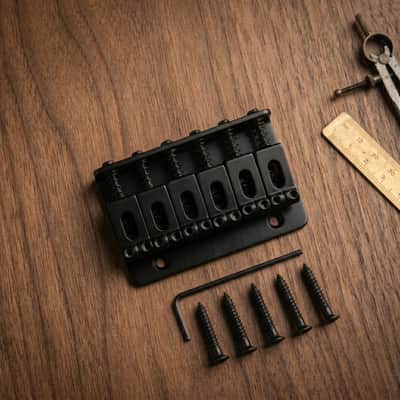
What to check used: Stratocasters for slide playing require the vibrato bridge blocked (a piece of wood or foam placed behind the tremolo block inside the guitar cavity) to prevent detuning when the bridge floats. Without blocking, the Stratocaster bridge will shift when a heavy slide is placed on the strings, detuning the guitar. This is a simple modification — a luthier can do it for $30-50.
#2
National Style O Resonator
Metal body resonator (Delta blues slide standard) · Tricone resonator, steel body, 25-inch scale, open tuning optimized, loud unamplified$900–$1,400 usedBest for: Delta blues slide guitar, authentic acoustic slide tone, Son House and Robert Johnson instrument style, loud unamplified resonator projection for acoustic slide performance
The National Style O is the authentic Delta blues slide instrument — Son House, Robert Johnson, and Bukka White played metal-body resonators for their slide playing before electric amplification was common. The metal body and resonator cone produce a bright, cutting, distinctive acoustic slide tone that is unique to this instrument type. For slide players who want the authentic acoustic Delta blues slide sound, the National is the correct instrument. Used at $900–$1,400.
What to check used: The National Style O is specifically for open tuning slide playing — it does not intonate accurately for standard chord work. The metal body is heavier than a standard guitar. The National is a dedicated slide/open tuning instrument, not a general-purpose guitar.
#3
Gibson Les Paul Standard
Humbucker slide guitar (Duane Allman and classic rock slide) · Mahogany body, 2 humbuckers, 24.75-inch scale, shorter scale for slide bending, set-neck sustain($1,200–$1,800 used: Les Paul Standard 50s)Best for: Classic rock and blues slide with humbucker warmth, Duane Allman and Warren Haynes slide reference, sustaining set-neck for slide notes to bloom, warm neck humbucker for slide melody
The Gibson Les Paul is the other primary slide guitar reference — Duane Allman used a 1959 Les Paul Standard for much of his slide work (the 'Duane Allman slide tone' is specifically the Les Paul neck humbucker in open E). Warren Haynes (Gov't Mule), Derek Trucks, and many Southern rock and blues slide players favor Les Pauls for the warm, sustaining humbucker character in open tuning. Used at $1,200–$1,800.
What to check used: Gibson Les Paul quality control varies by production period — inspect used examples carefully. The 24.75-inch scale is shorter than the Stratocaster's 25.5-inch, producing slightly different string tension in open tuning. Many slide players prefer the Les Paul's feel for this; others find the Stratocaster's tension more appropriate.
#4
Epiphone Les Paul (slide alternative)
Budget Les Paul for slide beginners · Mahogany body, 2 Alnico Classic Pro humbuckers, 24.75-inch scale, set-neck, budget Gibson-inspired construction$280–$380 used (Les Paul Standard 50s Epiphone)Best for: Budget humbucker slide guitar, Les Paul format for learning slide technique, accessible price for beginners who want to explore slide playing
The Epiphone Les Paul Standard is the accessible Les Paul slide alternative at $280–$380 used — the Alnico Classic Pro neck humbucker provides warm slide tone at accessible prices. For beginners who want to explore slide technique with a humbucker guitar without investing in a Gibson Les Paul, the Epiphone is the starting point. Used at $280–$380.
What to check used: Slide playing on a standard electric guitar requires higher string action than normal playing — the slide needs to glide over the strings without touching the frets. Setup for slide (higher nut and saddle) costs $50-80 from a luthier and makes the guitar significantly less comfortable for standard chord playing. Many serious slide players dedicate a separate guitar to slide with high action rather than using their standard setup guitar.
#5
Dobro Hound Dog Resonator
Round-neck resonator (bluegrass slide standard) · Wooden-body spider-cone resonator, round neck (standard fretting), maple body, chrome coverplate, available in metal body version$400–$500 new / $270–$380 usedBest for: Bluegrass resonator slide, round-neck resonator for standard and lap-style slide, Dobro sound for country and bluegrass slide playing
The Dobro Hound Dog is the accessible entry into wooden-body resonator slide guitar — the Dobro sound is the standard for bluegrass and country slide guitar. The round-neck design allows playing in either standard position or lap-steel position (raised on lap in open tuning). For bluegrass and country slide players who want the characteristic Dobro woody resonator tone, the Hound Dog provides it at $270–$380 used. Used at $270–$380.
What to check used: The Dobro round-neck is specifically voiced for the bluegrass/country sound — it sounds different from the National steel-body Delta blues resonator. The two instruments are used in different musical contexts: Dobro for bluegrass and country; National for Delta blues and roots music.
#6
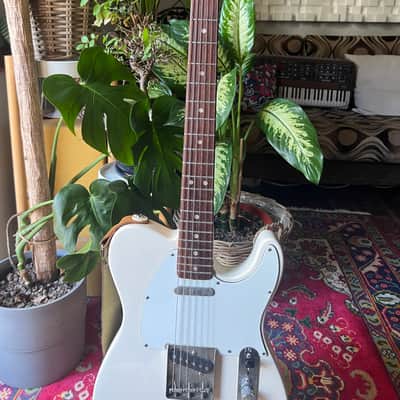
Fender Telecaster
Country and rock slide workhorse · 2 single-coil pickups, 25.5-inch scale, hard maple neck, alder body, bridge pickup for bright slide tone(Player Tele: $600–$850 used)Best for: Country and rock slide guitar, bridge pickup for bright cutting slide tone, Bonnie Raitt and Beck country-influenced slide reference, reliable all-around guitar for slide and standard playing
The Fender Telecaster is the go-to country and rock slide guitar — Bonnie Raitt uses a Telecaster for her signature blues-country slide work, and various country and rock slide players prefer the Telecaster's bright bridge pickup clarity for slide lines that cut through band mixes. The Telecaster's simple construction and 25.5-inch scale work well for slide in open tunings. Used at $600–$850.
What to check used: Same bridge-blocking consideration as the Stratocaster — however, the Telecaster bridge is a fixed saddle design that does not float, so this issue does not apply. The Telecaster is naturally stable for slide playing without modification.
#7
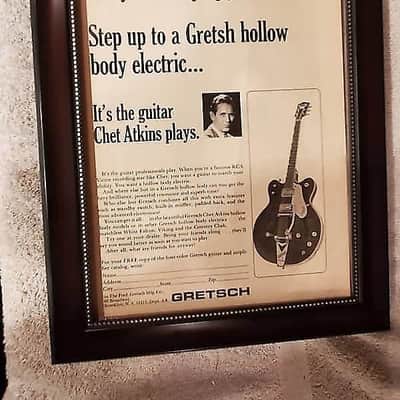
Gretsch G5420T Electromatic
Hollowbody slide (roots and vintage slide character) · Full hollow thinline, 2 Broad-tron humbuckers, Bigsby B60, 24.6-inch scale$480–$650 usedBest for: Country and rockabilly slide guitar, hollowbody acoustic bloom for slide note sustain, Bigsby for vibrato effect on slide notes
The Gretsch hollowbody is the vintage country and roots slide guitar — the hollow construction adds acoustic resonance to slide notes, and the Bigsby vibrato allows pitch modulation independent of the bottleneck (useful for adding tremolo to held slide notes). For roots, country, and rockabilly slide players who want hollowbody character, the Gretsch Electromatic is the recommendation. Used at $480–$650.
What to check used: Hollow-body guitars in open tuning at high volume feedback easily — the acoustic resonance that makes hollow instruments good for slide is also the source of feedback when amplified at louder volumes. Use semi-hollow instruments (Ibanez AS73, Epiphone ES-335) if live volume is a concern.
#8
Lap Steel Guitar (Rogue RLS-1)
Dedicated lap steel for Hawaiian and country slide · Lap steel specific design, elevated nut for slide-only playing, straight body, 22.5-inch scale, fixed bridge optimized for slide$100–$130 new / $70–$100 usedBest for: Dedicated Hawaiian and country lap steel technique, steel guitar for sitting practice, separate from standard guitar for maximum slide action setup
The Rogue RLS-1 is the accessible entry into dedicated lap steel guitar — a lap steel is played horizontally on the lap in open tuning, specifically designed for bottleneck or bar slide technique. The instrument cannot be played as a standard guitar; it is a dedicated slide instrument with extremely high action. For players interested in steel guitar technique specifically (Hawaiian, pedal steel warmup, vintage country), a dedicated lap steel allows proper technique development without compromising a standard guitar's setup. Used at $70–$100.
What to check used: Lap steel guitar is a fundamentally different technique from standard guitar playing — holding the steel bar, muting with the right hand, and playing in open tuning are specific skills that take time to develop independently. Lap steel is not a shortcut to bottle neck slide technique on a standard guitar. Approach it as a separate instrument.
#9
Squier Classic Vibe 50s Stratocaster
Budget Stratocaster for slide beginners · Alder body, 3 Fender-designed Alnico single-coil pickups, synchronized tremolo, 25.5-inch scale, vintage-style tremolo$350–$400 new / $220–$290 usedBest for: Budget slide guitar entry, Stratocaster neck pickup warmth for slide tone, accessible price for beginners who want to explore slide technique
The Squier Classic Vibe 50s Stratocaster is the accessible entry into Stratocaster-style slide guitar — Fender-designed Alnico single-coil pickups provide the neck pickup warmth needed for blues slide, and the 25.5-inch scale is appropriate for slide playing in open tunings. For beginners who want to explore slide on a budget before investing in a dedicated slide setup, the Classic Vibe Strat is the starting point. Used at $220–$290.
What to check used: Budget Stratocasters for slide require the same vibrato bridge blocking as premium models — the tremolo must be blocked to prevent detuning in open tuning with heavy slide. Also, the standard factory action is too low for comfortable slide playing — a high-action slide setup costs $50-80 from a luthier.