#1
Martin 000-15M
All-mahogany OM/000 (Piedmont and country blues) · Solid mahogany top, back and sides, 000 body (smaller than dreadnought), 24.9-inch scale, satin finish, no binding$850–$950 new / $580–$780 usedBest for: Piedmont and country blues fingerpicking, all-mahogany warmth, vocals above guitar, smaller body for fingerpicking comfort
The Martin 000-15M is the recommended acoustic blues guitar — all-mahogany construction produces a warm, dry, focused tone that sits back in the mix and allows the voice and picking technique to project clearly. The 000 body is smaller than a dreadnought, more comfortable for extended fingerpicking sessions. Robert Johnson, Mississippi John Hurt, and Piedmont blues players used mahogany guitars specifically for this sonic characteristic. Used at $580–$780.
What to check used: The 000-15M is specifically optimized for fingerpicking and vocal accompaniment — the softer, less projecting mahogany tone is a limitation for players who want the volume and projection of a dreadnought. Blues players who flatpick or play solo instrumental acoustic blues should consider the Martin HD-28 or similar spruce-top dreadnought for better volume and articulation.
#2
National Style O Resonator
Metal body resonator (Delta blues slide standard) · Tricone resonator, steel body, 25-inch scale, open tuning, louder than standard acoustic for unamplified performance$1,400–$1,700 new / $900–$1,400 usedBest for: Delta blues slide guitar, Robert Johnson and Son House instrument, metal body resonator volume for unamplified performance, classic Delta blues aesthetics
The National Style O is the authentic Delta blues resonator — Son House, Robert Johnson, and Bukka White played resonator guitars for their volume before amplification was available. The metal body resonator produces a bright, cutting, slightly tinny tone that is instantly recognizable in Delta blues. The National Style O is the premium resonator and the historically authentic choice. Used at $900–$1,400.
What to check used: The National resonator requires specific setup for open tunings (typically open G or open D for Delta blues slide). The metal body is heavier than a standard guitar. National resonators do not intonate as precisely as standard acoustic guitars — they are designed for open tuning slide playing, not standard tuning chord work. Verify you want a dedicated slide/Delta blues instrument before purchasing.
#3
Recording King RD-328
Budget Adirondack dreadnought for acoustic blues volume · Solid Adirondack spruce top, solid Indian rosewood back/sides, 25.4-inch scale, scalloped X-bracing$400–$450 new / $280–$380 usedBest for: Budget acoustic blues dreadnought, Adirondack spruce volume and punch for flatpicking blues, all-solid construction at accessible price
The Recording King RD-328 is the recommended budget acoustic blues guitar for players who prefer the flatpicking approach and want volume — Adirondack spruce top produces more punch and projection than Sitka, which suits the louder, more aggressive blues flatpicking style. All-solid construction at $280–$380 used is exceptional value. Used at $280–$380.
What to check used: Recording King quality control is less consistent than Martin or Eastman — plan on a setup ($50-80) for any Recording King instrument. Inspect fret finishing, nut and saddle quality, and action before purchasing. The tonewoods and bracing are excellent for the price; the finishing requires attention.
#4
Waterloo WL-14
Collings-made vintage-style acoustic blues guitar · Solid Sitka or Adirondack spruce top, solid mahogany back/sides, 14-fret neck join, small 14-size body, made by Collings$1,400–$1,700 new / $950–$1,400 usedBest for: Vintage 1930s-style acoustic blues guitar construction, Collings quality in smaller vintage body, country blues and Piedmont style
The Waterloo WL-14 is made by Collings Guitars but designed as a separate brand specifically for vintage-style acoustic instruments — the small 14-size body replicates the dimensions and construction of 1930s guitars used by country blues players, including the light bracing and simplified construction of the era. For players who want authentic vintage-style country blues tone from a premium builder, the Waterloo is the recommendation. Used at $950–$1,400.
What to check used: The Waterloo is a premium instrument for serious acoustic blues players who specifically want the vintage small-body tone — it is not a beginner recommendation. The vintage-light construction is more sensitive to humidity and playing conditions than modern instruments. Appropriate for advanced players committed to country blues tradition.
#5
Gibson J-45
Classic acoustic blues dreadnought (warm humming tone) · Solid Sitka spruce top, solid mahogany back/sides, Advanced Response bracing, 24.75-inch scale, rounded shoulder$1,900–$2,200 new / $1,200–$1,900 usedBest for: Classic American acoustic blues tone, Robert Johnson-inspired warm dreadnought, vocal accompaniment and blues flatpicking
The Gibson J-45 is used by many acoustic blues players for its warm, rich, mahogany-backed tone — darker and more vocal-complementary than spruce-and-rosewood combinations. Many classic blues recordings from the 1950s and 1960s were made with Gibson-style dreadnoughts. For acoustic blues players who want the warm Gibson character, the J-45 is the recommendation. Used at $1,200–$1,900.
What to check used: Gibson acoustic quality control has been variable over production periods — inspect J-45 instruments carefully (neck angle, fret work, nut quality) when buying used. The best J-45s are excellent; inconsistently assembled examples require setup work.
#6
Regal RC-2 Resonator
Budget resonator for Delta slide beginners · Wood body resonator, spider bridge, single resonator cone, open tuning capable, Regal construction$200–$250 new / $130–$200 usedBest for: Budget entry into resonator/slide blues, wood body for warmer resonator tone than steel body, Delta blues technique practice
The Regal RC-2 is the accessible entry into resonator guitar playing for acoustic blues beginners — wood body resonator produces a warmer, slightly less cutting tone than the National steel body, at a fraction of the price. For players who want to explore Delta blues slide technique without the National price, the Regal is the recommendation. Used at $130–$200.
What to check used: The Regal RC-2 is significantly lower quality than National resonators — the build quality and tone are functional for learning technique but the sound is not the authentic Delta blues resonator character. Players who commit to resonator playing should budget for the upgrade to a National (or Dobro for bluegrass) when they have confirmed the slide technique.
#7
Eastman E6D
Mid-range dreadnought for acoustic blues · Solid Sitka spruce top, solid Indian rosewood back/sides, 25.5-inch scale, Eastman craftsmanship$700–$800 new / $480–$650 usedBest for: All-solid dreadnought quality for acoustic blues at mid-range price, Eastman craftsmanship, warm dreadnought blues tone
The Eastman E6D is the all-solid dreadnought recommendation for acoustic blues players at mid-range prices — solid Sitka spruce and rosewood provide the acoustic blues dreadnought tone at $480–$650 used. Eastman's quality is consistently excellent. For acoustic blues players who want all-solid dreadnought quality without Martin pricing, the Eastman E6D is the recommendation. Used at $480–$650.
What to check used: Eastman availability is through specialty dealers rather than Guitar Center — the purchase process may require more research than buying a Yamaha or Fender. The quality is genuine and the instruments are well-regarded; the distribution channel is just narrower.
#8
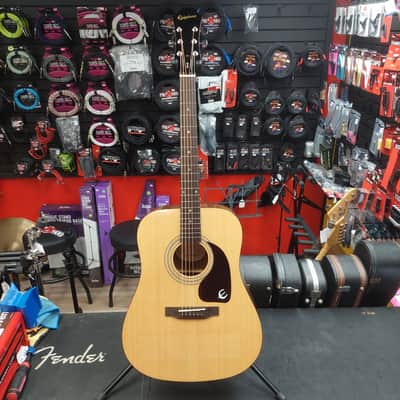
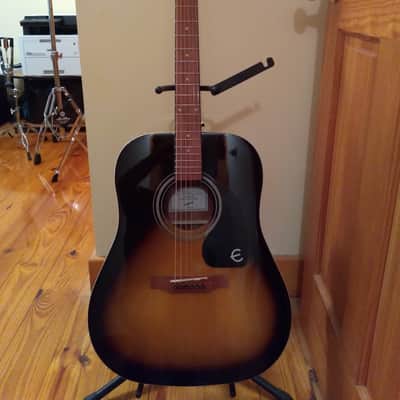
Epiphone J-200
Budget jumbo for acoustic blues and gospel · Spruce top (laminate), maple back/sides, jumbo body, Shadow ePerformer pickup, budget Gibson-inspired jumbo$300–$350 new / $200–$280 usedBest for: Budget acoustic blues guitar with electronics, jumbo body volume for solo performance, accessible Gibson-inspired aesthetics
The Epiphone J-200 provides jumbo body volume and electronics at budget prices — for acoustic blues players who perform solo and need volume and amplification capability without premium investment, the J-200 covers both at $200–$280 used. The jumbo body produces more acoustic volume than smaller bodies. Used at $200–$280.
What to check used: The Epiphone J-200's laminate top limits acoustic resonance and tonal complexity — at $200–$280 used, this is expected. The Shadow ePerformer pickup provides serviceable electronics. For players who prioritize acoustic tone quality, the Fender CD-60S (solid top, no electronics) at comparable prices provides better acoustic tone at the cost of electronics.
#9
Martin HD-28
Herringbone dreadnought (professional acoustic blues) · Solid Sitka spruce top, solid East Indian rosewood back/sides, herringbone purfling, scalloped X-bracing, 25.4-inch scale$2,800–$3,200 new / $1,800–$2,800 usedBest for: Professional acoustic blues flatpicking, herringbone vintage character, best flatpicking volume and articulation, professional investment
The Martin HD-28 is the professional acoustic blues guitar — the herringbone purfling is a reference to the original 1930s Martin HD-28 that blues, folk, and bluegrass players have used for decades. The scalloped X-bracing produces maximum acoustic volume and tonal complexity. For serious acoustic blues flatpickers who need the loudest, most articulate acoustic guitar available, the HD-28 is the recommendation. Used at $1,800–$2,800.
What to check used: The Martin HD-28 at $1,800+ is a professional investment appropriate for committed players. The instrument rewards good technique — a poorly adjusted or roughly played HD-28 does not sound dramatically better than an Eastman or Recording King. The full benefit of the Martin investment appears over years of playing.