#1
Yamaha CG122
Classical nylon-string for bossa nova and classical Latin · Sitka spruce or cedar top, nato back/sides, traditional fan-bracing, nylon strings, 52mm nut$280–$350 new / $180–$250 usedBest for: Bossa nova fingerpicking, Brazilian popular music classical guitar approach, classical Latin repertoire, affordable entry to nylon-string Latin guitar
The Yamaha CG122 is the affordable entry to classical and bossa nova Latin guitar — the nylon string tone and traditional body shape produce the warm, round character that bossa nova demands. João Gilberto's foundational bossa nova used a classical guitar, and the CG122 replicates that approach at accessible price. The 52mm wide nut suits Latin fingerstyle technique. Used at $180–$250.
What to check used: Classical guitar technique requires different right-hand positioning than steel-string guitar — nail length, angle, and finger independence are more critical than for steel-string players. If transitioning from steel-string to nylon, the lower tension and wider neck require adjustment time. Classical guitar instruction specifically covers the right-hand technique for bossa nova and Latin classical playing.
#2
Cordoba C7
Mid-range classical nylon-string for serious Latin repertoire · Cedar or spruce top, Indian rosewood back/sides, traditional fan-bracing, nylon strings, 52mm nut$450–$550 new / $280–$380 usedBest for: Serious bossa nova and classical Latin guitar study, cedar top warmth for fingerstyle Latin expression, solid rosewood back and sides for improved resonance over entry models
The Cordoba C7 is the step-up from entry-level nylon strings for serious Latin players — the solid rosewood back and sides and cedar top produce the warm, resonant character needed for expressive bossa nova and Latin classical interpretation. For players committed to Latin guitar as a primary instrument, the C7 provides the resonance for nuanced touch expression. Used at $280–$380.
What to check used: Cedar top Cordoba C7 is more touch-sensitive than a spruce top — softer attack produces a warm, dark tone; brighter attack produces more projection. For bossa nova's gentle, intimate playing style, the cedar top's sensitivity is appropriate. For louder Latin playing (salsa accompaniment, cuatro), the spruce top version produces more volume.
#3
Gibson ES-335
Latin jazz electric semi-hollow (Carlos Santana, Latin jazz) · Semi-hollow, 2 humbuckers, 24.75-inch scale, warm resonant tone$2,200–$3,000 usedBest for: Latin jazz electric guitar, warm semi-hollow tone for jazz-Latin fusion, sophisticated Latin jazz chord work with semi-hollow natural resonance, Wes Montgomery-adjacent mellow chord playing
The Gibson ES-335 suits Latin jazz electric playing — the semi-hollow warm humbucker tone provides the round, full character for Latin jazz chord melody and improvisation. Jazz-influenced Latin guitar (Latin jazz, smooth bolero) often uses semi-hollow instruments for the natural acoustic warmth. The ES-335's neck pickup in clean settings produces the warm, mellow tone of classic Latin jazz guitar. Used at $2,200–$3,000.
What to check used: The Gibson ES-335 is expensive. The Ibanez Artcore AG75 ($450–$600 used) or Epiphone ES-335 ($420–$600 used) provide semi-hollow Latin jazz warmth at significantly lower prices. For players beginning Latin jazz guitar, the Artcore provides the semi-hollow character without the Gibson investment.
#4
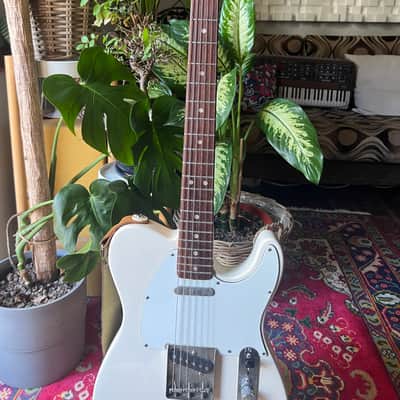
Fender Stratocaster
Latin rock electric (Carlos Santana primary, rock-Latin fusion) · 3 single-coil pickups, 5-position switch, 25.5-inch scale(Player Strat: $600–$850 used)Best for: Carlos Santana-influenced Latin rock fusion, smooth electric lead tone for Latin ballads, single-coil sparkle for uptempo Latin rhythms, versatile Latin popular music
The Fender Stratocaster suits Latin rock and pop — Carlos Santana's melodic, singing lead tone was achieved with various Stratocasters (and later PRS), but the Stratocaster's sustaining, smooth character with tube amp breakup produces the warm Latin rock lead quality. For Latin music that crosses from classical into rock-influenced territory, the Stratocaster is the most versatile electric. Used at $600–$850.
What to check used: Carlos Santana now uses PRS guitars (PRS Santana SE) — for the specific contemporary Santana tone, the PRS SE Santana ($600–$700 used) or PRS CE 24 ($1,000–$1,350 used) are more accurate. The Stratocaster covers early Santana (Woodstock era, 'Evil Ways') through a pushed tube amp; PRS covers post-1990s Santana production. Both are excellent for Latin rock.
#5
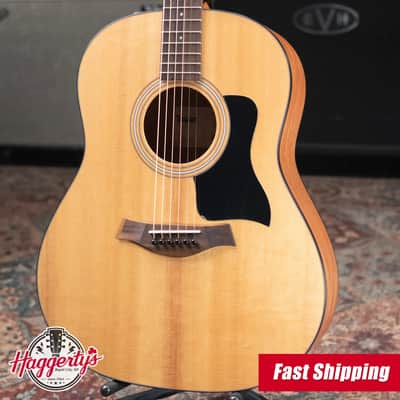
Taylor 314ce
Steel-string acoustic for Latin singer-songwriter · Sitka spruce top, solid sapele back/sides, Taylor ES2 electronics, 25.5-inch scale, cutaway$1,000–$1,300 usedBest for: Latin singer-songwriter and acoustic pop-Latin, steel-string acoustic for bolero and romantic Latin ballad, Taylor projection for Latin café or small venue performance
The Taylor 314ce suits Latin singer-songwriter and bolero acoustic playing — the warm sapele back/sides and spruce top produce balanced, projecting acoustic tone for solo performance. Latin ballad tradition (bolero, balada romántica) uses acoustic guitar prominently, and the Taylor 314ce's warm clarity suits intimate Latin vocal accompaniment. The ES2 electronics allow amplified performance of Latin acoustic repertoire. Used at $1,000–$1,300.
What to check used: Taylor sapele (314ce) has a slightly warmer, less bright character than Taylor rosewood (814ce). For bossa nova specifically, the nylon string instruments above are more authentic; the Taylor 314ce suits Latin steel-string acoustic playing in the bolero, pop, and cuatro-adjacent traditions.
#6
Ibanez Artcore AF75
Hollow-body Latin jazz accessible · Fully hollow, Ibanez Super 58 humbuckers, 24.75-inch scale, spruce top, maple body$400–$500 usedBest for: Budget Latin jazz hollow-body, accessible hollow-body warmth for Latin jazz chord work, Artcore quality-to-price ratio for Latin jazz beginners
The Ibanez Artcore AF75 is the accessible entry to hollow-body Latin jazz guitar — the fully hollow Super 58 pickup warmth and spruce top resonance provide Latin jazz character at $400–$500 used. For players entering Latin jazz from a rock or pop background who want hollow-body tone without the Gibson ES-335 investment, the AF75 is the most affordable fully hollow Latin jazz starting point. Used at $400–$500.
What to check used: The Ibanez AF75 has fully hollow body feedback — at Latin jazz volumes (low to moderate) this is manageable, but at rock or salsa band volumes the hollow body requires careful positioning relative to the amplifier. The semi-hollow Ibanez AS93 ($350–$450 used) has better feedback resistance for louder Latin contexts.
#7
Martin 000-15M
All-mahogany steel-string for intimate Latin acoustic · All-solid mahogany (top, back, sides), satin finish, 000 body, 25.4-inch scale$700–$900 usedBest for: Warm, intimate Latin acoustic tone with all-mahogany character, smaller 000 body for fingerpicking Latin ballads, Martin quality for acoustic bolero and romantic Latin styles
The Martin 000-15M suits intimate Latin acoustic playing — all-mahogany construction produces a warm, round tone with less treble brightness than spruce-top acoustics. The smaller 000 body provides a more intimate volume level and playability for close-position Latin fingerpicking. For Latin ballad and bolero guitar playing, the 000-15M's mellow warmth suits the understated emotional quality. Used at $700–$900.
What to check used: All-mahogany acoustics are warmer and less bright than spruce-top instruments — if your Latin playing requires projection and treble clarity (classical Latin, flamenco, or leading a salsa ensemble), the spruce-top Taylor 314ce above projects better. The 000-15M is ideal for intimate solo Latin playing.
#8
Epiphone Casino
Hollow-body for Latin rockabilly and vintage Latin pop · Fully hollow, 2 P-90 pickups, 24.75-inch scale$600–$700 new / $400–$560 usedBest for: Vintage Latin pop and Latin rockabilly, P-90 warmth for 1950s-1960s Latin pop arrangements, hollow-body resonance for classic Latin popular music production
The Epiphone Casino suits vintage Latin pop and the 1960s Latin popular music that used hollow-body guitars prominently — the fully hollow P-90 tone matches the electric guitar character of classic Latin popular recordings. For Latin musicians who reference the warm, slightly rough P-90 tone of vintage Latin jazz and pop, the Casino at $400–$560 used provides the sound authentically. Used at $400–$560.
What to check used: The Casino feeds back at higher volumes — vintage Latin pop was performed at moderate amplified volume, which suits the Casino's feedback behavior. Modern amplified Latin music at higher volumes requires the semi-hollow instruments (ES-335, Ibanez AS93) for better feedback resistance.