#1
Fender Stratocaster
Indie pop primary (Vampire Weekend Ezra Koenig, bright clean tone) · 3 single-coil pickups, 5-position switch, 25.5-inch scale(Player Strat: $600–$850 used)Best for: Vampire Weekend bright single-coil indie pop, chiming clean chord work, Stratocaster neck pickup for warm indie pop melody, indie pop jangle over rhythmic pop production
The Fender Stratocaster is the Vampire Weekend guitar — Ezra Koenig's bright, melodic indie pop Stratocaster playing defines contemporary indie pop guitar. The middle and bridge positions produce the characteristic Stratocaster 'quack' that adds rhythmic energy to indie pop chord progressions. The neck pickup's warmth suits indie pop ballad melody lines. Used at $600–$850.
What to check used: Indie pop Stratocaster tone uses clean to lightly overdriven settings — heavy distortion is not an indie pop characteristic. Amplifier settings: Fender-style clean with the edge of breakup (Fender Deluxe Reverb, Vox AC15) produce the characteristic warmth that indie pop production uses. Effects: light reverb, sometimes chorus for additional sparkle.
#2
Fender Telecaster
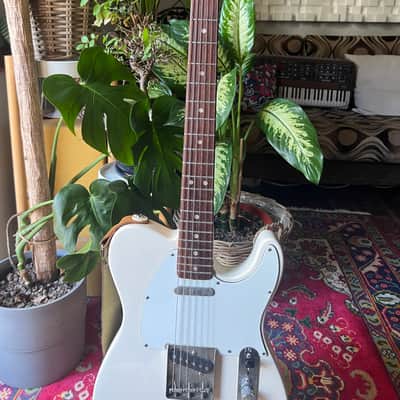
Indie pop bright rhythm (HAIM, catchy chord-driven indie pop) · 2 single-coil pickups, 25.5-inch scale, bright bridge pickup(Player Tele: $600–$850 used)Best for: HAIM indie pop guitar energy, bright bridge pickup for indie pop strumming clarity, clean bright Telecaster for catchy chord-riff indie pop, Telecaster twang for country-influenced indie pop
The Fender Telecaster suits HAIM-influenced indie pop — the bright, snappy Telecaster bridge pickup adds the rhythmic energy and clarity to indie pop guitar parts that sit definitively in the mix alongside bass and drums. For indie pop that references 1980s new wave and synth-pop guitar (Joy Division, New Order-influenced indie pop), the Telecaster's clean, cutting character is the guitar. Used at $600–$850.
What to check used: The Telecaster's bridge pickup can feel harsh for slow indie pop ballads — the neck pickup and middle switch positions produce softer, warmer indie pop tones. For indie pop that spans energetic rhythm parts and warm ballad sections, the Telecaster's two distinct tonal extremes require pickup selection awareness.
#3
Taylor 214ce
Indie pop acoustic (Phoebe Bridgers, acoustic-driven indie pop) · Sitka spruce top, layered rosewood back/sides, Taylor ES2 electronics, 25.5-inch scale, cutaway$700–$900 usedBest for: Acoustic indie pop and indie folk crossover, singer-songwriter indie pop guitar, warm Taylor tone for indie pop acoustic production, cutaway for indie pop chord melody on upper frets
The Taylor 214ce suits the acoustic side of indie pop — Phoebe Bridgers, Lucy Dacus, and the indie pop-adjacent indie folk wave uses acoustic guitar prominently, and the Taylor 214ce's warm, balanced tone and comfortable playability make it the standard acoustic indie pop instrument. The ES2 electronics allow live performance and recording versatility. Used at $700–$900.
What to check used: Taylor 214ce is a mid-range instrument in the Taylor lineup — the 314ce (solid rosewood, $900–$1,200 used) provides improved tone for acoustic indie pop recording. The layered rosewood on the 214ce handles humidity changes better than the 314ce's solid rosewood, making it more practical for touring indie pop.
#4
PRS SE Custom 24
Indie pop versatile (modern indie pop production) · Mahogany body, maple top, 2 humbuckers with coil tap, 25-inch scale, 24 frets$600–$750 usedBest for: Indie pop players who need both clean single-coil sparkle for uptempo chord parts and humbucker warmth for heavier bridge sections, coil tap versatility for indie pop production range
The PRS SE Custom 24 provides indie pop range — the coil-tap allows transparent single-coil indie pop shimmer for verse sections and fuller humbucker density for chorus dynamics. The PRS quality at SE prices ($600–$750 used) provides reliable intonation for indie pop's often harmonically complex chord progressions. Used at $600–$750.
What to check used: PRS SE's mahogany character is slightly warmer and fuller than Fender's brighter, more forward single-coil indie pop tone. PRS is appropriate for indie pop that leans toward warm, polished studio production; Stratocaster and Telecaster suit indie pop that emphasizes bright, forward guitar presence in the mix.
#5
Squier Classic Vibe 60s Stratocaster
Budget indie pop entry · Alder body, Fender-designed pickups, 3 single-coil pickups, 25.5-inch scale$350–$430 new / $220–$300 usedBest for: Indie pop beginners who want Stratocaster single-coil tone at entry prices, accessible bright clean indie pop exploration
The Squier Classic Vibe 60s Stratocaster is the budget indie pop entry — the Fender-designed single-coil pickups produce convincing Stratocaster indie pop character at $220–$300 used. For indie pop players starting out who want Stratocaster tone before investing in a Player or American Stratocaster, the Classic Vibe is the starting point. Used at $220–$300.
What to check used: Budget savings suggestion: The difference between Squier Classic Vibe Stratocaster ($220–$300) and Fender Player Stratocaster ($600–$850) is significant for indie pop. If indie pop is your primary direction, the Fender Player's improved tuners, nut, and pickups are worth the upgrade investment for better tuning stability and tone consistency.
#6
Gibson ES-335
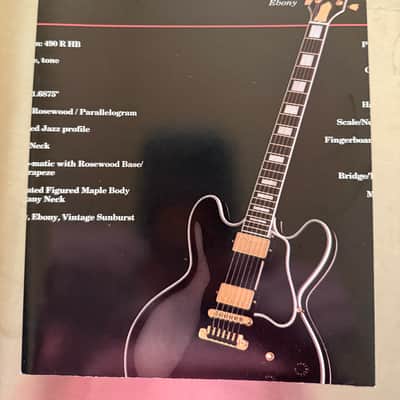
Indie pop semi-hollow warmth · Semi-hollow, 2 humbuckers, 24.75-inch scale, warm resonant tone$2,200–$3,000 usedBest for: Warm semi-hollow indie pop chord texture, indie pop that references 1960s Velvet Underground-adjacent warmth, semi-hollow resonance for indie pop recording
The Gibson ES-335 suits indie pop players whose references include Velvet Underground-influenced warmth and vintage semi-hollow tone — the natural acoustic resonance adds dimensionality to indie pop chord work. Some indie pop bands use semi-hollow instruments specifically for the warm, round chord quality that contrasts with the brighter synthesizer elements of contemporary indie pop production. Used at $2,200–$3,000.
What to check used: The Gibson ES-335 is a premium investment for indie pop. The Epiphone ES-335 ($420–$600 used) or Ibanez Artcore AS73 ($240–$330 used) provide approximate semi-hollow indie pop warmth at much lower prices. The tonal improvement of the Gibson over the Epiphone in heavily produced indie pop is less audible than in acoustic or jazz contexts.
#7
Epiphone Casino
Vintage indie pop hollow-body · Fully hollow body, 2 P-90 pickups, 24.75-inch scale$600–$700 new / $400–$560 usedBest for: Indie pop that references Beatle-influenced jangly guitar, fully hollow body natural resonance for indie pop warmth, P-90 character for indie pop recordings with vintage feel
The Epiphone Casino suits indie pop that references the jangling, slightly warm guitar of 1960s-influenced indie pop — the fully hollow P-90 character provides a round, harmonically rich tone that works in warm, layered indie pop production. John Lennon's Casino is the historical reference; contemporary indie pop players find the Casino's warm hollowbody character creates a vintage indie pop quality. Used at $400–$560.
What to check used: The fully hollow Casino feeds back at higher volumes — indie pop uses moderate stage volumes, so feedback is manageable. The Casino's fully hollow body is more feedback-prone than a semi-hollow ES-335 at similar volume levels.
#8
Rickenbacker 360
Jangle pop / indie pop classic (R.E.M., The Byrds influenced) · Semi-hollow thinline, 2 Rickenbacker pickups, 24.75-inch scale, distinctive jangle tone$1,800–$2,400 usedBest for: Jangle pop and indie pop with R.E.M. and Byrds-influenced jangly 12-string or 6-string tone, Rickenbacker distinctive treble-heavy bright character for indie pop production
The Rickenbacker 360 defines the jangle pop to indie pop lineage — R.E.M. (Peter Buck), The Byrds (Roger McGuinn), and the entire jangle pop genre used Rickenbackers for their distinctive, shimmering bright tone. For indie pop players who want the specific Rickenbacker chime that influenced countless indie pop bands, the 360 is the original and specific instrument. Used at $1,800–$2,400.
What to check used: Rickenbacker instruments are expensive ($1,800–$2,400 used) and have a specific sound that is not universally versatile — the Rickenbacker tone is distinctive and identifiable. If your indie pop references are specifically jangle pop and R.E.M.-adjacent, the Rickenbacker is the authentic choice. If your indie pop spans styles, a Stratocaster covers more ground at lower cost.