#1
Boss Katana 50 Mk II
Best sub-$200 amp (modeling with 50W capability) · 50W (5W/25W/50W selectable), 5 amp character modes, 60 built-in effects, 8-inch speaker, headphone out$200–$230 new / $130–$180 usedBest for: Best all-around amp under $200 for home practice and small gigs, 50W for occasional small venue performance, 60 built-in effects eliminate need for pedal purchases, 5-watt mode for bedroom practice
The Boss Katana 50 Mk II is the best guitar amp under $200 — the selectable power levels (5W bedroom, 25W rehearsal, 50W gig) make it the only sub-$200 amp that legitimately covers both practice and small gig use. The 5 Boss amp character modes (Clean, Crunch, Lead, Brown, Acoustic) cover rock, blues, jazz, and acoustic applications. 60 built-in effects eliminate the need for pedal purchases alongside the amp. Used at $130–$180.
What to check used: Boss Katana 50 at $130–$180 used hits the top of the $200 budget but is worth the investment — the 25W and 50W modes provide genuine small gig capability that cheaper amps lack. At 5W bedroom mode, the Katana is extremely quiet for late-night practice. The 8-inch speaker is smaller than the 12-inch speaker on practice amps designed only for home use.
#2
Fender Champion 20
Fender clean with built-in effects (beginner standard) · 20W, 8-inch speaker, 2-channel (clean/drive), built-in digital effects, Fender styling$120–$150 new / $80–$110 usedBest for: Beginners who want Fender clean tone with built-in effects, straightforward two-channel operation for new players, Fender reliability and support for first amp
The Fender Champion 20 is the standard beginner amp recommendation — 20W provides comfortable bedroom to small room practice volume, the clean channel delivers Fender's characteristic warm clean tone, and the drive channel covers most rock and blues distortion requirements. The built-in digital effects (reverb, delay, chorus) eliminate effect pedal needs for beginners. Used at $80–$110.
What to check used: The Fender Champion 20's 8-inch speaker limits low-end response compared to 10-inch or 12-inch speaker alternatives. For players who want a larger-speaker practice experience, the Fender Frontman 25R (10-inch speaker, similar price) is a better value. The Champion 20's spring reverb-simulation is not as good as real spring reverb in tube amps, but adequate for learning.
#3
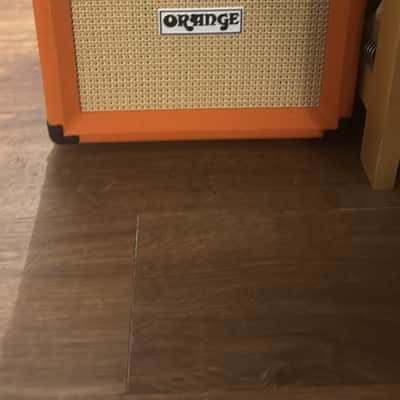
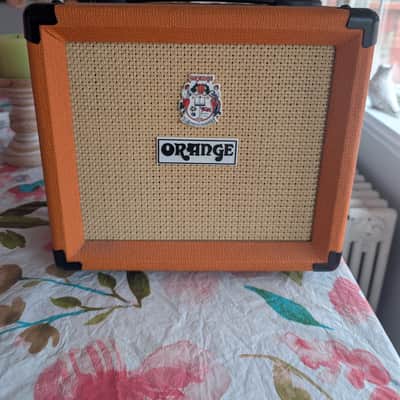
Orange Crush 20
British crunch tone at low price · 20W, 8-inch Orange Voice of the World speaker, Orange natural overdrive, headphone out, CabSim headphone output$130–$160 new / $80–$120 usedBest for: Classic British overdrive tone at budget price, Orange natural gain structure for rock and blues, CabSim headphone output for silent practice, distinct Orange character compared to Fender/Boss alternatives
The Orange Crush 20 provides British overdrive character at budget pricing — the Orange natural overdrive gain structure produces warm, harmonically rich rock and blues distortion that the Fender Champion and Frontman solid-state alternatives do not replicate. For players whose musical style emphasizes British rock (Led Zeppelin, AC/DC, classic rock), the Orange Crush 20's natural British character is appropriate. Used at $80–$120.
What to check used: The Orange Crush 20 does not have built-in effects — unlike the Fender Champion 20 or Boss Katana, the Crush 20's built-in tone is its primary feature rather than effects variety. For effects-focused players, the Boss Katana provides more onboard variety. The Crush 20 is the choice for players who want a specific, quality British tone rather than a variety of modeled sounds.
#4
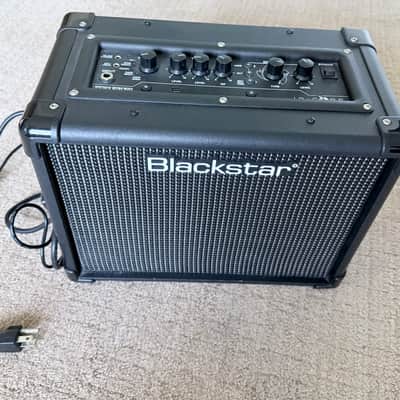
Blackstar ID:Core 10 V3
Stereo modeling practice amp (dual 5W speakers) · 2×5W stereo, 2×3-inch speakers, 12 voice presets, Super Wide Stereo technology, USB recording$100–$130 new / $65–$90 usedBest for: Home recording with USB output, stereo effects experience in practice amp, 12 amp voices for wide tonal exploration, most affordable USB recording practice amp
The Blackstar ID:Core 10 is the most affordable USB recording practice amp — the USB output allows direct recording to computer without a separate audio interface, making it the home recording entry point. The stereo setup creates an immersive practice experience unusual in this price range. For beginners who want to record their playing from the start, the ID:Core 10 is the practical choice. Used at $65–$90.
What to check used: The Blackstar ID:Core 10's 3-inch speakers lack the low-end response of 8-inch or larger speakers — at bedroom volumes the stereo character compensates, but the fundamental low-end of guitar amplification is lacking. The ID:Core 10 suits home recording and headphone practice more than band-context monitoring.
#5
Fender Frontman 20G
Budget reliable solid-state practice amp · 20W, 8-inch speaker, 2-channel, gain knob for overdrive, standard Fender layout$100–$130 new / $50–$80 usedBest for: Absolute budget entry for electric guitar amplification, basic clean and drive two-channel for learning, lightweight and portable for practice
The Fender Frontman 20G is the most affordable practice amp from a major manufacturer — at $50–$80 used, the Frontman provides functional two-channel amplification for beginners who want to spend minimal money on amplification before committing to their guitar journey. Fender brand reliability means the Frontman works consistently. Used at $50–$80.
What to check used: The Fender Frontman 20G is a basic practice amp — the clean tone is serviceable and the overdrive is limited. For players who have committed to electric guitar, the Fender Champion 20 ($80–$110 used) provides improved tone and built-in effects for a moderate premium. The Frontman 20G is appropriate for absolute beginners who are unsure about their commitment.
#6
Vox Pathfinder 10
Vox clean and crunch in a small package · 10W, 6.5-inch speaker, Vox two-channel topology, tremolo effect, headphone output$100–$120 new / $65–$90 usedBest for: Vox AC-style clean-to-crunch tone in a bedroom amp, built-in tremolo for surf and vintage rock, small and portable for apartment practice
The Vox Pathfinder 10 delivers Vox clean-to-crunch character in the smallest available Vox format — the EF86-pentode-inspired circuit topology produces the Vox chimey clean and natural crunch that solid-state Fender alternatives do not replicate. The built-in tremolo is useful for surf rock and vintage rock styles. Used at $65–$90.
What to check used: The Vox Pathfinder 10's 6.5-inch speaker produces less volume and low-end than 8-inch alternatives — this is a bedroom amp that suits intimate practice rather than rehearsal room use. The Pathfinder 10 is not loud enough for playing with other musicians or in a band context.
#7
Roland Micro Cube GX
Battery-powered portable modeling practice amp · 3W, 5-inch speaker, battery-powered (6xAA), 8 COSM amp models, built-in tuner, AUX in$120–$150 new / $80–$110 usedBest for: Battery-powered practice for camping, travel, and outdoor use, 8 COSM amp models for wide tonal range in a tiny package, most portable quality amp under $200
The Roland Micro Cube GX is the best portable battery-powered practice amp — running on 6 AA batteries for up to 20 hours, the Micro Cube provides practice amplification anywhere without AC power. The 8 Roland COSM amp models cover clean, crunch, jazz, and metal tones from a 5-inch 3W format. Used at $80–$110.
What to check used: The Roland Micro Cube GX at 3W and 5-inch speaker is specifically a personal practice amp — at bedroom volumes it is perfectly clear, but the Micro Cube cannot compete in a rehearsal or band context. Battery life decreases significantly at maximum volume levels. Keep spare AA batteries available for extended practice sessions.
#8
Line 6 Spider V 20 Mk II
App-connected modeling amp (200 presets) · 20W, 8-inch speaker, 200 presets, Bluetooth app control (Line 6 Remote), USB recording$160–$190 new / $90–$130 usedBest for: Players who want app-controlled preset management for easy tone recall, 200 presets covering every genre, USB recording capability, Bluetooth speaker mode for audio playback
The Line 6 Spider V 20 Mk II is the most feature-rich sub-$200 amp — 200 onboard presets, Bluetooth app control, USB recording, and speaker mode for playing backing tracks combine in a 20W bedroom amp. For players who want extensive preset variety and app-based tone management, the Spider V 20 provides modern amp capabilities at budget price. Used at $90–$130.
What to check used: Line 6 Spider amps have historically received criticism from tone-sensitive players for artificial-sounding digital modeling at budget price points. The Spider V 20 has improved significantly over previous Spider generations, but players seeking tube-amp character will not find it here. The Spider V 20 is the practical choice for players who want features over tonal authenticity.