#1
Fender Rumble 25
Solid-state bass combo (25W) · 25 watts, 8-inch speaker, 3-band EQ, overdrive circuit, headphone out, aux in, Fender Rumble voicing$130–$160 new / $80–$110 usedBest for: Best beginner bass amp, home practice, overdrive channel, Fender Rumble tone, lightweight
The Fender Rumble 25 is the most recommended beginner bass amp — it is compact, affordable, and produces the Fender Rumble's characteristic clean, punchy bass tone. The built-in overdrive circuit adds useful dirt without requiring a separate pedal. The headphone output and auxiliary input (for playing along with music) make it a complete practice amp. The Rumble series has an excellent reputation for good sound at its price range. Used at $80–$110.
What to check used: 25 watts with an 8-inch speaker is adequate for home practice and apartment use at moderate volumes — it is not loud enough for band rehearsal with drums. For rehearsal with a drummer, upgrade to at least the Rumble 100 (100W, 12-inch speaker). The Rumble 25 is specifically a home practice amp.
#2
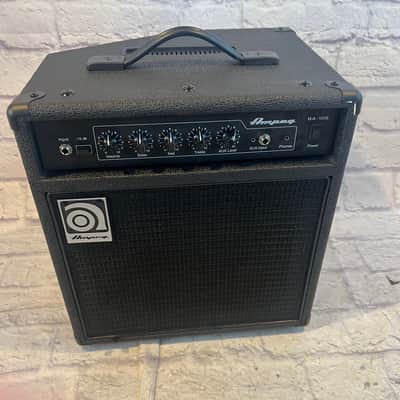
Ampeg BA-108V2
Solid-state bass combo (25W) · 25 watts, 8-inch Eminence speaker, 3-band EQ, treble scrambler overdrive circuit, -15dB pad, headphone out$150–$180 new / $90–$130 usedBest for: Ampeg tone at practice amp price, Scrambler overdrive, classic Ampeg bass sound
The Ampeg BA-108V2 is the practice amp for players who want the Ampeg bass sound — Ampeg is the brand most associated with classic rock bass tone (Paul McCartney, Jimi Hendrix bass player experience, Roger Waters). The BA-108 includes the Scrambler overdrive (based on the Ampeg Scrambler overdrive pedal circuit), adding grit and grind available on demand. For players coming from a bass guitar that suits Ampeg's voicing (passive P-Bass, J-Bass), the BA-108 is the natural practice amp match. Used at $90–$130.
What to check used: The BA-108V2 at 25 watts with an 8-inch speaker is similarly limited in volume ceiling as the Rumble 25 — practice amp only, not suitable for rehearsal with drums. The Ampeg tone may be less transparent than the Rumble for players who want a flat, uncolored EQ platform.
#3
Orange Crush Bass 25
Solid-state bass combo (25W) · 25 watts, 8-inch speaker, parametric midrange EQ, active/passive input, headphone out, aux in, tuner out$190–$220 new / $130–$160 usedBest for: Orange tone and aesthetics, parametric mid EQ for deep tone shaping, modern rock and metal bass
The Orange Crush Bass 25 is the premium practice amp for players who want Orange's distinctive voicing — warm, punchy, and slightly pushed in the midrange. The parametric midrange EQ (adjustable frequency sweep with gain control) provides more advanced tone shaping than the standard 3-band EQ on most practice amps. The Orange build quality is boutique by practice amp standards. Used at $130–$160, it's the tone-seeker's choice in practice amp bracket.
What to check used: The Orange Crush Bass 25 is the most expensive practice amp in this guide — the premium over the Rumble 25 is for tone character and Orange aesthetics. Players who want a neutral, transparent EQ platform will prefer the Rumble. The Orange voicing is distinctive (pronounced midrange character) that suits some musical styles (rock, alternative, modern pop) more than others (jazz, blues).
#4
Hartke HD50
Solid-state bass combo (50W) · 50 watts, 10-inch hydrive composite cone speaker, 3-band EQ, headphone out, aux in, level control$180–$220 new / $120–$160 usedBest for: 50 watts for small rehearsal space, Hartke hydrive speaker, more volume than 25W amps
The Hartke HD50 provides 50 watts (double the Rumble 25 and BA-108) — enough for small rehearsal rooms and quiet jam sessions with an acoustic drummer. The Hydrive speaker (composite aluminum and paper cone) produces a focused, punchy tone that Hartke is known for. At $180–$220 new, the HD50 bridges the gap between practice amps and rehearsal amps. Used at $120–$160.
What to check used: 50 watts at moderate volumes will be heard in small rehearsal spaces but will not compete with a drummer playing at full volume. For reliable band rehearsal volume, 100+ watts with a 12-inch or 15-inch speaker is the practical minimum. The HD50 is most useful for quiet rehearsal with light percussion or as a loud home practice amp.
#5
Fender Rumble 40
Solid-state bass combo (40W) · 40 watts, 10-inch speaker, 4-band EQ, overdrive, headphone out, aux in, 3 voicing buttons (Vintage/Bright/Contour)$180–$220 new / $120–$160 usedBest for: Step up from Rumble 25, more volume, better EQ with voicing buttons, quiet rehearsal use
The Fender Rumble 40 is the next step in the Rumble series from the 25 — 40 watts with a 10-inch speaker provides noticeably more volume, and the voicing buttons (Vintage, Bright, Contour) offer quick EQ presets. The Rumble 40 can handle quiet rehearsal with an electronic drum kit or light acoustic drumming. Used at $120–$160, it is the practical upgrade for players who have outgrown the Rumble 25's volume ceiling.
What to check used: The step from Rumble 25 to Rumble 40 is a significant improvement in volume and flexibility. Players who want to eventually play with a full band on acoustic drums should consider going directly to the Rumble 100 (100W) at purchase rather than upgrading twice.
#6
Ampeg BA-115V2
Solid-state bass combo (150W) · 150 watts, 15-inch Eminence speaker, 3-band EQ, Scrambler circuit, high-frequency tweeter, -15dB pad$380–$450 new / $200–$280 usedBest for: Ampeg classic tone with enough power for rehearsal, 15-inch low end, Scrambler overdrive
The Ampeg BA-115V2 is a rehearsal-capable bass amp with the Ampeg tone — 150 watts with a 15-inch speaker provides adequate volume for rehearsal with drums. Used at $200–$280, it falls just above the strict $300 guideline but is relevant as the natural upgrade from practice amps for players who need rehearsal volume with Ampeg character. The 15-inch speaker produces deep, warm bass response that 10-inch speakers cannot match.
What to check used: At 150 watts, the BA-115V2 handles rehearsal rooms adequately but is not a gigging amp — for live performance, 300-500 watts is the practical floor for a bass amp. Verify the condition of the tweeter and speaker carefully when buying used; bass speakers are subject to heavy use.
#7
GK MB200
Solid-state micro head (200W) · 200 watts at 4 ohms, 3-band EQ with boost, contour switch, lightweight (1.75 lbs), pairs with any cabinet$220–$280 new / $150–$200 usedBest for: Lightweight micro head for pairing with a separate cabinet, 200 watts, GK Class D sound
The Gallien-Krueger MB200 is the compact micro head option — 200 watts in a 1.75-pound package that pairs with any bass cabinet. For players who already have or plan to acquire a bass cabinet, the MB200 provides professional Class D amplification at a lightweight, affordable price. GK's clean, punchy tone is well-regarded in professional bass circles. Used at $150–$200. Note: requires a separate bass cabinet; does not include a speaker.
What to check used: The MB200 is a head-only unit — it requires a compatible bass cabinet (1x10, 1x12, 2x10, or 4x10) to produce sound. Factor in the total cost of head + cabinet when evaluating this option. The practical advantage is flexibility: the same head can drive different cabinets for different applications (small cabinet for rehearsal, larger cabinet for gigs).