#1
Fender Rumble 25
Budget 25-watt combo bass practice amp · 25 watts, 8-inch speaker, Overdrive circuit, 3-band EQ, headphone output, AUX input, lightweight$130–$150 new / $85–$120 usedBest for: Best budget beginner bass amp, bedroom/apartment practice, lightweight portability, Fender Rumble reliability
The Fender Rumble 25 is the most recommended beginner bass amp — the Rumble series is Fender's dedicated bass amplifier line and the 25-watt version is the entry point. The Rumble 25 includes a headphone output (practice silently) and an AUX input (play along with music), which are essential for home practice. The built-in overdrive circuit adds bass distortion for rock and punk. At $85–$120 used, the Fender Rumble 25 is the practical standard for beginner bass.
What to check used: 25 watts is adequate for home practice but not loud enough to play over a drummer or with a band — for rehearsals, a minimum of 100-150 watts is practical for bass. The Rumble 25 is a practice amp only. If you anticipate playing with other musicians soon, consider the Rumble 100 instead to avoid needing a second purchase.
#2
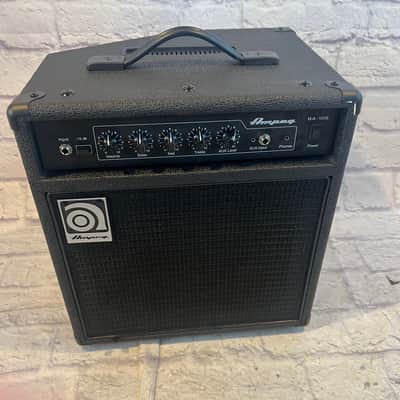
Ampeg BA-108v2
Classic Ampeg bass practice combo · 20 watts, 8-inch speaker, 3-band EQ, headphone output, AUX input, Ampeg traditional styling$120–$140 new / $80–$110 usedBest for: Ampeg heritage bass tone at budget price, practice amp with classic tone character, Ampeg BA series reliability
The Ampeg BA-108 is the entry into the Ampeg bass amp lineup — Ampeg is the heritage bass amplifier brand (SVT 810 cabinet is the standard live bass rig). The BA-108 brings Ampeg's tone character to a compact 20-watt practice combo at $80–$110 used. For beginners who specifically want the Ampeg warm, defined bass tone in a practice amp, the BA-108 delivers it. Classic Ampeg EQ response (the low-mid shape) is present even at small wattages.
What to check used: The Ampeg BA-108 is 20 watts with an 8-inch speaker — slightly less headroom than the Fender Rumble 25. It is intended for personal practice only. The Ampeg tone character is warm and defined but not as bright as solid-state alternatives — players who want aggressive, modern bass tones may prefer the Fender Rumble or Orange Crush series for more tonal flexibility.
#3
Orange Crush Bass 25
Distinctive Orange-brand combo practice amp · 25 watts, 8-inch speaker, CabSim headphone output, active/passive input, tuner output, parametric mid EQ$180–$200 new / $120–$160 usedBest for: Orange aesthetics and tone, CabSim headphone output for recording quality, parametric mid control, distinctive character
The Orange Crush Bass 25 is the Orange brand's beginner bass amp — Orange is known for distinctive British tone and the Crush Bass series brings this character to practice amps. The CabSim-equipped headphone output simulates cabinet response for more realistic tone when practicing silently, which is significantly better than basic headphone outputs on competing practice amps. The parametric mid EQ provides more precise tone shaping than standard bass/mid/treble controls. Used at $120–$160.
What to check used: Orange amplifiers carry a tone character that is specific — warm, with a scooped mid character. Players who specifically want neutral, flat-response practice tone for critical listening may find the Orange character less suitable than the Fender Rumble's more transparent EQ response. The Orange character is a feature for players who like it, a limitation for players who do not.
#4
Hartke HD25
25-watt combo with aluminum-cone speaker · 25 watts, Hartke aluminum-cone speaker, 3-band EQ, headphone output, AUX input$140–$160 new / $95–$130 usedBest for: Hartke's distinctive bright aluminum-cone tone, practice amp with clear mid presence, Hartke HD series reliability
The Hartke HD25 uses Hartke's signature aluminum-cone speaker — aluminum cones produce a brighter, more articulate character than paper-cone speakers, with better high-frequency response and slightly sharper transient definition. For bass players who want to hear their technique with more clarity and brightness, the Hartke aluminum sound is the preference. The HD25 provides this at budget practice amp pricing. Used at $95–$130.
What to check used: Hartke aluminum-cone tone is a specific character — brighter and more articulate than the warm Ampeg or Fender Rumble character. It is the correct choice for players who want that definition, the wrong choice for players who want warm, round bass practice tone. Listen to Hartke audio demos before purchasing to confirm the aluminum tone preference.
#5
Fender Rumble 100
100-watt combo (band rehearsal capable) · 100 watts, 12-inch speaker, 4-band EQ, Overdrive circuit, XLR DI output, effects loop, 3 voicing buttons$350–$400 new / $240–$320 usedBest for: Versatile bass amp for practice through rehearsal, band-capable wattage, XLR DI for recording and PA, Fender Rumble quality
The Fender Rumble 100 is the recommended amp for beginners who anticipate playing with a band — 100 watts into a 12-inch speaker is the minimum practical for rehearsals against a drummer. The XLR DI output allows direct connection to a PA or recording interface without a microphone. The 4-band EQ and voicing buttons (Bright, Contour, Vintage) provide comprehensive tone shaping. For beginners who want one amp for both practice and rehearsal, the Rumble 100 covers both. Used at $240–$320.
What to check used: The Fender Rumble 100 at $240–$320 used is significantly more expensive than basic practice amps — it is a larger investment appropriate for players who are committed to playing with others. For pure home practice, the Rumble 25 saves money. The Rumble 100 is listed here because spending $85 on a practice-only amp and then $300 on a rehearsal amp later often costs more total than buying the Rumble 100 once.
#6
Roland Cube Bass 30XL
Digital modeling bass combo · 30 watts, 10-inch speaker, COSM amp modeling, 8 onboard effects, tuner, Aux in, headphone out, looper$250–$300 new / $170–$240 usedBest for: Amp modeling variety for bass (SVT, Flip Top, various amp types), built-in effects and tuner, recording-ready
The Roland Cube Bass 30XL is the modeling amp option for beginners — COSM amp modeling provides simulations of classic bass amps (Ampeg SVT, Ampeg Flip Top, British flat-top, etc.) in a single combo. Eight built-in effects (compression, overdrive, chorus, delay) eliminate the need for pedals for practice and home recording. The built-in tuner and looper make it a comprehensive practice tool. Used at $170–$240.
What to check used: Digital amp modeling produces simulated tone rather than actual analog amp character — experienced players often prefer the direct tonal response of a physical amplifier. Beginners may find the modeling versatility more useful than the authentic character of a single-amp-type practice combo. The Roland Cube's modeling quality is high for the price but the digital character is apparent to experienced bass players.
#7
Peavey MAX 158
Budget 8-watt micro practice combo · 8 watts, 8-inch speaker, basic EQ, headphone output, AUX input, very compact and lightweight$80–$100 new / $55–$80 usedBest for: Absolute minimum investment bass practice amp, apartment/dorm use, extremely compact portability
The Peavey MAX 158 is the minimum-investment bass practice option — 8 watts is sufficient for personal practice at home where volume is not an issue. The MAX 158 includes a headphone output and AUX input for silent practice. Peavey has produced reliable practice bass amps for decades. For players who want the absolute cheapest functional bass practice amp at $55–$80 used, the MAX 158 is the recommendation.
What to check used: 8 watts is very quiet — the MAX 158 cannot compete with acoustic guitar volume, let alone drums. This is an apartment or bedroom-only practice tool. If you practice with headphones, the 8-watt limitation does not matter. If you need any audible volume in a room, the Fender Rumble 25's 25 watts is noticeably louder.
#8
Markbass Mini CMD 121P
Professional compact combo (upgrade path) · 300 watts, 12-inch Markbass speaker, onboard tube preamp section, Italian design, gigging-capable$900–$1,100 new / $650–$850 usedBest for: Compact professional bass combo, advanced students and semi-professional gigging, Markbass Italian quality
The Markbass Mini CMD 121P is listed as the premium upgrade recommendation — a 300-watt professional bass combo at $650–$850 used that is practical for gigging. Markbass is Italian-made and uses lightweight neodymium speakers that produce a warm, clear bass tone at low weight. For students who progress past beginner level and need a single amp that covers practice, rehearsal, and small gigs, the Mini CMD 121P is the professional-grade solution that does not need to be upgraded again for years.
What to check used: The Markbass Mini CMD at $650–$850 is an investment appropriate for committed intermediate-to-advanced players, not absolute beginners. The quality justifies the price for serious players, but beginners should start with the Fender Rumble 25 or Rumble 100 and upgrade to Markbass when they have confirmed their long-term commitment to bass.