#1
Shure SM58
Dynamic Vocal Microphone · Cardioid dynamic, 50Hz–15kHz, tailored presence peak, XLR$100 new | $55–$75 usedBest for: Live vocalists, gigging musicians, anyone who needs durability
The SM58 is the most popular vocal microphone in history—found on stages at every venue size. Its presence peak enhances voice intelligibility in noisy environments. Virtually indestructible; used examples are abundant.
What to check used: Check the mesh head for dents (affects tone). Test the XLR connector for tight connection. SM58 clones (Behringer, Pyle) are cheap but use lower-quality capsules.
#2
Audio-Technica AT2020
Condenser Microphone · Cardioid condenser, 20Hz–20kHz, requires phantom power$100 new | $55–$75 usedBest for: Home recording vocalists, singer-songwriters, podcasters
The AT2020 is the benchmark home studio condenser; it captures detail and air in vocals that dynamic mics miss. Requires phantom power (48V) from an audio interface. Used for countless indie recordings.
What to check used: Verify phantom power works on your audio interface. Check the capsule for dust (compressed air cleaning is safe). The XLR connector should be firm.
#3
Rode NT1-A
Large-Diaphragm Condenser · Cardioid, ultra-low noise (5 dB EIN), 20Hz–20kHz$230 new | $120–$170 usedBest for: Studio-quality vocal recording where noise floor matters
The NT1-A's self-noise of 5dB EIN is among the lowest of any affordable condenser; whisper-quiet for capturing delicate vocals and acoustic instruments. Package includes shock mount and pop filter.
What to check used: Used examples often lack the original shock mount and pop filter. Check if these are included or ask for a price reduction. Verify the phantom power circuit is functioning.
#4
Sennheiser e835
Dynamic Vocal Microphone · Cardioid dynamic, 40Hz–16kHz, uniform frequency response$100 new | $55–$75 usedBest for: Live vocalists who want an SM58 alternative with fuller lows
The e835 has a more pronounced low-frequency response than the SM58, which suits baritone vocalists and those who want more body in live performances.
What to check used: The e835 is less common than the SM58; fewer used examples available. Verify it is the e835 and not the e835S (which has a cardioid pattern in upper midrange).
#5
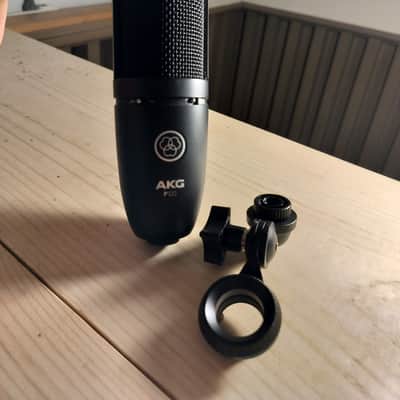
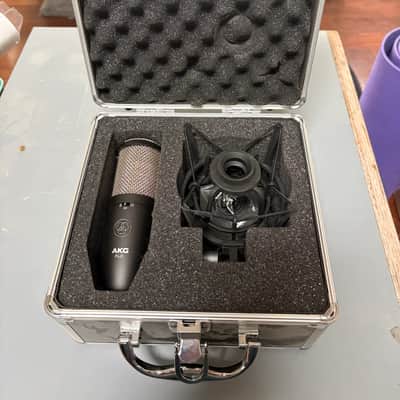
AKG P220
Large-Diaphragm Condenser · Cardioid, high-pass filter, pad switch, XLR$150 new | $80–$110 usedBest for: Home studio recordings with acoustic instruments
The P220 captures nuance well for vocals, acoustic guitar, and room ambience. The high-pass filter helps reduce handling noise; the 20dB pad allows recording loud sources.
What to check used: Verify the high-pass filter and pad switch function correctly. Check for dust on the capsule.
#6
Blue Yeti USB
USB Condenser Microphone · Multi-pattern, built-in headphone monitoring$130 new | $70–$100 usedBest for: Vocalists who do not want an audio interface
The Yeti USB is the best plug-and-play option for vocalists; no interface needed. Multiple polar patterns including cardioid (vocals), bidirectional (duets), and omni (group).
What to check used: Check that all polar patterns switch cleanly. Verify the mute button is not sticky. Test the headphone jack for audio output.
#7
Shure SM7B
Dynamic Broadcast Microphone · Cardioid dynamic, 50Hz–20kHz, built-in EQ$400 new | $250–$320 usedBest for: Podcasters, streamers, professional vocalists
The SM7B is the gold standard broadcast/streaming microphone—used by Michael Jackson, Joe Rogan, and countless podcasters. Requires a clean preamp with high gain (or a Cloudlifter). The built-in bass rolloff and presence boost are useful.
What to check used: The SM7B requires high preamp gain; verify your audio interface can deliver at least 50dB of gain. Without a Cloudlifter ($200), signal may be thin. Check for any damage to the mesh head.