#1
Shure SM57
Dynamic instrument microphone · Cardioid, 40Hz-15kHz, no phantom power required, 191dB SPL max, rugged steel construction$80–$110 usedBest for: Guitar amp miking, snare drum, any instrument in live or studio use — the industry standard instrument mic
The Shure SM57 is the most widely used microphone in professional music — it is on more guitar amps, snare drums, and instrument sources in professional studios and live venues worldwide than any other single microphone. The SM57's ability to handle the high SPL of a guitar amp at close range without distortion, combined with its tailored frequency response that emphasizes the presence of instruments in the midrange, makes it universally appropriate. Every studio uses SM57s. At $80–$110 used, it is a fundamental studio tool.
What to check used: The SM57's frequency response is designed for instruments, not vocals — it has a proximity boost at low end and a presence peak around 5-10kHz that flatters instruments but can make vocals sound nasal. For vocals, the SM58 (vocal version) has a built-in pop filter and slightly different frequency response. Both are equally necessary in a full studio or live rig.
#2
Shure SM58
Dynamic vocal microphone · Cardioid, 50Hz-15kHz, built-in ball pop filter, steel mesh grille, no phantom power, 191dB SPL$80–$110 usedBest for: Live vocal performance, the universal live vocal microphone, rugged enough for touring
The Shure SM58 is the most common live vocal microphone in the world — it appears in every venue, in every rider, and can be found in every live sound system. The SM58's cardioid pattern provides strong rear rejection to minimize feedback, the built-in pop filter reduces plosives, and its legendary durability (the microphone survives being dropped from stage, used in rain, and decades of abuse) makes it the default live vocal mic. Used at $80–$110.
What to check used: The SM58 has a presence peak around 5kHz that adds brightness and intelligibility to vocals — great for live performance where clarity in a PA is needed, less ideal for recording where a more neutral or warmer condenser may be preferred. The SM58 is primarily a live mic; for studio vocal recording, a condenser is typically preferred.
#3
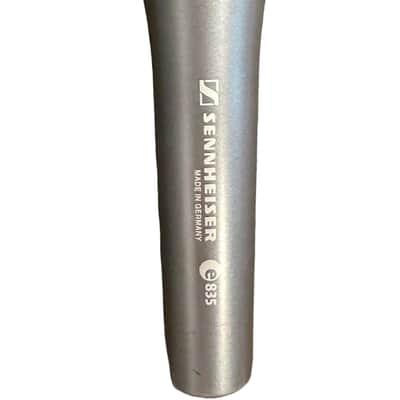
Sennheiser e835
Dynamic vocal microphone · Cardioid, 40Hz-16kHz, humbucker coil for EMI rejection, lightweight capsule, no phantom power$80–$110 usedBest for: Alternative to SM58, warmer vocal character, Sennheiser clarity, smaller capsule for fast transients
The Sennheiser e835 is the SM58 alternative with a warmer, fuller vocal character — where the SM58 has a forward presence peak, the e835 is slightly more neutral and extended in frequency response. The humbucker capsule rejects electromagnetic interference (particularly useful in venues with high-frequency lighting or other EMI sources). For vocalists who find the SM58 slightly bright or harsh, the e835 is the natural alternative. Used at $80–$110.
What to check used: The e835 does not have a built-in pop filter like the SM58 — the mesh grille provides minimal protection against plosives compared to the SM58's ball grille. A mounted pop screen is more important when using the e835 for recording. The lighter capsule assembly is slightly more susceptible to physical shock damage than the SM57/SM58 construction.
#4
Shure SM7B
Dynamic broadcast/studio vocal microphone · Cardioid, 50Hz-20kHz, flat/mid-boost/bass roll-off switch, internal shock isolation, yoke mount$280–$380 usedBest for: Podcasting, broadcasting, radio, home studio vocals — the broadcast-quality vocal microphone
The Shure SM7B became the standard podcasting microphone — its warm, broadcast-quality vocal character, internal shock isolation, and yoke mount (designed for broadcast studios) translated perfectly to the podcasting format. The SM7B requires significant gain (a Cloudlifter or high-gain interface is recommended), but produces an instantly recognizable warm, full vocal tone. Used on Michael Jackson's 'Thriller' vocals (1982) and countless radio broadcasts. Used at $280–$380.
What to check used: The SM7B requires 60dB of gain from your audio interface — more than most interfaces provide cleanly. A Cloudlifter or other in-line preamp is commonly needed ($150 new) unless you use an interface with exceptional gain headroom (Universal Audio, Audient). Without adequate gain, the SM7B sounds thin and noisy as you push the interface gain to maximum.
#5
Electro-Voice RE20
Dynamic broadcast microphone · Variable-D cardioid, 45Hz-18kHz, internal pop filter, bass roll-off switch, Variable-D design reduces proximity effect$350–$500 usedBest for: Professional broadcast and podcast, reduced proximity effect, radio-quality vocal character
The Electro-Voice RE20 is the other broadcast microphone standard — used in radio stations, broadcast studios, and professional podcasts worldwide. The Variable-D design reduces proximity effect (the bass boost that occurs when speaking close to a directional microphone), allowing broadcasters to maintain consistent tone even when moving toward or away from the microphone. The internal pop filter eliminates plosives without requiring an external pop screen. Used at $350–$500.
What to check used: Like the SM7B, the RE20 requires significant gain from a preamp or interface — 60dB minimum for optimal performance. The RE20's large size requires a robust boom arm or stand. The RE20's flat frequency response and lack of proximity effect produces a very neutral vocal tone — some podcasters prefer the SM7B's warmer, more colored character.
#6
Sennheiser MD421 II
Dynamic instrument microphone (large diaphragm) · Cardioid, 30Hz-17kHz, 5-position bass roll-off switch, large diaphragm for instruments$280–$380 usedBest for: Guitar amp alternative to SM57, toms and drums, bass cab, warm full instrument sound
The Sennheiser MD421 is the professional alternative to the SM57 for guitar amp miking — its larger diaphragm produces a warmer, fuller low-end response that many engineers prefer for capturing the full body of a guitar cabinet or bass cabinet. The MD421 is particularly popular for toms (drums) and bass guitar cabinets where the SM57's relative thinness in the low end is a limitation. It appears on classic rock, metal, and jazz recordings as the preferred guitar and drum mic when a fuller sound is needed. Used at $280–$380.
What to check used: The MD421's larger body and 5-position bass roll-off switch are more complex to position for miking than the SM57's simpler compact design. The bass roll-off positions require understanding which to use for specific sources — flat for full bass response, roll-off positions to reduce muddiness on bass-heavy sources.
#7
AKG D112 MkII
Kick drum dynamic microphone · Cardioid, 20Hz-17kHz, large diaphragm specifically voiced for kick drum, integrated stand mount$150–$220 usedBest for: Kick drum recording, bass cabinet recording, any low-frequency source
The AKG D112 is the most common professional kick drum microphone — specifically designed with a large diaphragm that handles the extremely high SPL of a kick drum and a voicing that emphasizes the attack transient and low-end thump that defines kick drum sound in mixes. The integrated stand mount positions the microphone easily inside the kick drum shell. The D112 also works well on bass guitar cabinets and other low-frequency sources. Used at $150–$220.
What to check used: The D112 is designed specifically for kick drum and bass frequency sources — it does not produce useful results on vocals, acoustic guitar, or high-frequency instruments. It is a tool for a specific application, not a general-purpose microphone.
#8
Shure BETA 52A
Supercardioid kick drum microphone · Supercardioid, 20Hz-10kHz, integrated stand, designed for kick drum and bass instruments, shock mount$120–$170 usedBest for: Alternative kick drum mic, bass cab recording, supercardioid rejection pattern
The Shure BETA 52A is the alternative to the AKG D112 for kick drum recording — a supercardioid pattern provides tighter directional focus and better rejection of bleed from cymbals and snare. The BETA 52A's voicing emphasizes attack and punch on kick drum recordings. Its lower profile compared to the D112 is useful for positioning inside small kick drum shells. Many engineers use the D112 and BETA 52A together (one inside, one outside the kick drum) for full-spectrum capture. Used at $120–$170.
What to check used: The supercardioid pattern requires more precise positioning than the cardioid D112 — the tighter pickup pattern means positioning matters more. Supercardioid microphones have small rear lobes that pick up sound behind the microphone — position the rear lobe away from hi-hat or snare.