#1
Fender Mustang (Short Scale)
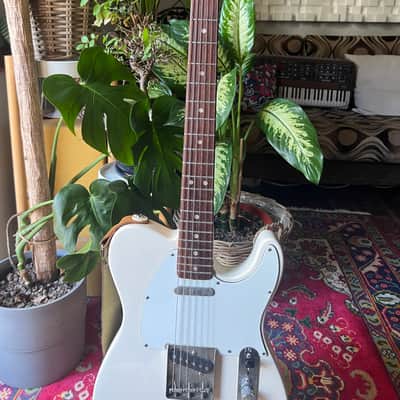
Short-scale solid body electric (24-inch) · 24-inch scale length, offset body, 2 single-coil pickups, 1-5/8 inch nut width, alder or poplar body$750–$900 new / $400–$650 used (Player Mustang) / $250–$400 used (vintage/Squier)Best for: Best short-scale electric for adults, offset body comfort, 24-inch scale for easier reach, comfortable nut width
The Fender Mustang is the most popular short-scale electric guitar for adult players with small hands — the 24-inch scale length (versus 25.5-inch on a standard Stratocaster) reduces string tension and shortens the reach between frets. The 1-5/8-inch nut width is narrower than a standard Strat's 1-11/16-inch, making chord shapes easier to reach across. The Mustang has been a beloved rock guitar since the 1960s and is not a 'beginner guitar' — it is a genuine professional instrument in a small package. Used at $400–$650 for the Player Mustang.
What to check used: The Mustang's 24-inch scale produces lighter string tension — players who use heavy picks or play hard may find the strings feel looser than expected. Using slightly heavier strings (.010-.046 instead of .009-.042) compensates for the reduced tension and maintains the feel of a standard-scale guitar.
#2
Squier Mini Stratocaster
3/4 size Stratocaster (22.75-inch scale) · 22.75-inch scale length, 3 single-coil pickups, alder body, 1-19/32 inch nut width, Stratocaster shape$130–$160 new / $85–$120 usedBest for: Budget short-scale electric, children and smaller players, Stratocaster feel at 3/4 size, practice instrument
The Squier Mini Stratocaster is the most affordable short-scale electric guitar — at 22.75-inch scale length, it is noticeably smaller than even the Mustang. The Mini Strat is appropriate for children (ages 5-10) and adults with very small hands who find even the 24-inch Mustang scale difficult. The 1-19/32 inch nut width is the narrowest of any commonly available electric guitar. Budget price makes it accessible as a starter instrument. Used at $85–$120.
What to check used: The Squier Mini Strat is a starter instrument — the small scale produces a thinner tone than full-scale instruments, and the construction quality reflects the budget price. Adults with small hands who want a serious instrument should look at the Fender Mustang, which is a 24-inch professional guitar rather than a scaled-down starter.
#3
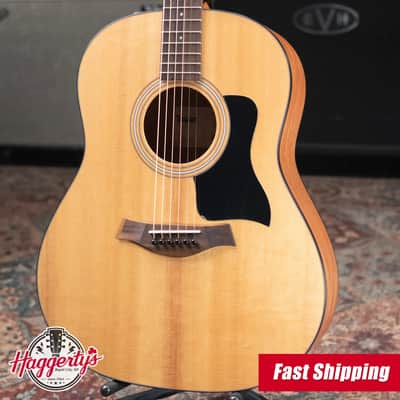
Taylor GS Mini
Compact acoustic (23.5-inch scale) · GS Mini body, 23.5-inch scale, solid Sitka spruce top, layered sapele back/sides, shorter fret reach$450–$500 new / $320–$400 usedBest for: Best compact acoustic for small hands, shorter fret reach, full acoustic experience in smaller package
The Taylor GS Mini is the most recommended compact acoustic guitar — the 23.5-inch scale length and GS Mini body size make it noticeably more comfortable for players with smaller hands than a dreadnought. The frets are closer together and the nut is narrower. Despite its smaller size, the GS Mini produces a full acoustic tone and a solid Sitka spruce top. It is not a 'children's guitar' — professionals use it as a practice and travel instrument. Used at $320–$400.
What to check used: The GS Mini's shorter scale means the open strings produce less tension — changing from a dreadnought to the GS Mini will feel noticeably different. Some players prefer the lighter feel; others miss the fuller resonance and body of a full-scale acoustic. The GS Mini's layered back and sides also limit its acoustic projection compared to all-solid instruments.
#4
Gibson Les Paul Junior
Short-scale (24.75-inch) slab body electric · 24.75-inch Gibson scale, single P-90 pickup, slab mahogany body, no binding, lightweight, vintage styling$1,200–$1,500 new / $700–$1,000 used (recent; vintage Junior prices vary widely)Best for: 24.75-inch Gibson scale for smaller hands, single P-90 simplicity, lightweight slab body, vintage rock tone
All Gibson guitars use a 24.75-inch scale length — notably shorter than the Fender 25.5-inch scale. This 0.75-inch difference is significant for hand reach: frets are closer together and chord shapes require slightly less reach. The Les Paul Junior is the simplest and lightest Gibson solid body, with a single P-90 pickup and slab mahogany body. For players who want Gibson scale length with less weight than a standard Les Paul, the Junior is a practical choice. The P-90 is a versatile pickup from blues to hard rock. Used at $700–$1,000.
What to check used: 24.75-inch scale is a modest improvement over 25.5-inch — it is not as dramatic a difference as the Mustang's 24-inch scale. Players with very small hands may still find 24.75-inch scale challenging. The Les Paul Junior at $700–$1,000 used is a significant investment; evaluate the Epiphone Les Paul Junior (same scale, lower price) as an alternative.
#5
Fender Jaguar
Short-scale offset electric (24-inch) · 24-inch scale length, offset double-cutaway body, 2 single-coil pickups, complex switching system, bridge vibrato$1,000–$1,300 new / $600–$900 used (Player Jaguar)Best for: Short-scale Fender with more tonal flexibility than Mustang, offset body comfort, tremolo arm, surfing and indie rock
The Fender Jaguar shares the 24-inch scale with the Mustang but adds a tremolo arm and a more complex switching system. For players who want the short-scale comfort of the Mustang with additional sonic options and the Jaguar's specific aesthetic (used by Kurt Cobain, Tom Verlaine, J Mascis), the Jaguar provides both. The offset body is comfortable in the seated position and distributes weight well. Used at $600–$900 for the Player series.
What to check used: The Jaguar's switching system (two-plate system with rhythm and lead circuits, individual pickup switches, tone circuit switches) is noticeably more complex than the Mustang. The learning curve for the switching is real. The floating bridge can also shift position if the guitar is handled roughly — verify the bridge is properly set and secure.
#6
Martin LXM (Little Martin)
Compact acoustic (23-inch scale) · 23-inch scale, HPL mahogany body, Fishman electronics, 1-11/16 nut width, travel acoustic$160–$200 new / $110–$150 usedBest for: Budget compact acoustic, Martin brand, 23-inch scale for small hands, Fishman electronics included
The Martin LXM (Little Martin) is the affordable compact acoustic for small-handed players — a 23-inch scale length with HPL construction. The LXM is an official Martin product with Martin's quality control at a budget price. The Fishman pickup allows plugging in for small amplified use. For players who want a compact acoustic with Martin credentials at a budget price, the LXM is the entry point. Used at $110–$150.
What to check used: HPL (High Pressure Laminate) construction does not sound like solid wood — the tone is functional but lacks the resonance and dynamic range of all-solid or even solid-top acoustic guitars. The LXM is appropriate as a beginner, practice, or travel guitar. Players who want real acoustic tone in a compact form should invest in the Taylor GS Mini.
#7
PRS SE Custom 22
24.594-inch scale with slim wide-thin neck · 24.594-inch scale (PRS scale), Wide-Thin neck profile, 22-fret, two PRS-designed humbuckers, mahogany body$700–$800 new / $450–$600 usedBest for: Slim PRS neck profile for small hands, mid-Gibson/Fender scale length, PRS quality and versatility
The PRS SE Custom 22 uses PRS's proprietary 24.594-inch scale — slightly longer than Gibson (24.75-inch) but shorter than Fender (25.5-inch), designed to balance tension and playability. The Wide-Thin neck profile is PRS's specific neck shape: wider at the nut than a Gibson but thinner front-to-back, providing more fretting room without the thick baseball-bat feel of some Gibson necks. For players who find Fender necks too long and Gibson necks too thick, the PRS SE Custom 22 is the specific solution. Used at $450–$600.
What to check used: The PRS SE Custom 22 is Korean-manufactured — quality is excellent for the price tier, but differs from the American-made PRS Core instruments. The SE series provides PRS's unique scale length and neck profile at accessible prices, which is the primary reason to choose it for small-handed players.
#8
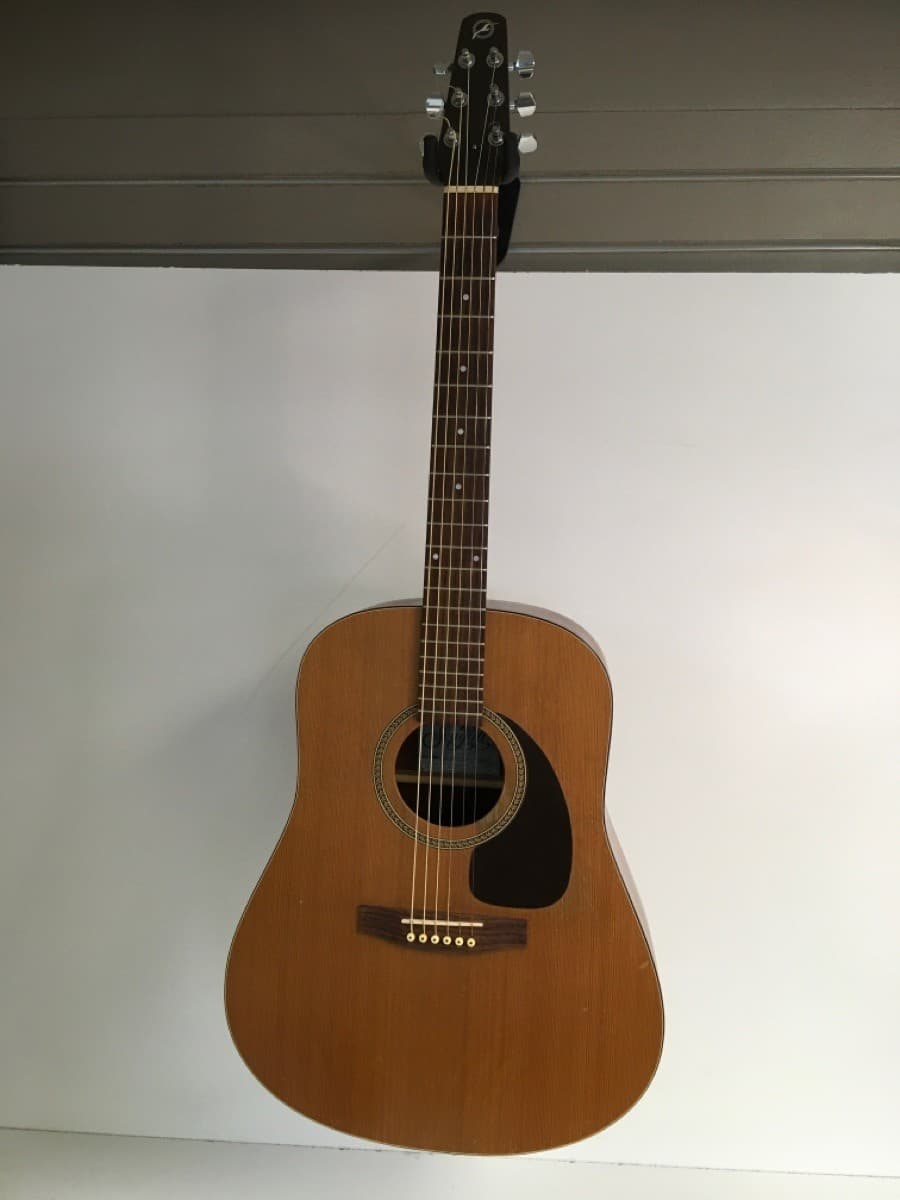
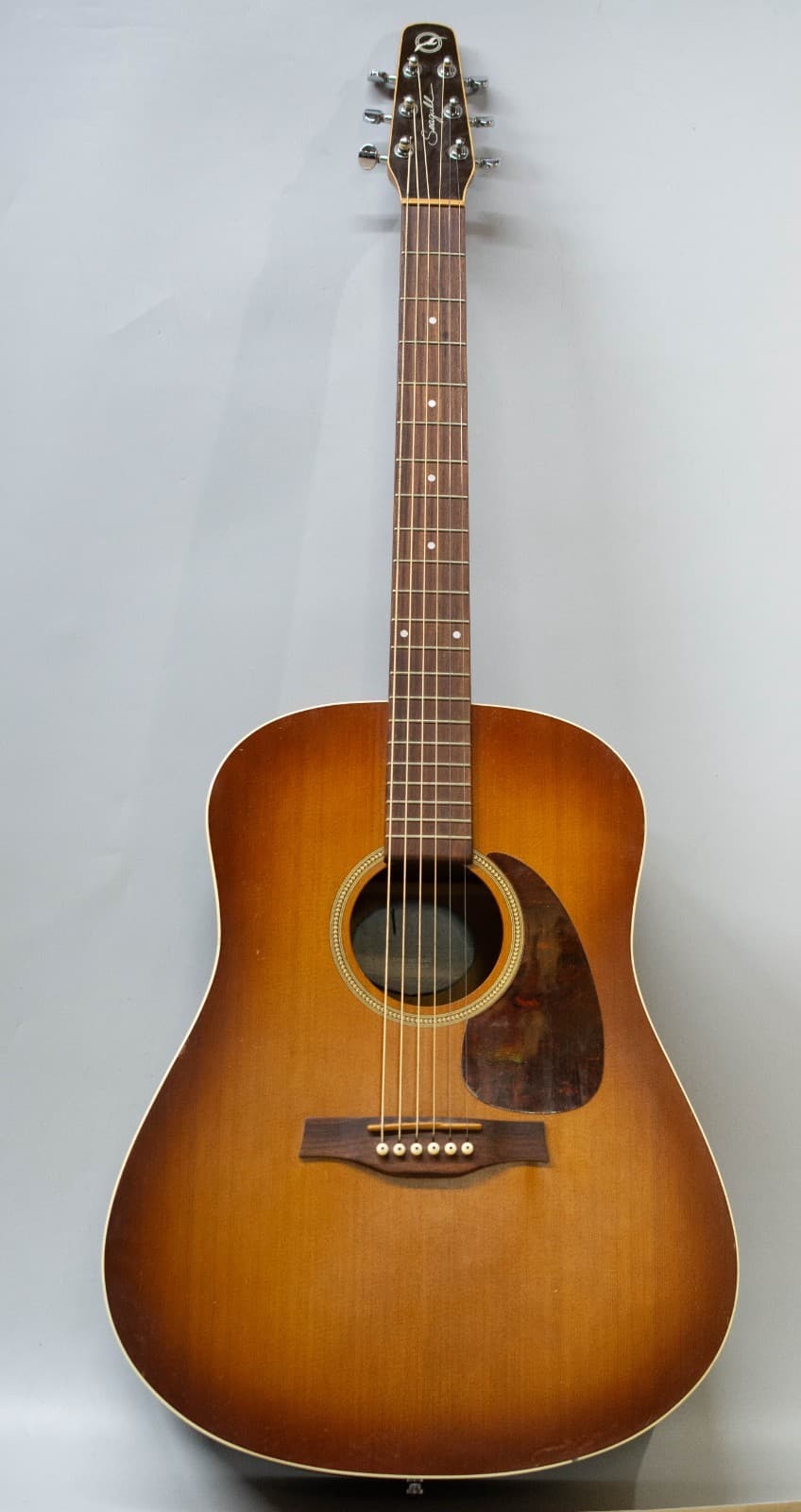
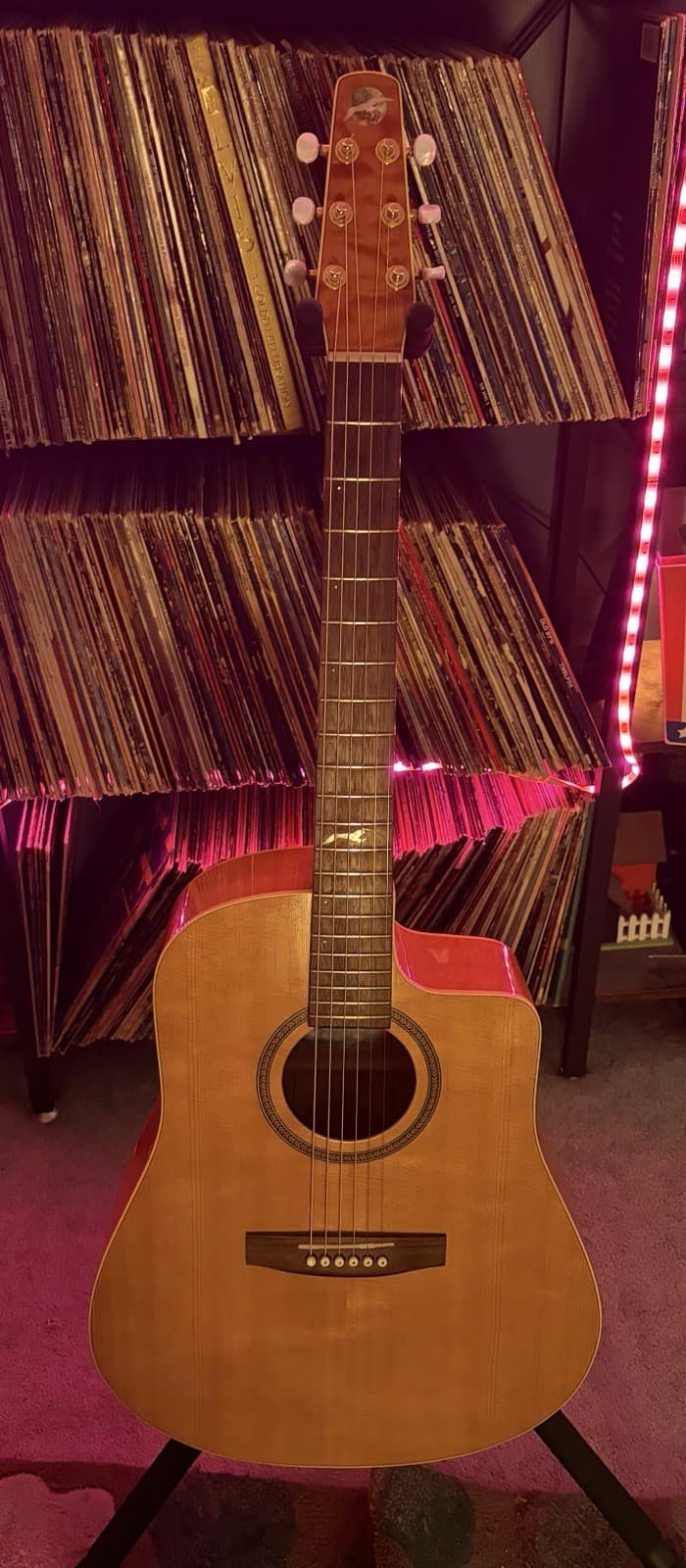
Seagull S6 Original (1-3/4 inch nut, comfortable profile)
Dreadnought acoustic with comfort neck · Solid cedar top, wild cherry back/sides, 25.5-inch scale but 1-3/4 inch nut width (wider for fingerpicking)$500–$600 new / $350–$480 usedBest for: Acoustic players with small hands who want fingerstyle string spacing, Canadian-made quality, warm cedar tone
The Seagull S6 presents an interesting consideration: it uses a full 25.5-inch scale but a wider nut (1-3/4 inch / 44.5mm) than typical acoustic guitars. The wider nut gives more string spacing for fingerpicking — some players with small hands actually prefer wider string spacing for individual finger control. The S6 is specifically noted because Seagull's neck profile is lower and more comfortable than many competing acoustics. Used at $350–$480.
What to check used: Note that the Seagull S6's advantage for small hands is the neck profile and string spacing, not the scale length (which is standard 25.5-inch). Players who specifically need shorter scale length for fret reach should look at the Taylor GS Mini, Martin LXM, or a 3/4-size acoustic instead.