#1
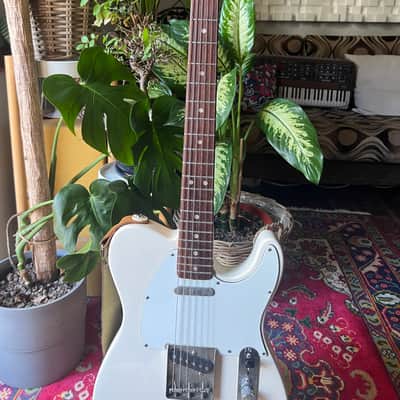
Fender Telecaster
Best overall · Country, rock, alt, session recording$400–$800 usedBest for: Session recording workhorse — on more hit records than any other guitar
The Telecaster appears on more hit records than any other guitar. Its bright, cutting bridge pickup sits in a mix without frequency-masking other instruments; the neck pickup warms up for rhythm. The simple construction means fewer variables to go wrong during a session. Professional session players like Steve Cropper, Danny Gatton, and Brent Mason built careers on Telecasters precisely because they record consistently.
What to check used: Single-coil pickups are susceptible to 60-cycle hum from fluorescent lighting and studio monitors. Most studios address this with proper grounding, but verify the guitar's shielding — unshielded Teles can introduce noise in electrically busy environments.
#2
Fender Stratocaster
Pop & R&B · Pop, R&B, funk, session recording$500–$1,000 usedBest for: Pop, soul, and R&B session recording — the five-way switch covers every tone
The Stratocaster's five-way switch covers a tonal range no other recording guitar matches. Position 2 (bridge + middle) produces the characteristic "quack" used on countless pop and R&B recordings. Position 4 (middle + neck) gives a warm, woody rhythm tone. The Strat records with a natural brightness and clarity that most pop and R&B production requires. It's the most recorded electric guitar in music history.
What to check used: Like all single-coil-equipped guitars, Strats can pick up interference in recording environments. The middle pickup is reverse-wound/reverse-polarity, which means positions 2 and 4 are hum-cancelling — if your recordings show hum, check which pickup position you're using.
#3
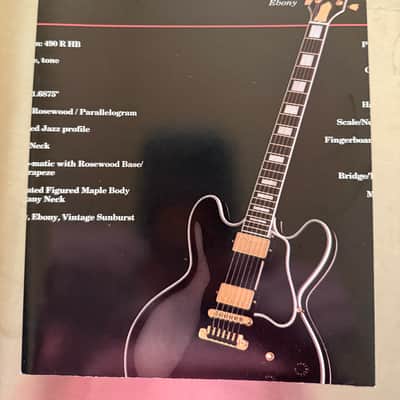
Gibson ES-335
Best semi-hollow · Blues, jazz-rock, classic rock, soul recording$1,200–$3,000 usedBest for: Blues, soul, and jazz-rock recording — Chuck Berry, Clapton Cream-era, BB King
The ES-335's semi-hollow construction produces a complexity in recorded tone that solid-body guitars can't replicate. The center block prevents feedback at high volumes while the hollow wings add warmth and harmonic content. On recording, the ES-335 has a sustain bloom — notes swell slightly after the initial attack — that sounds musical in a mix rather than just loud. It records best with low to moderate gain.
What to check used: At high gain levels, the ES-335's hollow construction can produce microphonic feedback (squealing from the pickups resonating with the body). This is manageable with proper gain staging and mic placement but requires awareness during sessions.
#4
Gibson Les Paul Standard
Rock essential · Rock, hard rock, classic rock recording$800–$2,000 usedBest for: Rock and hard rock recording — Page, Slash, Gary Moore, all humbucker-driven rock
For rock recording, the Les Paul Standard's combination of mahogany body, maple cap, and PAF-style humbuckers produces sustain, warmth, and midrange push that defines the genre. The thick, singing quality of a Les Paul in the mix — heard on virtually every rock record from the 60s through today — comes directly from this combination. It records with a natural compression that reduces dynamic inconsistencies across different picking intensities.
What to check used: Les Paul Standards are among the most counterfeited guitars. Verify the serial number via Gibson's online tool before purchasing a used example. Also check the neck for cracks at the headstock joint — this is the most common damage point on Les Pauls.
#5
PRS Custom 24
Modern versatile · Modern rock, prog, versatile studio recording$700–$1,800 usedBest for: Modern versatile studio guitar — coil-split from humbucker warmth to single-coil clarity
The PRS Custom 24 has become the modern session player's versatile recording guitar. The coil-split option via the push-pull tone pot moves from full humbucker (warm, thick, Les Paul-adjacent) to split single-coil (bright, articulate, Strat-adjacent) without changing guitars. PRS build quality is extremely consistent — the fret level, intonation, and electronics are set precisely at the factory, which translates to fewer studio setup issues.
What to check used: PRS guitars have their own unique neck profile and fret size. Players coming from Fenders often need adjustment time — the PRS Pattern Regular and Pattern Thin profiles are distinctly different from Fender C profiles. Try before buying if possible.
#6
Rickenbacker 360
Indie jangle · Post-punk, jangle pop, indie rock recording$800–$1,600 usedBest for: Jangle and chime recording — R.E.M., The Byrds, Tom Petty
The Rickenbacker produces a chiming, bright, trebly jangle on recordings that no other guitar replicates. The dual-output jack ("Rick-O-Sound") allows simultaneous stereo recording from separate pickups — practical in recording contexts. R.E.M.'s early sound, The Byrds' 12-string jangle, and Tom Petty's Heartbreakers recordings all relied on Rickenbacker character. It excels where the recording needs high-frequency shimmer and chime.
What to check used: Rickenbackers have a particularly narrow nut (1-5/8") and neck profile that some players find uncomfortable. They also have unusual electronics that require care — the Hi-Gain pickups are output-matched differently from standard pickups and may require amp input matching.
#7
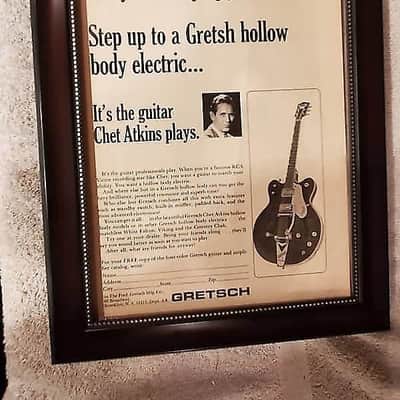
Gretsch G6120 Country Gentleman
Country & rockabilly · Country, rockabilly, vintage studio recording$1,000–$2,500 usedBest for: Country and vintage recording — Chet Atkins, Eddie Cochran, Brian Setzer
For country, rockabilly, and vintage-influenced recording, the Gretsch G6120 or Country Gentleman produces a warmth and twang that Telecasters can't match. The hollow body adds resonance and harmonic content. Filter'Tron humbuckers reject noise better than single coils while retaining brightness. Chet Atkins used Gretsches for his entire classic RCA recording period — the sound is inseparable from the guitar.
What to check used: Fully hollow Gretsch guitars are prone to feedback at higher volumes or in close-mic studio situations. This is manageable with proper mic placement and gain staging, but requires awareness. Check the Bigsby mechanism — it should engage and return smoothly without binding.
#8
Epiphone ES-335
Budget pick · Budget semi-hollow, versatile studio recording$300–$500 usedBest for: Budget semi-hollow recording without the Gibson ES-335 price
The Epiphone ES-335 (Dot or Inspired by Gibson series) gives you the semi-hollow thinline construction and humbucker configuration at $300–$500 used. The fundamental tonal character — warmth, sustain bloom, harmonic complexity — comes from the construction, not the brand name. For recording projects where budget is a constraint, the Epiphone delivers results that are difficult to distinguish from a Gibson in a mix. Upgrade the pickups if you want to get closer.
What to check used: Check electronics carefully on used Epiphone examples — the pots and switch quality is below Gibson standard and oxidation is common on older examples. A full electronics clean or replacement ($60–$100 at a shop) resolves most issues and is worth budgeting.