#1
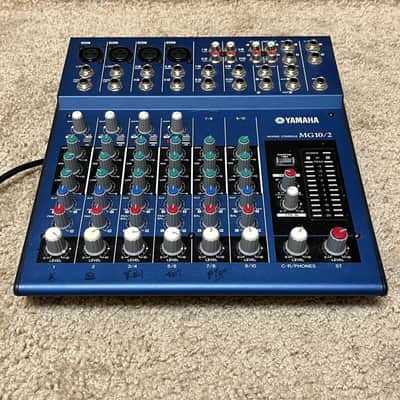
Yamaha MG10XU
Analog Mixer · 10 channels (4 XLR mic, 6 stereo line), 3-band EQ, effects, USB audio$180 new | $100–$150 usedBest for: Home studios, small bands, podcast interviews
The MG10XU is legendary in home studios: compact, affordable, built-in USB audio interface, and a dual-output master that lets you send different mixes (monitor vs. main) to different destinations. 4 mic preamps is enough for drums + bass + 2 vocals.
What to check used: Check all faders for scratching or noise when moving them. Test the USB connection; cables are wear points.
#2
Behringer Xenyx X1204USB
Analog Mixer · 12 channels (4 XLR mic, 8 line), 3-band EQ, built-in FX, USB audio$150 new | $60–$100 usedBest for: Budget-conscious home recordists and gigging musicians
The X1204USB offers 12 channels (twice the MG10XU) at half the price secondhand. Behringer build quality is solid, and the preamps are low-noise. Great entry point for complex band recording.
What to check used: Behringer mixers are common on the used market, so inspect for dust inside channels. Test all XLR inputs for audio.
#3
PreSonus StudioLive AR12c
Hybrid Analog/Digital Mixer · 12 channels, built-in USB audio, SD card recording, tablet control via WiFi$500 new | $300–$400 usedBest for: Gigging musicians and podcast producers needing recording backup
The AR12c records directly to SD card and can send multitrack audio to your DAW via USB simultaneously. Tablet app for wireless mixing is powerful for live sound. Hybrid analog/digital workflow.
What to check used: Check the SD card slot for debris. Verify the WiFi module works if included. Test USB multitrack export.
#4
Mackie ProFX10v3
Analog Mixer · 10 channels (4 XLR mic), built-in EFX, USB audio, low-latency monitoring$200 new | $100–$140 usedBest for: Vocalists and acoustic musicians mixing overdubs
ProFX10v3 is Mackie's workhorse: tight analog summing, built-in reverb and delay effects, and an excellent mic preamp. Smaller footprint than MG10XU but professional sound.
What to check used: Inspect the XLR connectors for oxidation. Test the effects send/return loop.
#5
Allen & Heath ZEDi-10FX
Analog Mixer · 10 channels (2 XLR mic, 8 line), USB audio interface, on-board effects$200 new | $100–$160 usedBest for: DJs and electronic producers mixing multiple sources
ZEDi-10FX is designed for flexible routing and effects loops. Excellent VCA fader quality and onboard FX make it ideal for producers. Great preamps.
What to check used: Check the crossfader if this is a DJ-focused unit. Test the Effects loop routing.
#6
Yamaha MG16XU
Analog Mixer · 16 channels (4 XLR mic, 12 line), 3-band parametric EQ, USB audio$280 new | $150–$200 usedBest for: Bands with drums, bass, guitar, and vocals needing independent control
MG16XU doubles the MG10XU channel count and adds parametric EQ (more flexible than 3-band). 16 channels covers full drum kit + bass + 2 guitars + 2 vocals plus effects returns.
What to check used: Larger mixer means more components to fail. Inspect all 16 channels. Test parametric EQ sweep.
#7
Behringer X32 Compact
Digital Mixer · 32 input channels, 16 physical faders (motorized), 6 mix buses, iPad/USB control$1200 new | $600–$950 usedBest for: Professional live sound and large recording sessions
X32 is the industry standard for digital mixing: 32 channels via networking, onboard effects, and motorized faders. Massive capability in a compact footprint. Used prices have dropped significantly.
What to check used: Verify all motorized faders move smoothly. Check the Ethernet port. Test the monitor mixing feature (critical for live sound).