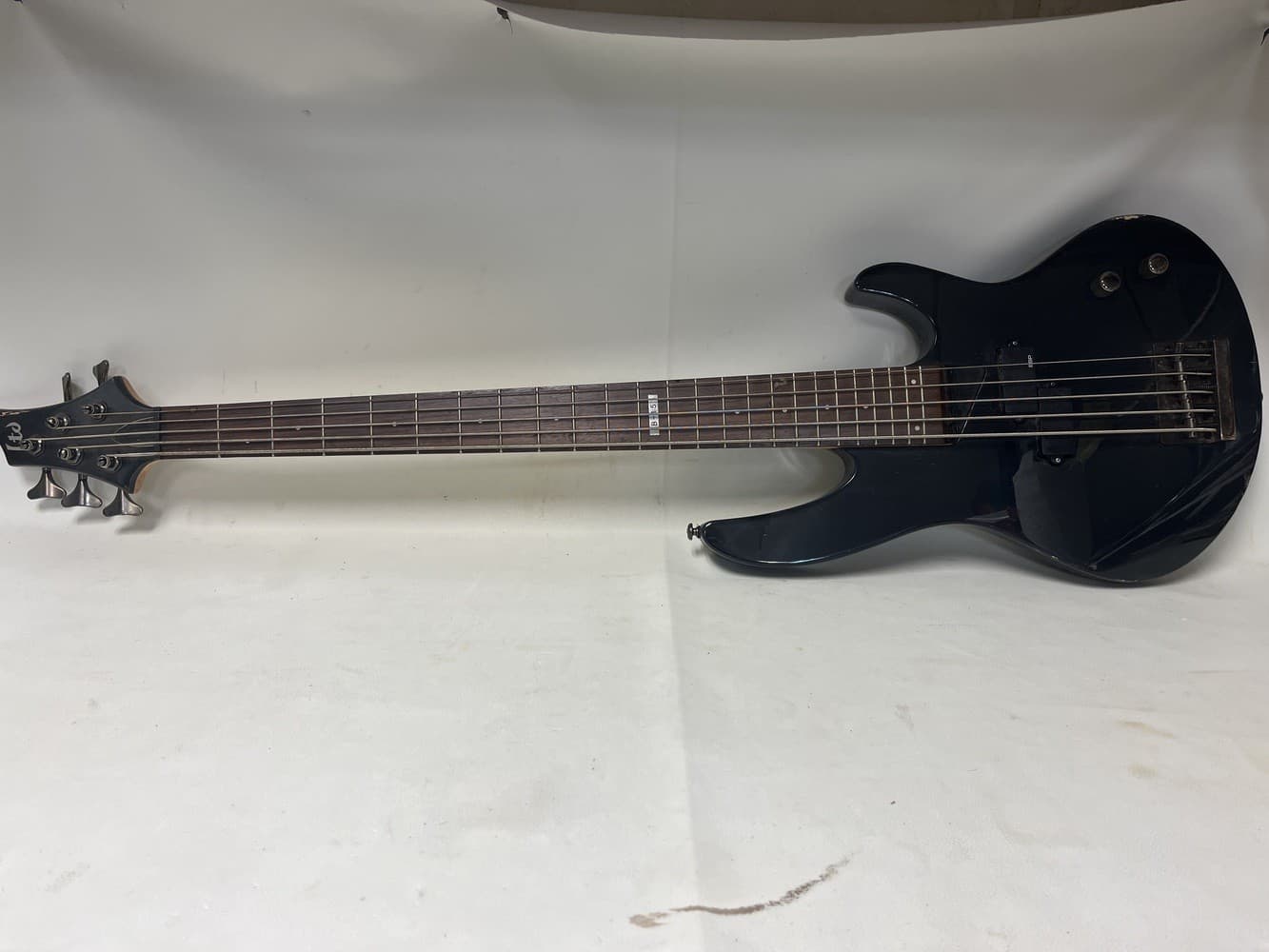
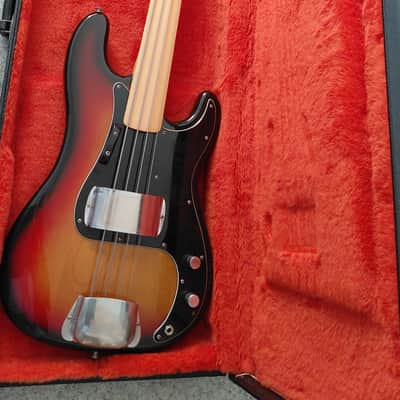
#1
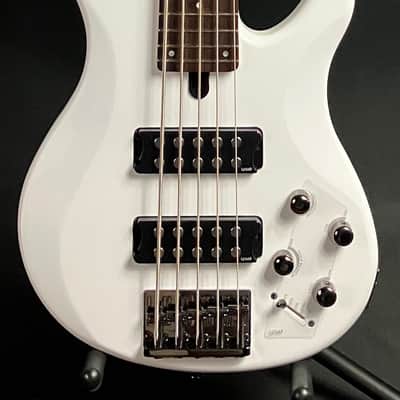
Yamaha TRBX505
5-String Active Bass · 5 strings, active PJ pickups, 3-band EQ, swamp ash body$380–$540 usedBest for: Players who want maximum tonal versatility in a 5-string
The TRBX505 is the best-reviewed affordable 5-string bass on the market. The swamp ash body and active PJ pickup configuration produce a tight, focused low B and wide tonal range. The 3-band active EQ gives genuine control over bass, mid, and treble frequencies. Neck width and string spacing are comfortable for most players.
#2
Squier Affinity Jazz Bass V
5-String Passive Bass · 5 strings, 2 Jazz Bass single coil pickups, maple neck$220–$300 usedBest for: Budget beginners learning 5-string technique
The Squier Affinity Jazz Bass V is the most affordable 5-string bass that actually sounds decent. The Jazz Bass pickup configuration is versatile and the neck profile is comfortable. String spacing is a bit tight compared to premium instruments but acceptable for fingerstyle playing.
What to check used: The low B string on the Affinity V can be loose at lower price points. Consider upgrading to heavier gauge strings (130 gauge B) for better tension.
#3
Ibanez SR405E
5-String Active Bass · 5 strings, active Bartolini MK-1 pickups, 3-band EQ, thin neck$300–$440 usedBest for: Players who want a slim, fast neck on a 5-string
Ibanez SR series necks are famously thin and fast — the SR405E is one of the easiest 5-strings to play because the neck does not feel much wider than a 4-string. The active Bartolini pickups have excellent clarity on the B string. Recommended for metal, jazz, and funk players who need speed.
#4
ESP LTD B-205SM
5-String Active Bass · 5 strings, spalted maple top, active EMG-HZ pickups, 3-band EQ$380–$540 usedBest for: Metal and hard rock bassists who need aggressive tone
ESP LTD instruments are designed for heavy music and the B-205SM delivers — the active EMG-HZ pickups are aggressive and high-output, the low B string is tight and defined, and the spalted maple top is visually striking. A 5-string designed for down-tuned playing from the ground up.
#5
Fender American Professional II Jazz Bass V
5-String Passive Bass · 5 strings, 2 V-Mod II Jazz pickups, rolled fingerboard, alder body$1,000–$1,500 usedBest for: Professional players who need American-made quality
The American Professional II Jazz Bass V is the standard for professional 5-string passive bass. The V-Mod II pickups are the best passive Jazz Bass pickups Fender has ever made. The rolled fingerboard edges feel immediately comfortable. A used American Pro II at $1,000-1,500 is one of the best-value professional instruments available.
#6
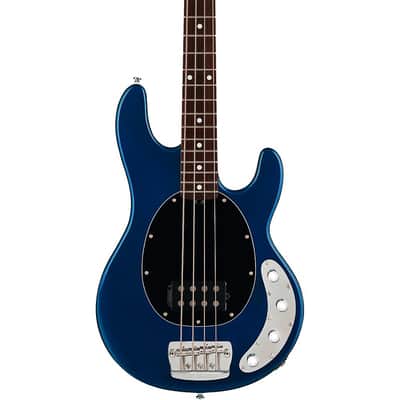
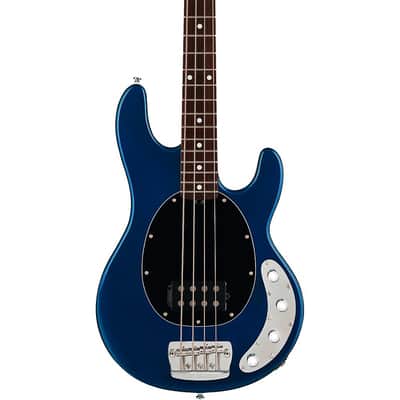
Music Man StingRay 5
5-String Active Bass · 5 strings, active H or HH humbucker, 3-band EQ, ceramic magnet$1,200–$1,800 usedBest for: Players who want the definitive active 5-string tone
The Music Man StingRay is the gold standard of active 5-string basses — the preamp is the most musical active EQ in production and the humbucker pickup has a characteristic punch and presence that is unmistakable. StingRay 5s retain their value extremely well. Used examples in excellent condition are a smart long-term investment.
#7
Schecter Stiletto Extreme-5
5-String Active Bass · 5 strings, active EMG-HZ pickups, set neck, mahogany body$350–$500 usedBest for: Metal and progressive rock players on a mid-range budget
Schecter basses are a cult favorite in metal for their aggressive tone and quality construction. The Stiletto Extreme-5 set neck provides excellent sustain and the EMG-HZ pickups drive any amp into articulate, defined low-end. The mahogany body adds warmth that balances the high-output pickups.