Gibson Les Paul Serial Number Guide

Date and authenticate your Les Paul by serial number — and understand what each production era is worth.

The Gibson Les Paul has been produced, discontinued, and revived across seven decades — and the serial number system changed with every ownership and production era. This guide covers what each era looks like, what the serial number tells you, and most importantly: what it means for value and whether you need professional authentication before buying.

The range is enormous: a 1959 Sunburst can sell for $500,000 at auction. A 1975 Norlin-era Standard in excellent condition might be $1,800. A 2020 Standard is $2,500 new. Knowing which era you have — and whether it's authentic — is the difference between a great purchase and an expensive mistake.

Where Is the Serial Number?

The serial number is on the back of the headstock on all production Les Pauls — ink-stamped on vintage instruments, impressed (debossed) into the wood with ink fill on modern instruments. It is not on the body. On custom shop and historic reissues, the serial may also appear on a label inside the control cavity.

Vintage Les Paul warning: For any instrument priced above $5,000 — and especially any pre-1969 guitar — professional authentication is not optional. Sophisticated replicas, parts guitars assembled from period components, and re-finished instruments are common at every price level. Budget $150–300 for an expert appraisal before purchasing.

Les Paul Production Eras

Serial formats changed multiple times. Always cross-reference with physical features and pot date codes.

EraYearsSerial FormatUsed Price Range
Goldtop / P-90 Era1952–19573–5 digits, ink-stamped$30,000–$150,000+
Sunburst "Burst"1958–19605–6 digits (8-prefix common)$200,000–$600,000+
SG-Body / Transition Era1961–19685–6 digits, then FON (Factory Order Number) systems$5,000–$30,000
Norlin Era1969–19868-digit numbers (various formats by sub-era)$1,200–$4,000
Nashville Modern1994–20188-digit: YDDDYRRR (digits 1&5 = year, 2–4 = day)$1,500–$3,500
Current Standard2019–present8-digit (same YDDDYRRR format)$2,200–$4,000

Goldtop / P-90 Era (1952–1957)

Serial format: 3–5 digits, ink-stamped

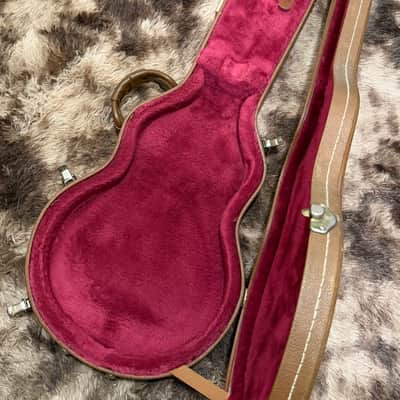
P-90 single-coil pickups. Wrap-around bridge (1952–1954), then stoptail. Gold top finish only. Original Lifton case has pink/red interior lining. These are among the rarest production Les Pauls.

Genuine Goldtops at this price require expert authentication. The market for fakes at this level is active. Never purchase without a professional appraisal.

Used price range: $30,000–$150,000+

Sunburst "Burst" (1958–1960)

Serial format: 5–6 digits (8-prefix common)

PAF (Patent Applied For) humbuckers — the defining tone. Cherry sunburst finish (fades beautifully with age to lemon burst, tiger burst). Carved maple top over mahogany body. Fewer than 1,700 were made across all three years. The most collectible production electric guitar ever made.

If someone is selling you a genuine 1958–1960 Les Paul Standard at a price that seems like a deal, it is not genuine. Authenticated Bursts are sold through major auction houses (Christie's, Heritage, Julien's) or established vintage guitar dealers. Do not buy one without full provenance documentation and independent expert authentication.

Used price range: $200,000–$600,000+

SG-Body / Transition Era (1961–1968)

Serial format: 5–6 digits, then FON (Factory Order Number) systems

Body shape changed to SG-style in 1961; the name "Les Paul" was removed from the guitar at Les Paul's request (1963) and returned in 1968. These transitional instruments are sometimes called "Les Paul SG." Early 1961 examples have the Les Paul name and PAF pickups.

The 1961–1963 instruments with "Les Paul" on the truss rod cover and PAF pickups are the most collectible from this era. Post-1963 examples with the SG shape but no Les Paul branding are more affordable.

Used price range: $5,000–$30,000

Norlin Era (1969–1986)

Serial format: 8-digit numbers (various formats by sub-era)

Gibson owned by Norlin (ECL) 1969–1986. Inconsistent quality: some years used maple center-section necks, 3-piece mahogany bodies, and large headstocks. Volute on back of headstock (1970–1981). Weight varies wildly. Many Norlin-era Les Pauls are excellent playing instruments available at significant discounts.

The most misunderstood era. A well-set-up 1975 Les Paul Standard can be a fantastic gigging guitar at $1,500. Avoid paying premium prices for Norlin-era guitars — the market correctly prices them below pre-Norlin and post-Norlin production.

Used price range: $1,200–$4,000

Nashville Modern (1994–2018)

Serial format: 8-digit: YDDDYRRR (digits 1&5 = year, 2–4 = day)

Gibson moved to Nashville in 1984. Modern Standards include weight-relief (2008–2018) and fully-chambered bodies (2012–2014). Historic reissues (R8=1958, R9=1959, R0=1960) are a separate non-chambered line. Chambered Standard bodies divide player opinion — some prefer the lighter weight, others prefer solid mahogany sustain.

The 2008–2012 weight-relieved Standards are excellent value. The 2012–2014 fully-chambered guitars are more polarizing but sound excellent. If you want a non-chambered modern Standard, look for pre-2008 or post-2018.

Used price range: $1,500–$3,500

Current Standard (2019–present)

Serial format: 8-digit (same YDDDYRRR format)

Returned to solid non-weight-relieved mahogany body after customer demand. "Original Collection" (traditional specs) and "Modern Collection" (coil-splitting, locking tuners) product lines. Improved binding, upgraded hardware. Most consistent modern production quality Gibson has shipped.

The 2019+ Standards represent the best new-production value in modern Gibson history. Used examples at $2,200–$2,800 are a solid buy — the quality justifies the price.

Used price range: $2,200–$4,000

Decoding the Modern 8-Digit Serial (1977–present)

The format is: Y DDD Y RRR

  • Digit 1 and Digit 5 combined = production year
  • Digits 2, 3, 4 = day of year (001 = Jan 1, 365 = Dec 31)
  • Digits 6, 7, 8 = production sequence number for that day

Example: 9 023 4 015

Digit 1 = 9, Digit 5 = 4 → Year 1994

Digits 2–4 = 023 → Day 23 = January 23

Digits 6–8 = 015 → 15th guitar produced that day

This format applies to Nashville production (1984+). Pre-1977 systems varied significantly and are best looked up using a dedicated Gibson serial database (e.g., guitardater.com).

Used Les Paul Buyer's Checklist

  • 1Identify the production era using the serial number and physical features (pickup type, bridge style, finish)
  • 2Decode the serial using the 8-digit formula above (for 1977+ instruments)
  • 3Check the headstock for repairs — look for discoloration, finish mismatch, or fill material under UV light
  • 4Test the pickups: solo each pickup, roll the tone knob fully down, check the switch in all positions for noise or dropout
  • 5Weigh the guitar if possible — weight relief (2008+) and chambering (2012–2014) change the playing experience
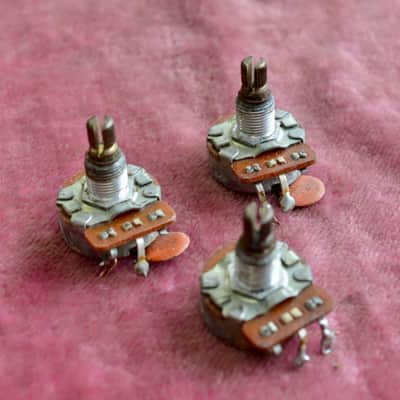
  • 6Check pot date codes: remove the control cavity cover and look for the stamped 6-digit code on the back of each pot
  • 7Verify the truss rod cover says the correct model name (Standard, Custom, Studio, etc.)
  • 8For instruments over $3,000: get an independent appraisal from a specialist before purchase

Gibson Les Paul Listings For Sale Now

See all

Frequently Asked Questions

Where is the serial number on a Gibson Les Paul?

The serial number is on the back of the headstock, either ink-stamped (vintage) or impressed into the wood with ink fill (modern). On very early Les Pauls (1952–1960), the number is ink-stamped in a distinctive typeface. From the mid-1970s onward, Gibson used an impressed (debossed) format that is often filled with white or gold ink.

How do I decode a Gibson serial number?

The modern 8-digit format (used since 1977) encodes the production date. Digits 1 and 5 together give the production year (e.g., 9XXXX4XXX = 1994; 0XXXX9XXX = 2009). Digits 2, 3, and 4 give the day of the year (001 through 365). Digits 6, 7, and 8 are the production sequence number for that day. Example: 90234015 = made on day 023 (January 23) of 1994, 15th guitar that day. Pre-1977 systems are more complex and varied by era.

What is a Gibson Les Paul "Burst" and why is it so valuable?

'Burst' refers to the cherry sunburst finish on the 1958–1960 Les Paul Standard — which is why these guitars are sometimes called 'Bursts.' Fewer than 1,700 were made across three years (1958, 1959, 1960). They are considered the apex of Les Paul production for several reasons: PAF humbuckers wound to original specs, hand-selected tonewoods, and 60+ years of aging that produced the iconic faded sunburst appearance. Authenticated examples regularly sell for $200,000–$600,000 at auction.

Are Norlin-era Gibson Les Pauls worth buying?

Yes, if priced accordingly. Norlin-era Les Pauls (1969–1986) have a mixed reputation because of inconsistent quality control, but many individual guitars from this period are excellent instruments. The key is price: a Norlin Standard should cost $1,200–$2,500, not $3,500+. At the right price, a well-setup Norlin Les Paul with good pickups is a professional-quality guitar. Avoid paying vintage prices for Norlin production.

What is weight relief on a Gibson Les Paul Standard?

Weight relief refers to chambers routed into the mahogany body to reduce the total weight of the guitar. Gibson introduced chambering in the 2008 Standard as a response to customer complaints about heavy instruments. The 2008–2011 Standards used "traditional weight relief" (small holes drilled through the body). The 2012–2014 Standards used "modern weight relief" (larger chambers). From 2015, the Standard returned to more conservative chambering. The 2019+ Standard is solid non-chambered mahogany. Player opinion on chambering is divided — it measurably changes the resonance character.

How do I tell if a vintage Les Paul is all-original?

Originality is assessed across multiple components: pickups (PAF stickers, bobbin color, magnet type), tuners (Kluson single-ring tulip buttons on vintage), hardware (nickel vs chrome plating consistent with era), electronics (original wiring harness, correct pots with matching date codes), and finish (no re-spray visible under UV light, checking grain and pore structure under magnification). Full authentication of a high-value vintage Les Paul requires a specialist — budget $150–300 for a professional appraisal before any major purchase.

Ready to Find a Gibson Les Paul?

Search listings across Reverb, eBay, and more — all in one place.